

Oh surprise! Justin Trudeau’s government may spend more, but it will nonetheless manage to complete the six fiscal years from 2020-21 to 2025-26 with a smaller deficit than it projected in the March 2021 budget.
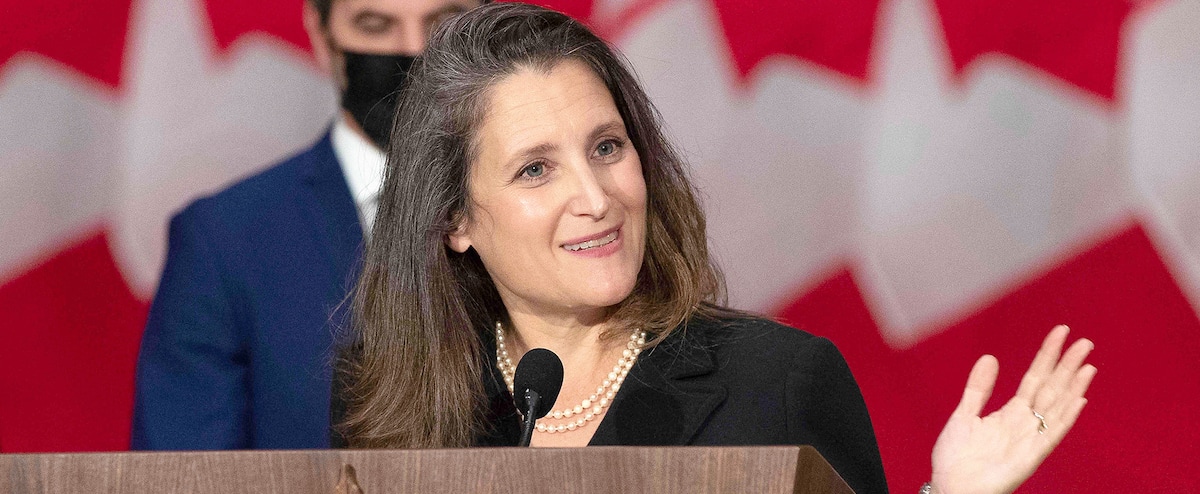
no filler, In the economic and budget update yesterdayFinance Minister Chrystia Freeland announced additional spending of $67.4 billion for these six fiscal years.
But… Since inflows of revenue are much higher than her budget forecast for last March, the Secretary has finally provided us with a significant reduction in budget balances of $59 billion for these six fiscal years, compared to her forecast for March 2021.
How much is the additional income? For the six fiscal years involved, we’re talking about $108 billion more than we’re looking at in taxpayer pockets, which are:
- Income tax on individuals and companies: $76.3 billion
- Taxes and fees: $15 billion
- Pollution pricing: $13.1 billion
- Work insurance premiums: $4.2 billion
This sudden increase in federal revenue is attributed to stronger economic growth than projected in last March’s budget.
With this additional $100 billion in revenue, the Trudeau government has been able to “save” over the past two years from the “direct program expenditures” it budgeted last March.
- Listen to Michel Gerard’s column on QUB Radio:
There is no balance in sight
Canadian taxpayers may be paying more taxes and fees to the federal government, and we’re a long way from rebalancing the federal finances.
From fiscal year 2020-21 to 2025-26, the federal government will have to transfer $626 billion of deficits into federal debt.
Of course, 2020-21 accounts for just over half of the projected deficit by 2025-26, and this is due to the costly programs to fight COVID-19 that the Trudeau government has put in place to help victims (individuals and businesses) of the coronavirus pandemic. The deficit was $327.7 billion in 2020-2021.
The current fiscal year (2021-22) will also show an extraordinary deficit due to special measures aimed at combating other waves of COVID-19 that have hit the entire world. Expected deficit: $144.5 billion.
courage! According to Minister Freeland’s new budget forecast, the annual deficit will drop from $58 billion next year to about $23 billion in 2025-26.
As you can see, we are still far from returning to equilibrium.
Federal debt explosion
Due to the large deficits caused by the costly (but necessary) measures of the broad federal program to fight COVID-19, the federal debt has virtually exploded in recent years.
Finance Minister Chrystia Freeland expects federal debt to reach $1.250 billion next year, up 82.5% from 2018.
This is a dramatic jump in the federal debt of $565 billion in four years. When interest rates go up, it will cost us a whole bunch of billions in interest charges.
There is clearly no doubt that the state of the federal finances has deteriorated since the outbreak of the coronavirus pandemic.
While the federal debt-to-GDP ratio was 30.9% of Canada’s GDP in 2018-2019, said ratio will reach 47.3% of GDP in the next fiscal year.
There is no reason to panic, Canada remains the least indebted country in the G7.


Sophie Laurent is a contributor to Vaughantoday.ca, covering a wide range of topics including local news, politics, business, technology, sports, entertainment, and lifestyle. She focuses on delivering clear, balanced reporting that helps readers stay informed about current events and issues that matter to their communities. Sophie is committed to presenting accurate information, practical insights, and relevant stories in a straightforward and reader-friendly manner, making complex topics accessible to a broad audience.