

IThere are two things to be distinguished here: the effect that the moon may (or may not) have on fish behaviour, on the one hand; Is this impact reflected on the results of fishing on the other hand.
There is no doubt that the lunar phase has an effect on fish behavior in general (although this can vary from species to species). For example, in a file Article published in 2000 In the Canadian journal of fisheries and aquatic sciencesUniversity of Montreal researcher Daniel Boisclair found that the northern red belly – the “minnow” that perches on the edge of lakes during the day and feeds on plankton in the sea at night – is eight times smaller in its feeding grounds at fullest. Moon nights are more than new moons. Perhaps this small prey fish does this in order to avoid predators, who can see them more easily under the full moon.
A team from Carleton University found that bass largemouth tended to Stand deeper around the full moon, at least in the spring and summer.
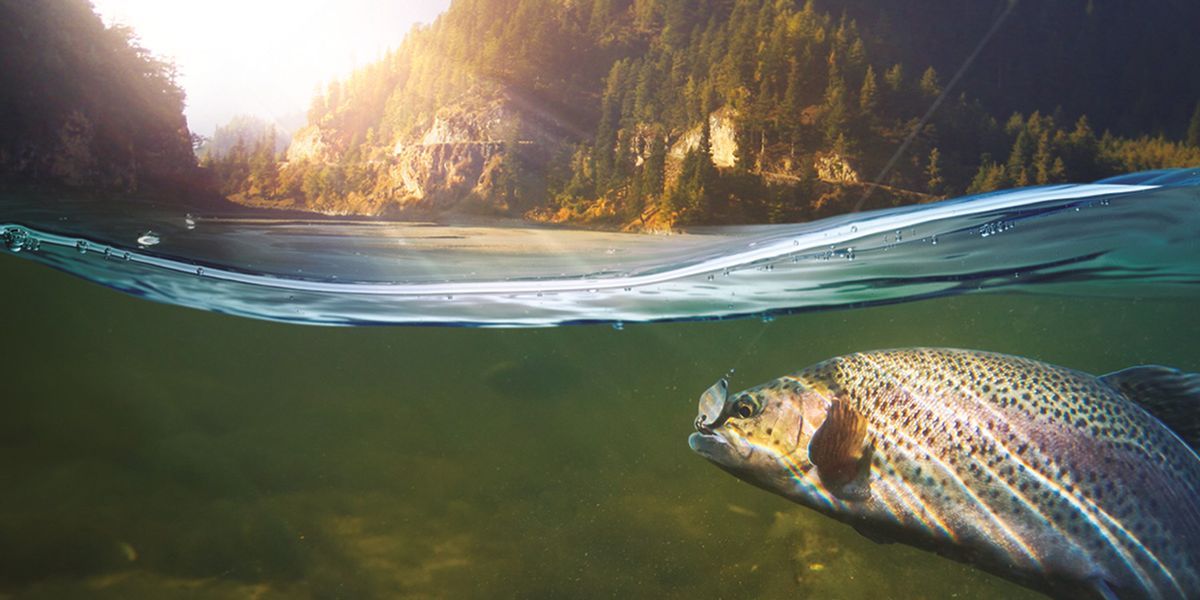
For his part, UQTR researcher and freshwater fish specialist Pierre Magnan also noted the moon’s effect on the behavior of trout (or “trout,” as it is often called). Be careful, he cautions, this is still highly fragmented data and has not been properly published in the scientific literature, so it should be considered with caution. But trout also seem to respond to the phases of the moon—or at least some individuals.
“During the day, trout stand in the heat line [la partie médiane de la colonne d’eau où la température baisse d’environ 1 °C par mètres de profondeur] They will feed near the surface overnight, says Mr. Magnan. (…) The data we have over a period of one month shows that there are individuals who are very active during a full moon and do not come to the surface at all when there is no moon. , while others don’t seem to care at all.”
It’s possible, but that’s just a hypothesis at the moment, which can be explained by the fact that trout comes in two different “forms,” he explains. Some feed mainly on insect larvae that live at the bottom of the water, near the shore, and the light of the full moon can make a big difference for these specimens. But the other part feeds mainly on offshore plankton, which requires no light: plankton is not hunted when seen but by swimming with their mouths open in the middle of the lagoons.
But in any case, it seems certain that the lunar phase affects the fish, and the work of these two researchers – and many others as well – has amply demonstrated this.
Now does that show up on hunting results? It is a firm belief in fishing circles that fish bite more (or less) during certain times of the lunar month. However, if the moon is running on fish, especially during the night, while sport fishermen cast their lines during the day.
Despite this, some studies have found that the lunar phase played out on the images captured. Thus, two American researchers showed in 2014, in the scientific journal PLoS-One [https://www.ncbi.nlm.nih.gov/pmc/articles/PMC4037224/pdf/pone.0098046.pdf], this musklung catch is more frequent around the full moon and new moon, but the effect is weak: the phase of the moon made only a 5% difference in the catch. Other research was conducted at sea in New Zealand, to me Mauritius and others Australia They also showed essentially the same thing: the moon is indeed a factor, but its effect is not the same for all species and is generally very weak. Moreover, there are undoubtedly a lot of practical benefits for fishermen.
To give an idea of the “size” of the moon’s impact, the difference was measured as 5% PLUS ONE It means that if a fisherman returns an average of 2 musklongs per day during his typical hunting trips, a 5% “bonus” will allow him to return 3 times every 10 completed moons. Obviously, this is not an effect that can be discerned at an individual scale, it really requires large databases to detect it. Which suggests that this belief likely originated and persisted for “bad reasons”—perhaps cognitive biases that make us notice better plums more on full moon days—although, at the end of the day, it turns out that there is some truth to it.

Sophie Laurent is a contributor to Vaughantoday.ca, covering a wide range of topics including local news, politics, business, technology, sports, entertainment, and lifestyle. She focuses on delivering clear, balanced reporting that helps readers stay informed about current events and issues that matter to their communities. Sophie is committed to presenting accurate information, practical insights, and relevant stories in a straightforward and reader-friendly manner, making complex topics accessible to a broad audience.