

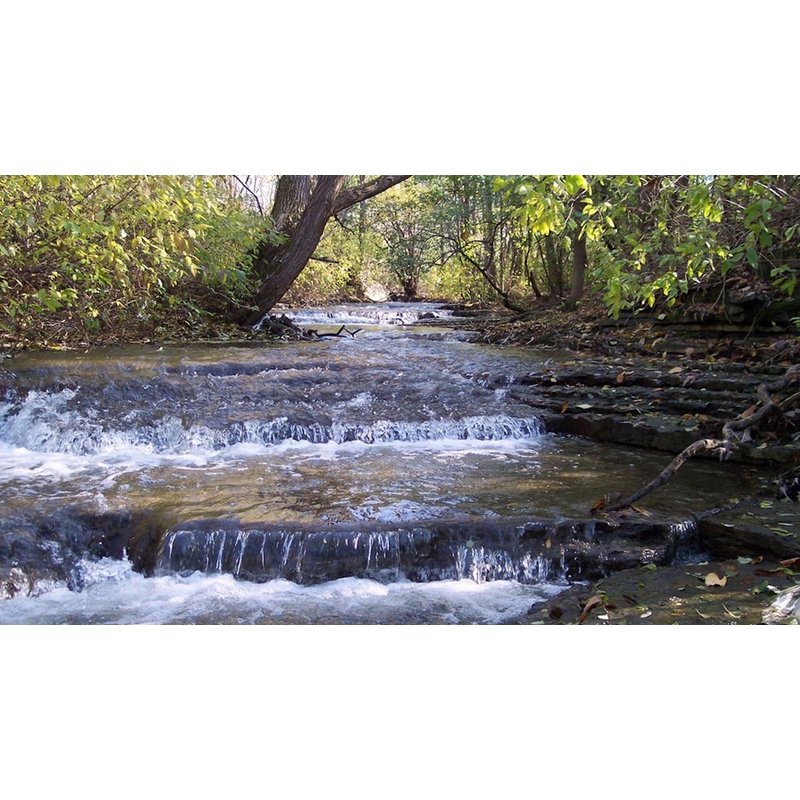
From the hottest countries to the arctic regions, smaller rivers have such a flow that they are prone to drying out. Even in Quebec, half of the rivers do not flow year-round, asserts a doctoral student in geography from McGill University and first author of this study published in the journal temper nature, Matisse Messager: “There are some in southern Quebec, even on the island of Montreal.”
He and his colleagues produced a List Shows the global distribution of these ephemeral or non-perennial rivers. It shows the various factors that influence the discontinuity of the flow – geography, the size of the watercourse, the climate and its location in the catchment (upstream or downstream).
One observation: the intermittent parts of the waterways are getting more and more, and the interruptions of the flow are increasingly long.
“This is the first part of a larger project to document climate control – it’s still theoretical and we want to document – through the amount of precipitation and rapid warming that is affecting even the rivers of the far north.” , explains the young researcher.
But for now, human management of rivers remains the main factor in water scarcity. Built dams and diverted canals often contribute to reduced flow. This affects some tributaries of large rivers, such as the Colorado in the southwestern United States, which are drying up. “The Delta has seen the proliferation of dams pumping water for agriculture and cities, including Las Vegas and Phoenix. This dries up smaller tributaries and deprives residents of access to water.”
Environmental systems to be protected
Rivers form important ecosystems: insects and amphibians, as well as fish, live there as whole animals. “We must protect these environments as native species complete their life cycle. Even temporary droughts of certain parts of the river protect them from invasive species, such as some plumes,” adds Mr. Messager.
So we should not view these unsustainable streams and rivers as environments to be modified, but rather to be preserved.
Many countries conduct global monitoring of rivers and streams and their water availability on a voluntary basis. However, it has been declining since the 1970s. “The surveillance network is collapsing, there are fewer and fewer investments and many budget cuts. It’s not a priority and we have less and less data,” notes M Messager.
precedent study By this author, in 2018, the fragility of this global hydrometric monitoring network was already highlighted. “It is important that governments strengthen it and we must encourage the exchange of open data among researchers.”
Roughly 9% of all the water that flows into the oceans comes from Canada, hence the importance of monitoring – with hydrological surveys conducted by stations – and the distribution and diversity of these flows.
For a broader representation of global hydrology, map (HydroATLAS), was developed a few years ago by one of the researchers, Bernard Lehner. The latter also shows the more general variables that affect the flow of rivers – geology, soil, climate, use, etc.
important for the future
These new global maps of intermittent rivers provide a rigorous comparison point for future conditions, comments Marie Larroque, a professor in the Department of Earth and Atmospheric Sciences at the US State University of Kuala Lumpur.
Climate conditions and future pressures already exerted by humans may lead to more and more intermittent periods. “As the authors emphasize, better understanding and identification of these waterways are very important research topics that can have many implications for water resource management and for populations,” adds the person who also holds water and land conservation research. a chair. “It is essential for water managers at the country level to have access to this data and to have a good understanding of the impacts of global changes on current conditions.” The researcher herself has an ongoing project to better understand the factors that enhance the association of this water with the aquifer.
She continued, it is important to realize that choppy rivers and ephemeral streams represent the most common type of watercourse on the planet: “Because hydrometric stations are usually installed on streams. Perennial waters with relatively high flow rates, this type of river is so little of documentation. This imposes a bias on our concept of watershed hydrology”
Data validation at the country level (Brazil, Argentina, Australia and France) shows this bias when researchers look at national and local metrics. To counteract this bias, “the authors emphasized, the approach must be used on a global scale” and not just to define discontinuity conditions at local levels, much to the chagrin of the expert.
However, knowledge needs to be deepened at the local and regional levels, so as to help managers take preventive measures in order to reduce the future impacts of human action and contribute to climate change adaptation.
Photo: Ruisseau-de-Montigny Natural Park / City of Montreal

Sophie Laurent is a contributor to Vaughantoday.ca, covering a wide range of topics including local news, politics, business, technology, sports, entertainment, and lifestyle. She focuses on delivering clear, balanced reporting that helps readers stay informed about current events and issues that matter to their communities. Sophie is committed to presenting accurate information, practical insights, and relevant stories in a straightforward and reader-friendly manner, making complex topics accessible to a broad audience.