

More rain and less snow in the Arctic
The climate system of the Arctic is currently shifting, previously it was clearly dominated by snowfall. Precipitation is actually increasingly observed. This change, although irregular over the polar region, could have a strong impact on the Greenland ice sheet as well as on sea level in general. River flows, the expansion and thickness of Arctic sea ice, permafrost, as well as flora, fauna and all associated ecosystems can be seriously affected by this change in the nature of precipitation.
>> Read also: “Climatology: Kilimanjaro can no longer snow in 2033”
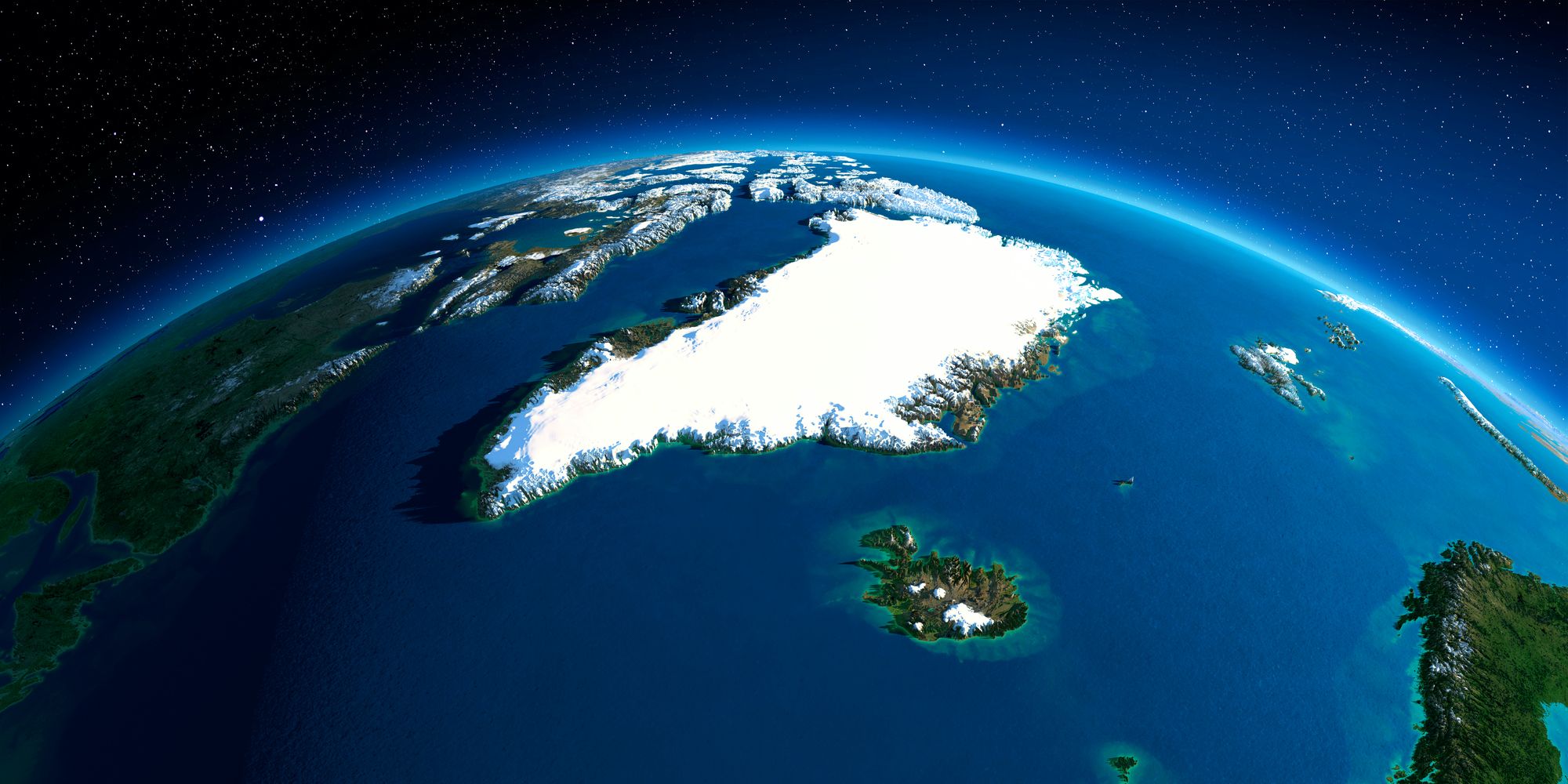
The Greenland ice sheet could be severely affected by the evolution of the polar hydrological cycle by 2100 © Anton Balazh, shutterstock
All climate change models show an increase in precipitation over all seasons in the Arctic over the coming decades. This increase will also be more pronounced in the fall and will be particularly related to increased precipitation compared to snowfall. However, in the winter, snow will still be the dominant type of precipitation over most of the Arctic.
If a trend towards regime change is currently observed, some models predict a sharp amplification of the phenomenon by 2100. The latest simulations indicate a 422% increase in precipitation for the winter season in 2100, compared to 2000.
+ 15 ° C in the year 2100 in the Arctic region
Thus a team of researchers examined various projections of Arctic precipitation up to the horizon 2100. The most recent data from CMIP6 appears to be (Paired Model Comparison Project) show a larger and faster increase in precipitation and a faster transition to a rainy system than previous simulations.
>> Read also: “Arctic: what would happen if all the sea ice melted?”
The development of the hydrological cycle in the Arctic will be associated with several factors, among which are mainly an increase in evaporation in this polar region, in connection with a decrease in sea ice and an increase in the surface of the open ocean. This is because the ice pack usually acts as a cover, preventing ocean water from evaporating. In the absence of a frozen surface, and in combination with the general increase in temperature, the atmosphere is laden with more moisture, which causes more precipitation. In addition, the models show a modification of atmospheric flows with increased transport of moist air towards the poles, further enhancing the level of precipitation.
In all cases, the degree of precipitation increase appears to be related to the degree of Arctic warming in all seasons. Thus, the most worrying models are predicting a temperature increase of 15°C for the year 2100, compared to 2000, for the winter season.
This change in the type of precipitation will also affect other regions of the world. In response to global warming of 1.5 to 2°C, precipitation will dominate the climate of Greenland and Norway. In the more pessimistic hypothesis of a general temperature increase of about 3°C, most of the coldest regions of the world would fall into a rain-dominant pattern in relation to snowfall.
cascading consequences
The rapid development, in less than a century, of the amount and type of precipitation in the Arctic will seriously affect the stability of socio-ecological systems in this region of the world. Reduced snowfall will affect the seasonality and greenness of the tundra and thus the animals and human populations that live there. Reducing snow cover will also exacerbate global warming by reducing the snow rebound effect, and increasing carbon dioxide fluxes.2 During the winter, large amounts of methane stored so far in the permafrost are released from the permafrost. The floods will surely be more frequent. While many species of wildlife will suffer from this environmental change, others, such as congregations of migratory birds, can benefit from it, which have already increased in number dramatically in this region in the face of the creation of a warmer and wetter climate.
The decrease in the amount of snow will also affect the ocean environment, in particular its stratification, which will modify the living conditions of phytoplankton and microalgae. These changes in particular could have cascading repercussions for all marine organisms, with phytoplankton at the base of the food chain.
Thus, the alarming results of the simulations once again demonstrate the urgent need for strong and concrete measures to limit the increase in global temperature.

Sophie Laurent is a contributor to Vaughantoday.ca, covering a wide range of topics including local news, politics, business, technology, sports, entertainment, and lifestyle. She focuses on delivering clear, balanced reporting that helps readers stay informed about current events and issues that matter to their communities. Sophie is committed to presenting accurate information, practical insights, and relevant stories in a straightforward and reader-friendly manner, making complex topics accessible to a broad audience.