

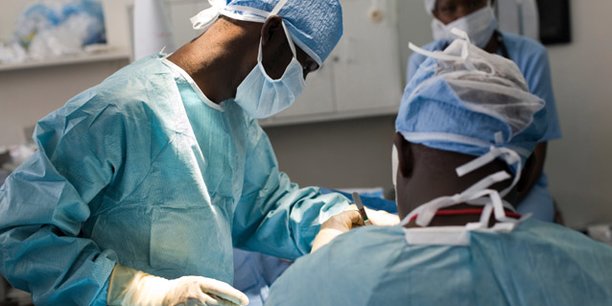
Although Africa is responsible for nearly half of global deaths from infectious diseases, sub-Saharan Africa accounts for only about 1% of global scientific output. This situation is unacceptable.
Today, 615 million Africans do not have adequate access to quality health care. Combined with a catastrophic rise in healthcare costs, this is pushing the continent to a breaking point. We urgently need greater proactivity and accountability from African governments if we are to address our growing healthcare deficits and respond quickly and effectively to future health threats.
Today, at the Galien Afrique, we call on governments, agencies and multilateral companies to urgently increase investments in health research and development, in order to improve the quality and accessibility of our health systems. As scholars, we advocate the following actions:
1. Promoting access to public health data Africa suffers from misinformation about the importance of science, innovation, and research and development. This has detrimental consequences for the fight against COVID-19 by increasing reluctance to vaccinate and preventing the development and adoption of new tools and the effectiveness of disease surveillance. We therefore call on African leaders to invest in making the most critical health data accessible to 1.2 billion Africans, in order to tackle the misinformation crisis that is an obstacle to the good health of the continent.
2. Investing locally in scientific and productive capabilities Despite the global nature of the pandemic, solutions developed on a global scale are not universal or coherently applicable in regions such as Africa. It is increasingly clear that countries with a well-established innovation infrastructure respond to crises faster and more decisively, and that investing in developing these foundations is critical to formulating effective solutions. It is Africans who know how to solve the continent’s biggest problems, and as such, we need leaders to invest in local laboratories, infrastructure and technologies to ensure we can respond effectively to current health threats and the future of our societies.
3. Investing in Education To succeed in resolving the health crisis in Africa, investing in the future is essential, and education is the cornerstone of this goal. We must train the next generation of scientists and make sure that we encourage neglected communities, especially women, to empower their representation at all levels. African leaders must increase investments in education and education, in order to advance the next generation of scientists, doctors, nurses and health professionals.
4. Expanding Access to Essential Medicines and Vaccines COVID-19 has demonstrated the importance of increasing access to quality medicines and highlighted the underinvestment in research and development of medical diagnostics, and the ability to develop and manufacture tests that are unevenly distributed around the world. African experts must be at the forefront of developing new testing solutions that meet our needs and are digitally connected to the health system to support treatment pathways and enhance disease surveillance. Organizations such as the African Medicines Agency (AMA) are also seeking to strengthen regulatory frameworks to expand access to effective, safe and quality medicines for all. African leaders must engage with WADA and other regulatory frameworks if we are to succeed in transforming access to health care on the continent.
5. The history of digital transformation in Africa has shown that crises can lead to transformative change, and the COVID-19 crisis was no exception. Due to the pandemic and social distancing strategies, we have seen an acceleration of the digital transformation of Africa, which was previously lagging behind. A year later, the importance of data and surveillance for targeting resources and designing our response to disease is undeniable. To achieve an effective health system, African governments and the private sector must continue investing in technology and digital innovation.
6. Strengthening COVID-19 regional scientific cooperation demonstrated the need for cooperation between countries and regions, as well as the inability of a single country to ensure its own health security. It is imperative that African governments become champions of regional cooperation, which will not only improve scientific knowledge but also promote sustainable development on the continent. Establishing scientific networks and facilitating access to scientific information will also be essential to the formation of a solid African research base and its integration into the international scientific community. Over the past few years, we have collectively made tremendous progress and generated innovations that will better prepare Africa for future pandemics and enable us to meet current health challenges. The deadline for achieving the 2030 UN Sustainable Development Goals is approaching. If we are to achieve global health equity over the next eight years, it is imperative that Africa invest in targeted health research and development. We have an immediate need for cooperation, investment and action by our leaders; Africa’s future depends on it.
Signatories: Dr Carol Benn – Breast Pathologist, South Africa – Professor Elizabeth Bocuse – Head of Research at the Kenya Medical Research Institute (KEMRI) – Professor Abdus Salam Fall – Coordinator of the Economic and Social Transformation Research Laboratory (LARTES – IFAN), Senegal – Professor Glenda Gray – President and CEO of the South African Medical Research Council (SAMRC) – Professor Christian Happi – Professor of Molecular Biology, Mukhlis University, Nigeria – Dr. Naama Kasigi – Surgeon, MSF, Kenya – Dr. Clement Misiko – National Veterinary Research Institute, Jos, Nigeria – Professor Georgina Odepo – Head of the Department of Virology, University of Ibadan, Nigeria – Professor Samba Soo – Director of CVD Mali.
December 10, 2021, 9:00

Sophie Laurent is a contributor to Vaughantoday.ca, covering a wide range of topics including local news, politics, business, technology, sports, entertainment, and lifestyle. She focuses on delivering clear, balanced reporting that helps readers stay informed about current events and issues that matter to their communities. Sophie is committed to presenting accurate information, practical insights, and relevant stories in a straightforward and reader-friendly manner, making complex topics accessible to a broad audience.