

This is a fundamental question in science: should we prefer experiment or theory?
Is there a void? This debate about ancestry was revived in the 17th century by various experiments, including those of Irish aristocrat Robert Boyle. Considered one of the founders of the modern experimental method, Boyle, in 1659, invented the first air pump, a highly advanced device intended to create a vacuum. Its goal is to establish scientific “facts” in the laboratory, without having to utter the true existence of the void, which would remain an impossible metaphysical problem. Because, according to Boyle, knowledge can only come from experiments: it is necessary to obtain measurement results that are guaranteed by the quality of the air pump and the witnesses who attend the experiments.
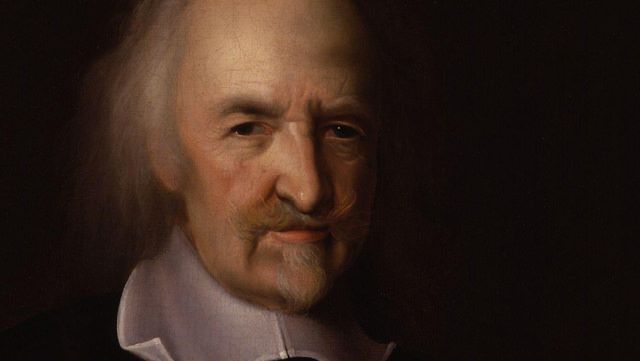
But his English contemporary, Thomas Hobbes, a philosopher of politics and science, thinks the exact opposite. For him, one cannot deduce objective empirical facts. First, because it is impossible to be completely impartial: the way of presenting the results of an experiment necessarily depends on a certain interpretation of nature. Moreover, the air pump is not a completely reliable tool: there are always leaks! So experience can only lead to uncertain knowledge, unlike abstract thought. Thus, Hobbes recommends searching for the “real causes” by building theories using the mind, on the model of mathematics. And you, to access knowledge, would you choose the conceptual path of Hobbes or the empirical path of Boyle?
>> Read also: “A word to researchers: Environmental transformation is not enough, we must evolve”

Sophie Laurent is a contributor to Vaughantoday.ca, covering a wide range of topics including local news, politics, business, technology, sports, entertainment, and lifestyle. She focuses on delivering clear, balanced reporting that helps readers stay informed about current events and issues that matter to their communities. Sophie is committed to presenting accurate information, practical insights, and relevant stories in a straightforward and reader-friendly manner, making complex topics accessible to a broad audience.