

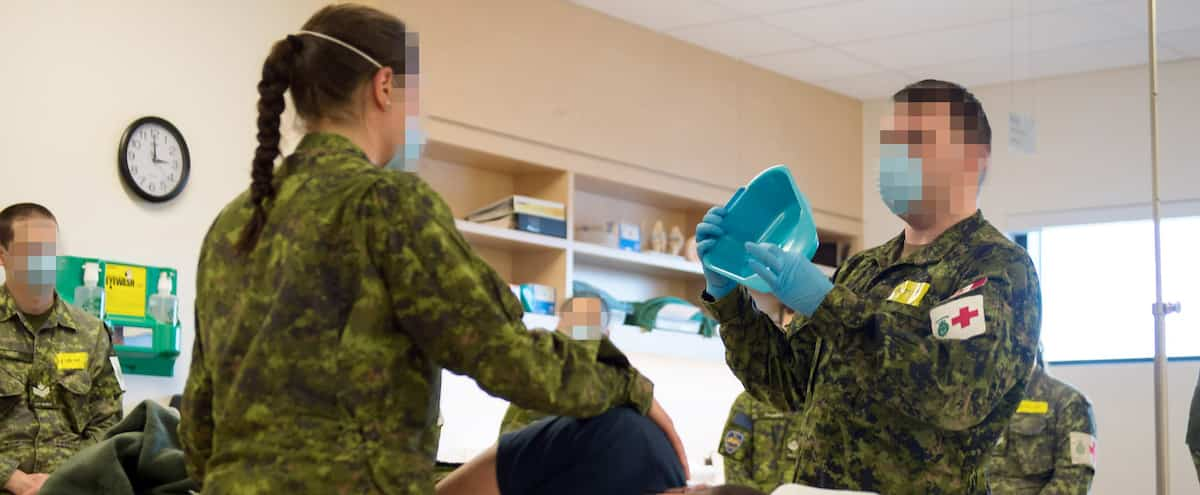
Two-thirds of the 10,000 reservists mobilized by the Canadian military at a cost of more than $200 million to tackle COVID-19 remained in the comfort of their homes, awaiting deployment orders.
According to information obtained by our FBI, only 3,500 of them have been used for operations associated with the epidemic, often of short duration, for example during interventions in long-term care institutions in Quebec and Ontario.
The armed forces disbursed at least $207 million to pay the salaries of 9,711 reservists who were demobilized from April to August 2020 on a full-time basis.
Like employees working from home in other sectors of the economy, Canadian Forces personnel assigned as reservists have not been actively deployed. [se sont préparés à l’être] ’,” the armed forces told us in an email.
“Many mechanisms have been put in place to ensure that members do the job [de préparation] Expect them,” we added.
In doing so, they participated in mandatory training sessions and were subject to daily monitoring calls.
They are not the only ones
Since the beginning of the epidemic, the General Staff of the Armed Forces has decided to significantly reduce activities on military bases and return most of the soldiers to their homes.
“Your workplace is then at home, secure and ready to intervene,” former Chief of Staff Jonathan Vance wrote on April 3, 2020, in a memo to all troops.
In the same note, Vance announced a full-time hiring for Reserves through the end of August.
suspicion
Retired Lt. Col. Remy Landry called for a response, and advocated the idea of resorting to reservists.
In his view, the decision was “wise and justified” due to the uncertainty and exceptional circumstances created by the pandemic.
He notes that mobilizing reservists was also necessary to deal with potential floods or wildfires, situations in which the armed forces have been called upon in recent years.
He believes that keeping reservists at home is the right thing to do.
Grouping them together at the bases would have increased the risk of COVID-19 among the troops.
Questions arise
The Canadian Taxpayers Association is not prepared to say that reserve mobilization was not necessary, but it questions whether it should not be boycotted.
“This decision represents a significant expense and raises many questions,” says the organization’s spokesperson, Franco Terrazano.

photo courtesy
Franco Terrazano
official speaker
Taxpayers have the right to ask why so many reservists were mobilized and why we continued to mobilize them when we learned that not all of them were necessary. “
Mr. Terrazano believes that the Canadian Forces High Command should answer these questions.
He continues: “We should have stopped spending money more quickly (before the end of the five months).”
Unlimited spend
In his opinion, the mobilization was partly justified by the uncertainty caused by the epidemic, but it should have been called into question.
He says, “The culture of unlimited spending in the federal government is unfortunately very pervasive, and taxpayers have the right to hold them accountable.”
◆ What is a reservist?
- Reservists are soldiers whose services are used when necessary.
- They are fully trained soldiers – and they have other occupations in their daily lives. In Canada, the reserve personnel number approximately 40,000, spread across the Navy, Army, and Air Force.
- In the north, there are 5,000 reserve citizens in the Ranger Corps.
◆ Number of reservists mobilized by region
- Atlantic: 1444
- Quebec: 2021
- Ontario: 2603
- Manitoba, Saskatchewan, and Alberta: 2300
- British Columbia: 943
- north: 400
Source: Canadian Armed Forces

“Subtly charming problem solver. Extreme tv enthusiast. Web scholar. Evil beer expert. Music nerd. Food junkie.”