

What would happen if a magnetic storm suddenly cut off the Internet? A scientist from the University of California, Irvine, P.Re Sangeetha Abdu Jyothi believes that a violent solar storm could take large sections of the web offline for weeks or even months.
His research was submitted a few weeks ago During the SIGCOMM 2021 conference that brings together professionals in computer networking and data transmission.
This information about a potential “internet disaster” was rarely reported or commented on in Quebec.
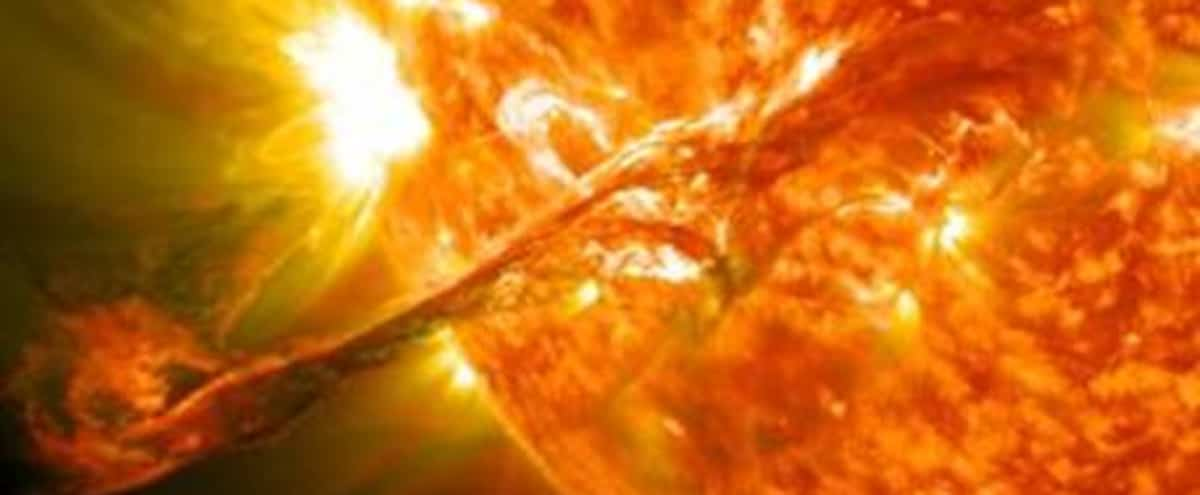
Solar flares are a sudden and massive release of energy on the surface of the Sun. It causes winds charged with electromagnetic particles to be expelled into space. Sometimes – every century or so – a severe solar storm succeeds in penetrating the Earth’s magnetic field that acts as a shield that prevents explosions of particles from causing harmful disruptions to our planet and our lives.
Already, solar storms in 1859 and 1921 disrupted nascent electrical infrastructure such as telegraph wires. During the massive “Carrington event” of 1859 – the most powerful solar storm on record – compass needles began to swing intermittently and the aurora borealis were visible all the way to the equator. Discharging the sparks set the telegraph paper on fire.
Here in Quebec, the extraordinary intensity of a solar storm on March 13, 1989 shut down the Hydro-Quebec grid, causing a nine-hour power outage. These three events occurred before the development of the modern Internet infrastructure.
After three decades of reduced solar storm activity, P . appearedRe Abdo Jyoti and other researchers point out that the likelihood of another severe solar storm is increasing dramatically.
The economic impact of a one-day Internet disruption in the United States is estimated to be more than $7 billion.
Undersea cables that support the global Internet are particularly vulnerable to coronal mass ejection. A solar storm can cause a massive loss of connectivity, even leaving local and regional infrastructure intact. Equipped with repeaters at intervals of 50 to 150 km to amplify the optical signal, submarine cables are threatened by solar storms, rendering them inoperable by burning these repeaters.
Undersea cables connecting North America and Europe Particularly sensitive to particle storms Because of its high length and latitude, the solar wind is more intense.
Such geomagnetic disturbances of solar origin are rare and therefore not much studied; Other threats such as extreme weather events or cyber attacks are prioritized. The pandemic has shown us how unprepared the world is to deal with planetary disasters.
We have very limited understanding of the extent of damage that a large-scale solar event could cause. Caused the global Internet to fail. saidRe Abdo Jyoti à wired.
In 2012, a solar storm missed our planet only nine days. The ejection of solar particles towards the Earth did not occur. While writing in Space Weather in 2012, physicist Pete Riley sensed that there was 12% chance of a major solar storm on Earth for the next ten years.
According to a 2008 National Research Council report, such an event can cause billions of dollars in losses and take up to a decade to recover.
When the next great solar storm hits, Earth’s inhabitants will have about 13 hours To prepare for his arrival, according to Sangeetha Abdu Jyoti.

Sophie Laurent is a contributor to Vaughantoday.ca, covering a wide range of topics including local news, politics, business, technology, sports, entertainment, and lifestyle. She focuses on delivering clear, balanced reporting that helps readers stay informed about current events and issues that matter to their communities. Sophie is committed to presenting accurate information, practical insights, and relevant stories in a straightforward and reader-friendly manner, making complex topics accessible to a broad audience.