

Forest ecosystems absorb about a quarter of humanity’s annual carbon emissions. Thus they reduce the amount of greenhouse gases (GHGs) that end up in the atmosphere and contribute to global warming. However, trees’ carbon appetites can wane, even as this food becomes more abundant in the atmosphere, according to the Study published today in review Science.
Through the process of photosynthesis, trees absorb carbon from the air. If the concentration of carbon dioxide in the atmosphere2 increases, this “carbon fertilization” stimulates their growth.
Until recently, the scientific community believed that forests would sequester more and more carbon as much carbon dioxide2 In the air increases. But over the past ten years, regional studies have put this hypothesis into question.
To see more clearly, researchers at the University of Utah conducted a large-scale analysis. These scientists compared the growth of trees in dozens of forests around the world to the flow of carbon over their crowns. They found that the two phenomena do not go hand in hand.
“Instead of increased tree growth, we may have a decrease. This phenomenon has not been quantified, but it could have significant consequences for the ability of forests to store carbon in the future,” says Antoine Capon, the postdoctoral researcher who signed on to the study, in an interview in He should.
To assess tree growth, the researchers visited 31 forests on several continents to collect wood samples. By measuring the thickness of the tree ring, they calculated the carbon sequestration of representative samples from the plot. They also relied on existing data.
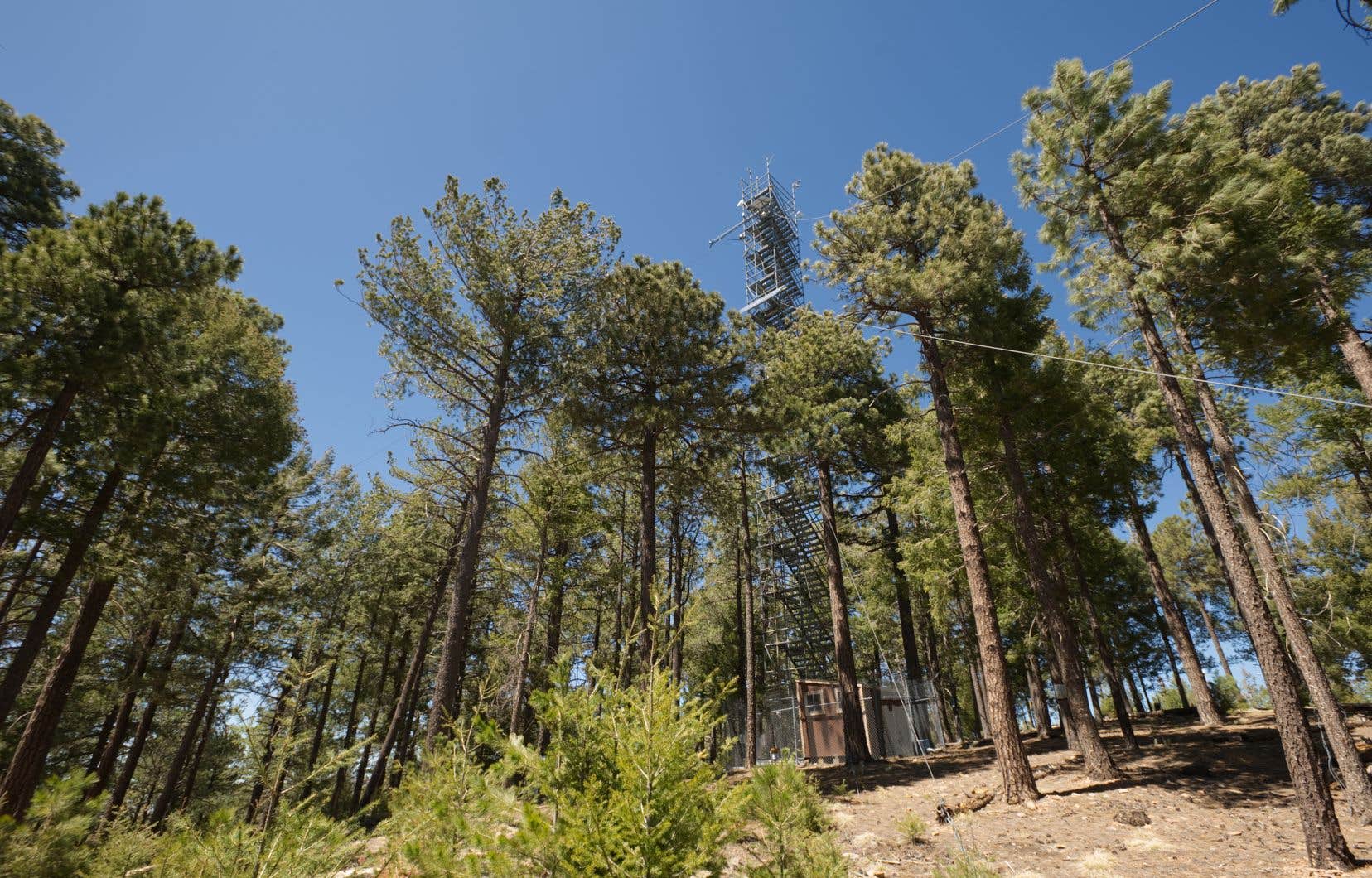
At the same time, “flow towers” in service for twenty years made it possible to measure the gaseous carbon exchange between 78 forest ecosystems and the atmosphere above their canopies. One such tower, topped with electronic sensors, is located in northern Quebec, 30 km from Chibogamau.
Widely
“With all of this data, we were able to show that the correlation between photosynthesis and tree growth is very low on average,” explains Mr. Capone.
Other factors limit tree growth and may outweigh carbon fertilization. For example, in cooler forests – where temperature restricts tree cell division – tree growth is less closely related to photosynthesis. In forests topped by a dense canopy of foliage, the same phenomenon is observed.
“It’s a fairly compelling study,” said Evelyn Thifault, a professor of forestry at Université Laval who was not involved in the project. Some small studies previously indicated that forest growth is not strictly limited by carbon availability, but the new publication demonstrates this for the first time on a large scale, she points out.
If the carbon absorbed by photosynthesis is not sequestered in the wood of the tree, it does not disappear. They are found in leaves or soil. Carbon is also released into the atmosphere through the process of respiration. Anyway, it probably won’t be stored long term.
The study by Mr. Capone and colleagues will have important consequences for forest planning, Ms. believes.me Thivolt. “The carbon in the ground, wouldn’t have the same benefit, from a forest management perspective, as the carbon in trees,” she says.
According to this professor, the new study will be “robust” enough to convince forest modelers to adjust their parameters in order to avoid overestimating wood production in response to increased carbon dioxide concentration.2 Up in the air.
at Companion analysis at ScienceJulia Green and Trevor Keenan, researchers from the University of California, Berkeley, note that their colleagues’ findings in Utah have implications for the effectiveness of tree planting in offsetting greenhouse gas emissions. “If less carbon than expected is stored in biomass in the coming years, the benefit of this ecosystem service is greatly diminished,” they wrote.
Beyond the concentration of carbon dioxide2 In the atmosphere, climate change itself will affect the development of forests. Higher temperatures will lead to the development of some boreal forests, but water shortages resulting from increased evaporation will limit tree growth in many ecosystems.
Let’s see in the video

Sophie Laurent is a contributor to Vaughantoday.ca, covering a wide range of topics including local news, politics, business, technology, sports, entertainment, and lifestyle. She focuses on delivering clear, balanced reporting that helps readers stay informed about current events and issues that matter to their communities. Sophie is committed to presenting accurate information, practical insights, and relevant stories in a straightforward and reader-friendly manner, making complex topics accessible to a broad audience.