Close Menu

    Subscribe to Updates

    Get the latest creative news from FooBar about art, design and business.

    What's Hot

    Making the Most of Retirement in Vaughan: Practical Financial Strategies for Retirees and Pre-Retirees

    May 18, 2026

    Budget-friendly trips in Canada: How to plan a day out at Ontario casinos without overspending

    April 13, 2026

    Hamilton Expands Cycling Network with New Federal Investment

    March 28, 2026
    Facebook X (Twitter) Instagram
    Vaughan TodayVaughan Today
    • Home
    • Top News
    • World
    • Banking
    • Explore Canada
    • How to
    • Solutions
    • Contact Us
    • Editorial Policy
    Vaughan TodayVaughan Today
    Home»Top News»British Columbia has the most unaffordable homes in Canada, followed by Ontario
    Top News

    British Columbia has the most unaffordable homes in Canada, followed by Ontario

    Natalie SinclairBy Natalie SinclairSeptember 22, 2022No Comments3 Mins Read
    Facebook Twitter Pinterest LinkedIn Tumblr Email
    British Columbia has the most unaffordable homes in Canada, followed by Ontario
    Share
    Facebook Twitter LinkedIn Pinterest Email Copy Link

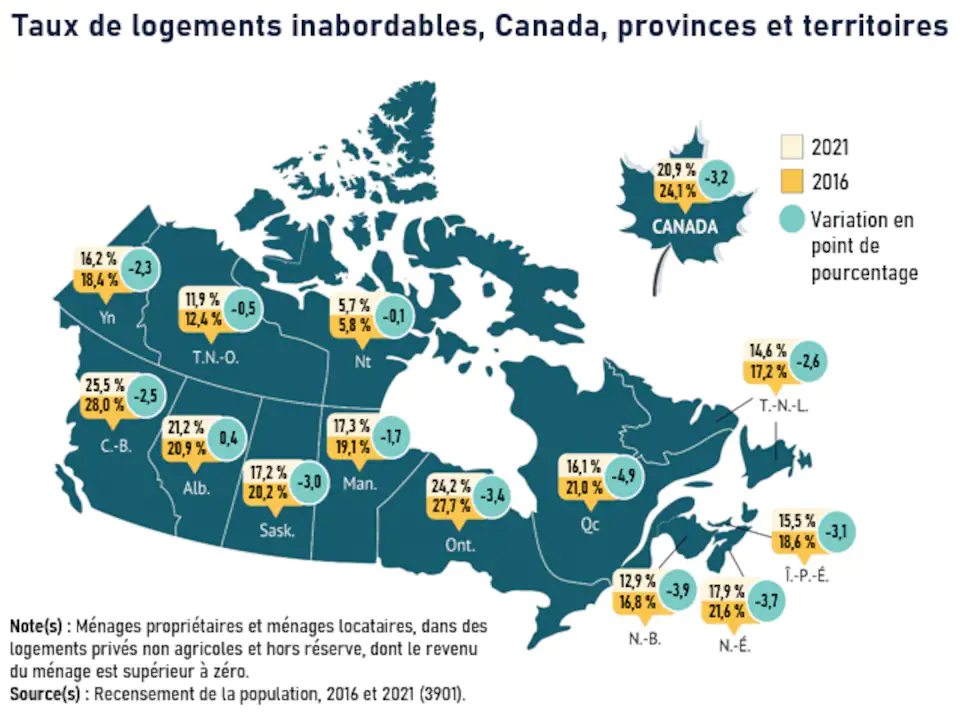
    The unaffordable housing rate is 25.5% in British Columbia and 24.2% in Ontario. The Canadian rate is 20.9%.

    ” This is largely due to higher rates of unaffordable housing in the large, high-rent urban centers of Toronto (30.5%) and Vancouver (29.8%), both CMAs with the highest rates of unaffordable housing. »

    – Quote from Canada Statistics

    tenants Downtown Toronto (45.2%), Vancouver (44.8%), and Montreal (44.2%) saw slightly lower rates of unaffordability in 2021. Meanwhile, homeowners were Downtown Toronto (36.2%), Vancouver (33.4%) and Montreal (30.9%) had the highest rates of unaffordable housing nationwideexplains Statistics Canada.

    Map of Canada showing households with incomes greater than zero.

    Owning households and renting households, in private non-agricultural and out of reserve housing, in which the household income is greater than zero.

    Photo: Statistics Canada

    On the other hand, the rate of unaffordable housing decreases among the low-income tenants, mainly due to temporary income support.

    The different impact of temporary COVID-19 benefits on occupant incomes—whether rented or owned—was a major factor in the differences in the magnitude of improvements in housing affordability for each group, from 2016 to 2021.explains Statistics Canada.

    Families that spend 30% or more of their income on housing costs are considered unaffordable.

    source : Statistics Canada

    With the last temporary benefits related to COVID-19 being phased out in early 2022 and inflation at its highest rate in 40 years, especially on the necessities of life, additional pressures could be placed on families already struggling to make ends meet.adds Statistics Canada.

    On the other hand, Canada’s home ownership rate is declining, reaching 66.5%, after peaking at 69% in 2011.
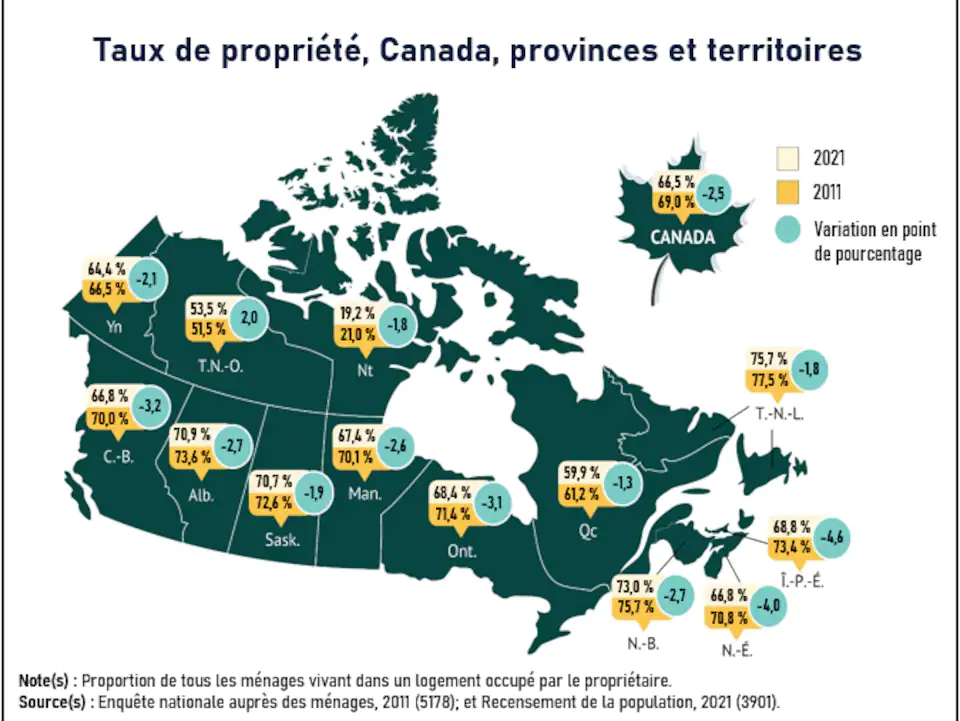
    Map of Canada showing the percentage of all households living in owned housing.

    Percentage of all households living in owned housing.

    Photo: Statistics Canada

    More young Canadians are concerned about their ability to afford housing

    As part of the survey titled Canadian society pictureconducted this spring, about half of Canadians said they had modified their spending habits and lifestyle due to inflation. They searched for discounts and promotions (50%) and purchased cheaper alternatives, brands or items (47%).

    Meanwhile, young Canadians aged 15-29 (53%) and 30-39 (39%) were the most likely to be seriously concerned about their affordability.adds Statistics Canada.

    Impact of higher interest rates on millennials

    According to the 2021 Census, millennial homeowners with a mortgage paid an average of $2,124 a month in May 2021. The Bank of Canada raised interest rates by one percentage point in July 2022. So renewing or taking out a mortgage for millennials would cost On average, 12% more, or $2,378 per month. This amount could rise to $2,648 if interest rates increase by 2 percentage points, and to $2,934 (+38%) if interest rates increase by 3 percentage points.

    source : Statistics Canada

    On the other hand, as the country’s indigenous population continues to grow, according to the latest data from Census Canada for 2021, also released on Wednesday, First Nations, Inuit and Métis residents are increasingly likely to experience housing problems.

    Natalie Sinclair

    Natalie Sinclair is a contributor at Vaughantoday.ca, covering a wide range of topics including local news, politics, business, technology, sports, entertainment, and lifestyle. She focuses on delivering clear, accurate reporting and useful information that helps readers stay informed about current events and issues that matter to their communities. Her work highlights timely developments, relevant stories, and practical insights in a professional and reader-friendly manner.

    Share. Facebook Twitter Pinterest LinkedIn Tumblr Email

    Related Posts

    Hamilton Expands Cycling Network with New Federal Investment

    March 28, 2026

    Climate Change: One of the Greatest Challenges of Our Time

    January 10, 2026

    Coldwell Banker The Real Estate Centre Expands Commercial Footprint With Strategic Acquisition

    December 22, 2025
    Top Posts

    Zodiac – Detailed Review of an Online Casino

    October 7, 2021340 Views

    Digital Transformation and Economic Resilience: Navigating the Digital Landscape in Canada’s Economy

    February 14, 2024321 Views

    Gambling as a Way to Earn Money

    March 31, 2022305 Views

    How to Pertain Real Estate Appraisal

    April 23, 2022290 Views
    Don't Miss
    Business

    Making the Most of Retirement in Vaughan: Practical Financial Strategies for Retirees and Pre-Retirees

    May 18, 202637 Views

    Retirement in Vaughan can be rewarding, but it also takes planning. Many local retirees want…

    Budget-friendly trips in Canada: How to plan a day out at Ontario casinos without overspending

    April 13, 2026

    Hamilton Expands Cycling Network with New Federal Investment

    March 28, 2026

    Canadians Remain Eager to Travel as Costs and Global Tensions Reshape Plans

    March 11, 2026
    About Us

    We cover culture, entertainment, travel, food, wellness, and real-life stories from across Vaughan and beyond.

    We’re currently accepting new media partnerships, brand collaborations, and editorial contributions.

    Email: [email protected]

    Contact: +1-416-555-0134

    Our Picks

    Making the Most of Retirement in Vaughan: Practical Financial Strategies for Retirees and Pre-Retirees

    May 18, 2026

    Budget-friendly trips in Canada: How to plan a day out at Ontario casinos without overspending

    April 13, 2026

    Hamilton Expands Cycling Network with New Federal Investment

    March 28, 2026
    Most Popular

    Hurricane Iota: The storm is expected to get stronger and hit Central America early next week

    November 15, 20200 Views

    Trump aims to undermine Biden’s legitimacy even as the legal challenges fade

    November 17, 20200 Views

    7 accused of stealing millions in Covid relief and spending on Lamborghini and Porsche

    November 18, 20200 Views
    • About Us
    • Contact Us
    • DMCA
    • Editorial Policy
    • Privacy Policy
    © 2026 VaughanToday.ca — Canadian Lifestyle News & Features. All Rights Reserved.

    Type above and press Enter to search. Press Esc to cancel.