

This article is part of a column Rumor detectorClick here for other texts.
Grow exponentially
Since the beginning of the epidemic, the mathematical concept of Exponential growth It has become a symbol of the worst-case scenario: a scenario in which the number of infected people increases most rapidly to the point where the epidemic is temporarily out of control. The epidemic in India The past few weeks have been an example of exponential growth.
There is no uniform ‘growth rate’, but the easiest way to explain exponential growth is to multiply the rapid total: 1,000 infected people, then 2,000 after a few days, then 4,000, then 8,000 … on a small scale, this is what happens when you do a bunch of Cases into multiple people infection, such as an outbreak Mother In Quebec.
Across many countries, this is often what happened during the past year, when multiple outbreaks simultaneously caused the case to rise vertically, creating different ‘waves’.
But exponential growth is not necessarily rapid. For example, in the forest, if one of the predator species that had only 4 individuals had 8 after a year and 16 the following year, then we can already talk about exponential growth. This increase may seem insignificant to an outside observer, but it has become a serious problem for animals that act as prey. In the case of a pandemic, over the past year, many waves were preceded by weeks in which the small number of cases or deaths led to the illusion of a small problem, while the growth curve, on the other hand, was actually showing an alarming path.
Decrease exponentially?
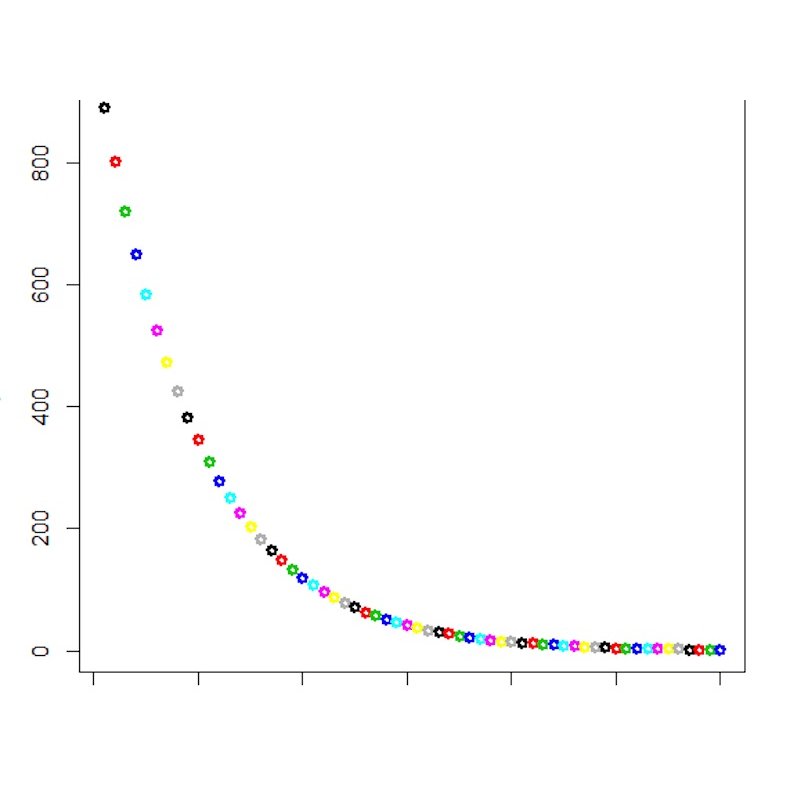
If we can achieve exponential growth, then the mathematics tells us that we can also have an exponential decline: from 8,000 cases, we go to 4000 and then to 2000 … He explained that this is what you can expect when you regain control of the epidemic Dr. Zoe McLaren in The New York Times. It is that That we noticed In New Zealand and Israel.
Except that if the decline is strong when the number of cases is high (from 8,000 to 4,000, for example), it is smaller when the numbers are low. As a result, “exponential decline” is synonymous with the end of an epidemic that could extend for a very long time. In other words, it can take a long time to reach zero, especially if intermittent outbreaks temporarily push the enclosure up.
This is the reason for the experts Warning That COVID-19 risk To be with us Still a long time. Especially that nowadays, The majority of states I just receivedVery limited number Vaccines are therefore more vulnerable.
There is no zero in sight
Consequently, the decisions that different governments will have to make this summer will be based on the inevitable premise: COVID-19 will not be completely eliminated – with the possible exception of the few countries that for the most famously targeted the ‘zero COVID’ policy. Like Australia. Every government has to decide what is the threshold within which normal life can be resumed. Israel, with about 60% of its population vaccinated, has it It almost reopened Fully its economy at the beginning of May.
Meanwhile, the math is relentless: it should come as no surprise that we keep hearing new cases every week in Quebec, France, the United States, and elsewhere. There will also be new outbreaks associated with various factors: poorly ventilated places, large agglomerations, more vulnerable or unvaccinated groups, etc.

Sophie Laurent is a contributor to Vaughantoday.ca, covering a wide range of topics including local news, politics, business, technology, sports, entertainment, and lifestyle. She focuses on delivering clear, balanced reporting that helps readers stay informed about current events and issues that matter to their communities. Sophie is committed to presenting accurate information, practical insights, and relevant stories in a straightforward and reader-friendly manner, making complex topics accessible to a broad audience.