


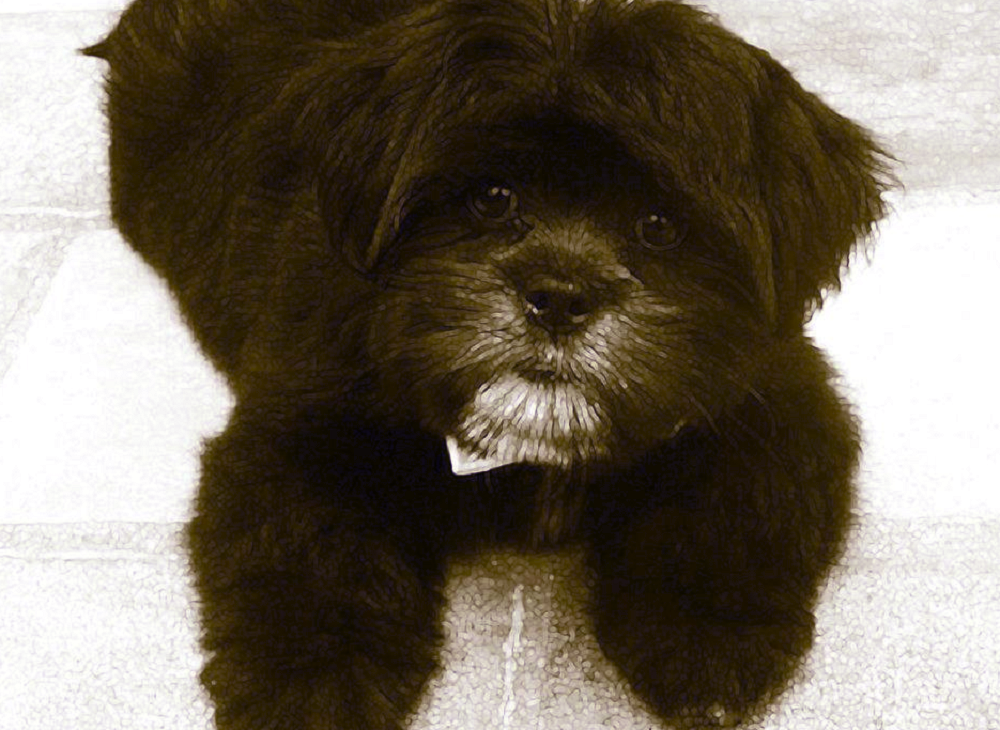
Few can resist the “beidaw” face that a dog makes when he wants affection, attention or a snack. A new study has revealed key anatomical features that may explain what makes dogs so attractive. The findings also suggest that humans have contributed to dogs’ ability to seduce with facial expressions through thousands of years of selective breeding.
Dr Ann Burroughs said: “Dogs are unique among other mammals in their mutualistic relationship with humans, which can be demonstrated by mutual gaze, something we don’t see between humans and other domesticated mammals such as horses or cats.” and Professor in the Department of Physical Therapy at the John J. Rangos College of Health Sciences at Duquesne University in Pittsburgh, Pennsylvania. “Our preliminary results provide insight into the role that facial expressions play in human-dog interactions and communication,” explained, lead author of the new study.
Burroughs presented his research findings on Tuesday (5), the last day of the annual meeting of the American Anatomy Society, which has been held in Philadelphia since last Saturday (2).
Dog domestication selects facial muscles to respond faster
Dogs and wolves are closely related. Although the exact timing is unclear, scientists believe the two species genetically diverged about 33,000 years ago, when humans began selectively breeding wolves, the first species to be domesticated.
The new study focuses on the anatomy of the small muscles used to form facial expressions, and mimic muscles. In humans, these tissues are dominated by myosin fibers that contract rapidly but also tire rapidly. This explains why we are able to form facial expressions so quickly, but not retain them for long. Muscle cells with slower fibers are more effective in long, controlled movements and do not tire as quickly.
For the study, the researchers compared myosin fibers in facial muscle samples from domesticated wolves and dogs. The results showed that, like humans, dogs and wolves have facial muscles that are dominated by fast-twitch fibers, but wolves have a higher proportion of slow-twitch fibers than dogs. “These differences suggest that having faster muscle fibers contributes to a dog’s ability to communicate effectively with people,” Burroughs said. “Throughout the entire domestication process, humans may have selectively bred dogs based on facial expressions similar to themselves, and over time the dogs’ muscles may have evolved to become ‘faster,’ which benefits communication between dogs and humans.”
Under the new approach, the presence of fast-twitch fibers allows for greater facial movement and faster muscle movement, allowing for small movements such as a raised brow and the short, powerful muscle contractions involved in barking. On the other hand, slow spur fibers are important for prolonged muscle movement, such as the use of wolves when they howl.
By reviewing previous research, the team found that dogs have an additional mimic muscle absent in wolves that contributes to “puppy eye” expression. The scientists say more research is needed to confirm their findings, with ways to distinguish between other types of myosin fibers, which could shed new light on the anatomical differences between dogs and wolves.
Have you seen our new videos on Youtube? Subscribe to our channel!

Sophie Laurent is a contributor to Vaughantoday.ca, covering a wide range of topics including local news, politics, business, technology, sports, entertainment, and lifestyle. She focuses on delivering clear, balanced reporting that helps readers stay informed about current events and issues that matter to their communities. Sophie is committed to presenting accurate information, practical insights, and relevant stories in a straightforward and reader-friendly manner, making complex topics accessible to a broad audience.