

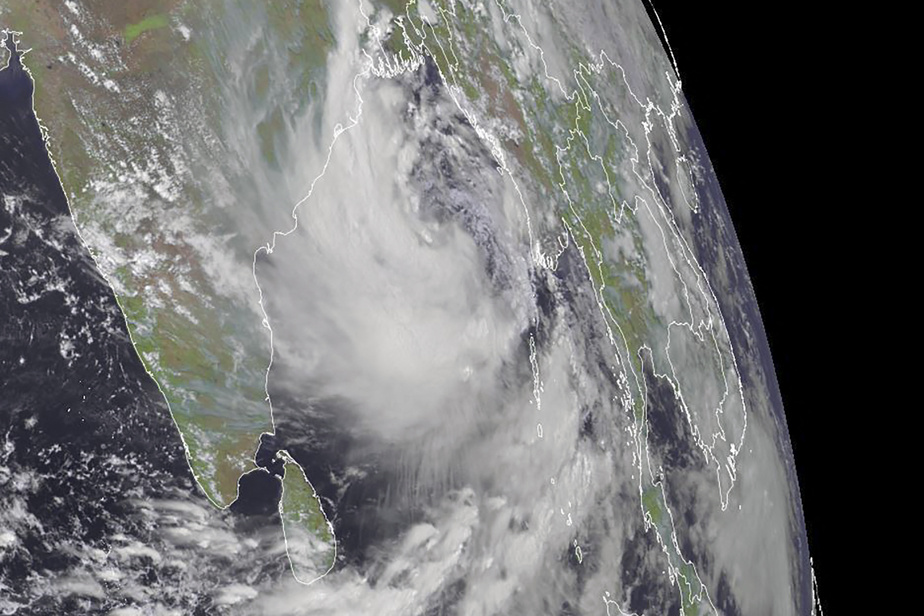


The risks are doubled
The World Meteorological Organization (WMO) says in a new climate bulletin published on Thursday that the probability of a “mean annual global temperature” temporarily increasing by 1.5 ° C by 2025 is now 40%, and that risk increases over time. This possibility has doubled compared to last year’s forecast, a change due to better temperature data “rather than a sudden change in climate indicators,” according to the United Nations specialized agency.
Record the expected temperature
The risk of shattering a new heat register is much greater. The World Meteorological Organization estimates “a 90% probability that at least one year between 2021 and 2025 will be the hottest on record, thus dislocating 2016”. The corporation states that 2020 was among the three hottest years on record, with global mercury rising 1.2 ° C compared to the pre-industrial era. The World Meteorological Organization (WMO) expects the average of the next five years to be “at least 1 ° C” higher than in the pre-industrial era.
More hurricanes
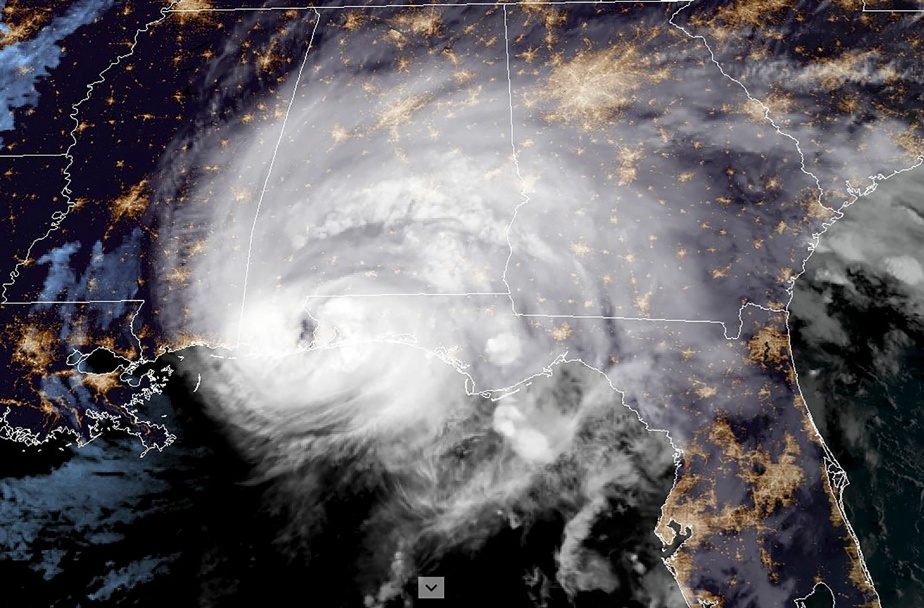
French Press Agency
Tornado Sally Devastated the southern United States in September 2020.
Rising temperatures will cause more rain in the Sahel region and in higher altitudes, according to forecasts by the World Meteorological Organization. It will also increase the number of tropical cyclones in the Atlantic Ocean. The Canadian Hurricane Center announced last week that it expects a more active than average hurricane season in 2021. In general, an increase in extreme weather events is expected, says the World Meteorological Organization, which will have “greater implications for food security, health and the environment.” And sustainable development. ”
Faster and faster
The acceleration of global warming, notes the World Meteorological Organization, which predicts that all regions of the world should experience temperatures above “modern values” for the period 1981-2010 over the next five years, with the exception of some regions of the Southern Ocean and the North Atlantic. In the northern hemisphere, the temperature increase in large areas of the Earth could reach 0.8 ° C compared to the recent past. The Arctic region is experiencing a rise in temperatures at twice the global average, according to the World Meteorological Organization.
The “bottom line” of the Paris Agreement
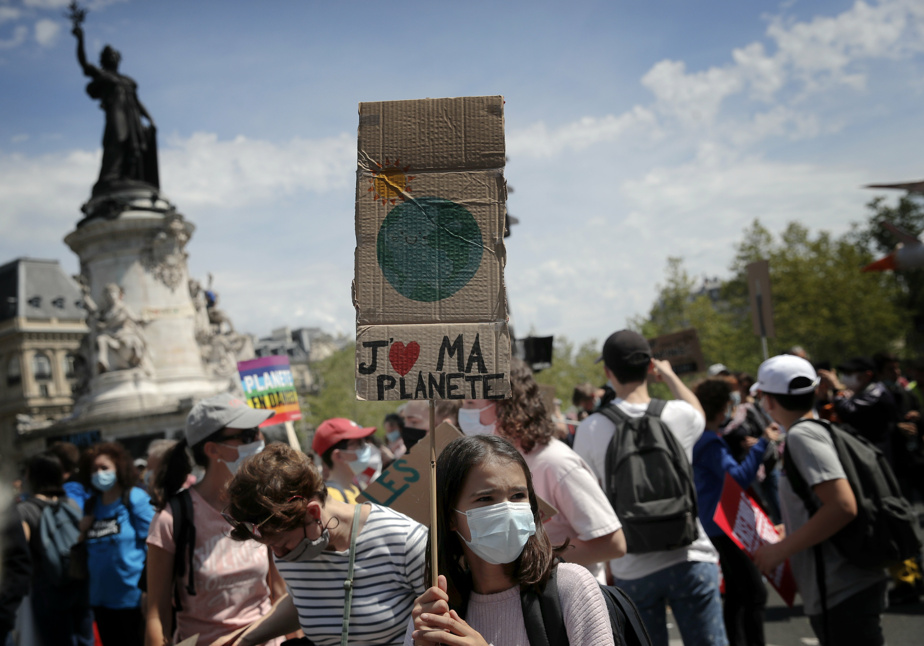
Photo by Christophe Inna, Archival Press
Climate demonstration on May 9 in Paris
“This study shows, with great scientific reliability, that we are measurably and relentlessly close to the minimum level of the Paris Agreement,” said WMO Secretary-General Petteri Taalas. Signed in 2015, this agreement aims to contain global temperature rise to less than 2 degrees Celsius and as close as possible to 1.5 degrees Celsius by the end of the century. The Foundation notes that the commitment of the international community is “far less than is currently necessary to achieve this goal.”
Adapting to a changing climate
Thales says the WMO findings highlight the need for adaptation to climate change. In particular, it stresses the importance of advanced early warning services, which only half of the countries possess, in limiting the negative impacts of extreme events. He said, “Not only do we find early warning services limited, but we also find a severe shortage of meteorological observations, especially in Africa and island states.”
The “minor” impact of the epidemic
The World Meteorological Organization says the pandemic and its containment measures it has spawned around the world will not have a major impact on the evolution of global temperature in the coming years. This is because a large number of greenhouse gases (GHGs) have a very long life. The World Meteorological Organization (WMO) explains that volatility in emissions over the past year will have only “minor” implications for greenhouse gas concentrations in the atmosphere.
How is global temperature rise calculated?
The World Meteorological Organization explains the measurement of the temperature of the planet “near the surface”, whether on land or in the oceans. Thus the annual mean temperature recorded gives “mean global temperature”. In order to measure global warming, this temperature is compared to the pre-industrial temperature, that is, the average annual temperature for the period from 1850 to 1900.

Lucas Tremblay is a contributor at Vaughantoday.ca, covering a wide range of topics including local news, politics, business, technology, sports, entertainment, and lifestyle. He focuses on delivering clear, accurate reporting and useful information that helps readers stay informed about current events and issues affecting their communities. Lucas is committed to presenting relevant stories in a straightforward and accessible way, providing balanced coverage that keeps readers connected to the latest developments.