

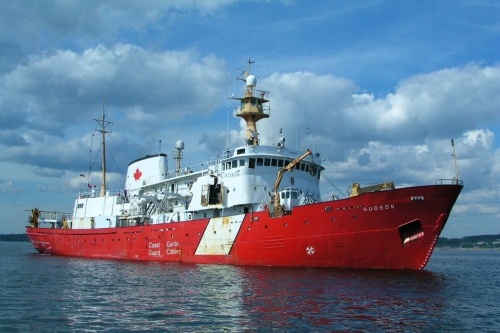
(Ottawa) The federal government is being forced to retire one of the Canadian Coast Guard’s major science ships, crippling the country’s ocean research capabilities for at least a few years.
Posted at 4:56 pm.

The Canadian Coast Guard announced Wednesday that the weather has finally caught up NGCC Hudson, which is 59 years old, and the oceanographic research vessel has been retired, although the replacement will not be ready until at least 2025.
The difficult decision came after one of the ship’s engines failed last November, and officials decided it was too costly to repair it and retrofit other outdated parts of the ship to meet new regulations.
Many cost overruns
The collapse was the latest in a string of problems for the oldest serving Coast Guard vessel, which has undergone millions of dollars in repairs and modernizations in recent years in a desperate attempt to keep it afloat.
The investments were necessary after several delays in the delivery of a replacement marine oceanography vessel from Vancouver’s Seaspan Shipyards, which was originally scheduled to complete construction of the new vessel in 2017.
In addition to the delays, the new ship has been subjected to numerous cost overruns. The Canadian Press reported this summer that the original $108 million budget had ballooned to nearly $1 billion.
weather changes
The Canadian Coast Guard is now seeking alternatives to conduct what it previously described as “vital” research around the Canadian oceans, which has become more important due to concerns about climate change.
“The Canadian Coast Guard is working closely with Fisheries and Oceans Canada to assess short- and long-term impacts on programming and develop a plan to mitigate those impacts,” the agency said in its writing.
“Discussions focus on the parts of the science program that could be complemented by other Canadian Coast Guard vessels, by charter vessels or by using other technologies,” she adds.
Losing the Hudson before a replacement is ready will leave a void, says Timothy Choi, a University of Calgary shipbuilding expert, although it’s too soon to know how widespread the damage will be.
“Our marine research capacity outside the Arctic will certainly be disrupted, although it depends on what alternative solutions they can find in the meantime,” he analyzed.
Not a unique case
Hudson is the latest federal ship to be retired before a replacement is ready due to delays in much of the federal government’s shipbuilding strategy.
The Royal Canadian Navy has been operating without any destroyers since 2017, with the first replacement not expected until at least 2032. These new ships will also replace the Navy’s 12 Halifax-class frigates.
The Navy has also had to charter a civilian vessel that has been converted in recent years as a support vessel since withdrawing its own ships in 2014. Currently, Seaspan is working on two permanent replacements, and they have faced delays of their own.
Seaspan recently promised to deliver its first new support vessel in 2023 and a second in 2025 after completing the Hudson replacement. However, this already fragile timeline now appears uncertain.
“Seaspan does a delicate dance,” said Jeff Collins, a military procurement expert at the University of Prince Edward Island.
“Any slippage on their part leads to further delays in replacement and risks increasing costs, particularly in this time of inflation… [stratégie fédérale de construction navale], especially for Sisban.

Evan McKenzie is a contributor at Vaughantoday.ca, covering a wide range of topics including local news, politics, business, technology, sports, entertainment, and lifestyle. He focuses on clear, balanced reporting that helps readers stay informed about current events and issues that matter to their communities. His work aims to provide useful information, timely updates, and relevant stories presented in an accessible and reader-friendly way.