

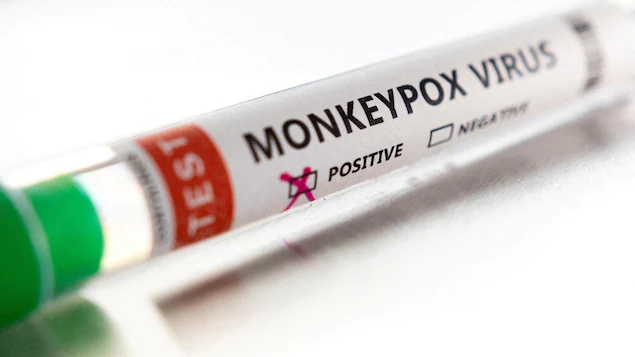
According to the World Health Organization (WHO), cases have tripled in two weeks in Europe.
On Thursday, Public Health Canada (PHAC) identified 278 cases, including 67 in Ontario and 202 in Quebec, the hardest-hit province.
It is a contagious infection. It is not COVID-19; It is not as transmissible as COVID-19
says Dr. Isaac Bogosh, an infectious disease specialist at Toronto General Hospital.
Dr. Sharon Walmsley of the Toronto General Hospital Research Institute agrees that cases are not growing as dramatically as COVID, but the virus is spreading similarly quickly.
” We are concerned and want to make sure that we adopt control measures to try to prevent this from developing into a large-scale epidemic or pandemic. »
Make a game plan
According to the researchers, public health strategy and measures are necessary to avoid a rapid deterioration of the situation.
This should include rapid diagnosis and contact tracing, so that infected people are isolated as quickly as possible, to reduce transmission. Canada needs more antivirals and vaccine doses, says Dr. Walmsley.
Dr. Bogosh talks about the importance of vaccinating those most at risk, but also those who will have been exposed, to protect them from the virus or at least to reduce their symptoms.
However, the tools available to clinicians may have limits. The vaccine given for smallpox, which is a different disease, was developed.
Monkeypox is endemic to countries in Africa, but there have been no previous outbreaks in areas where this disease is not endemic. It was a neglected virus
Sharon Walmsley notes. No research has been done and as a result we don’t have antivirals and vaccines that we can say for sure will be effective.
She believes that research efforts should be redoubled.
Communication and support
Currently, MSM accounts for the vast majority of cases in Canada. Isaac Bogoch believes in respectful communication and the involvement of this community in public health efforts.
” This is how you build trust and develop a smart strategy to combat an outbreak. »
Dr. Walmsley warns that we must remain vigilant, as monkeypox can be found in other groups, such as women and children: If that happens, and the infection spreads to the general public, it will be much more difficult to contain.
Infected individuals should self-isolate for at least two weeks, until the skin lesions have healed.
If you really want people to come in for testing, to make sure they get the care they need, to be able to trace contacts and notify those who have been exposed, you’re going to have to support them while they’re there. On the go
as Dr. Bogoch believes.
Everyone has to eat or pay the rent or the mortgage: we have to think about subsidies
Otherwise, he fears that some will hesitate to diagnose.
With information from Andrian Williams

Natalie Sinclair is a contributor at Vaughantoday.ca, covering a wide range of topics including local news, politics, business, technology, sports, entertainment, and lifestyle. She focuses on delivering clear, accurate reporting and useful information that helps readers stay informed about current events and issues that matter to their communities. Her work highlights timely developments, relevant stories, and practical insights in a professional and reader-friendly manner.