


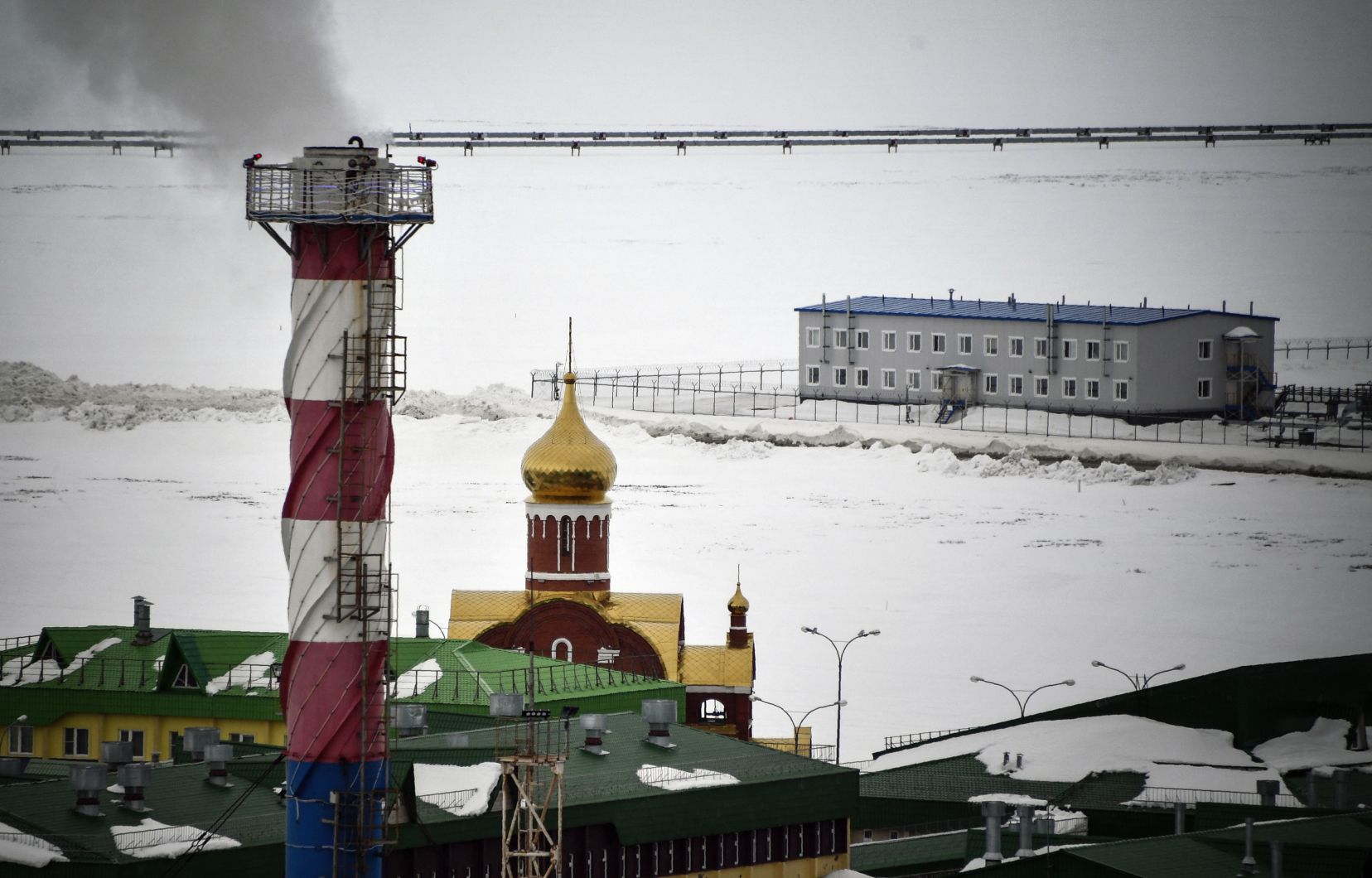
The Arctic and its Geopolitical Tensions. On the eve of the opening of the first meeting in two years of the Arctic Council to be held on Wednesday in Reykjavik, Iceland, Canada this week reiterated its determination to defend the “need for sustainable development” and “environmental protection” in this region desirable for its natural resources and its new strategic position made possible. Because of global warming.
A position that risks confronting Russia’s priority ambitions in oil exploration and mining, which is seeking by all means to expand its sphere of influence over this northern region.
“For Russia, the environmental issue should not be a reason to impede the economic development of this region,” sums it up on the other end of the Skype account by Frederick Lasserre, a geographer at Laval University and a specialist in polar geopolitics. This country has moved its economic development center to the Arctic to ensure its growth and is now acting accordingly. “
Moscow is on the offensive
A few weeks before this meeting between the foreign ministers of the countries surrounding the Arctic (Canada, the United States, Russia, Iceland, Norway, Sweden, Denmark and Finland), Russia also set the tone by announcing its 705,000 km stretch.2 The vast amount of land it is already claiming before the United Nations Commission on the Limits of the Continental Shelf. By doing so, Vladimir Putin is seeking to approach the borders of the exclusive economic zone of Canada and Denmark, but also to consolidate his hold on the Lomonosov mountain range, the underwater Arctic mountain range at the heart of, for years, the dispute over rights to exploit the seabed between Russia, the United States, Canada and Denmark.
On Monday, the Russian Foreign Minister declared that the Arctic is a region of Russian influence, and defended its right to defend its coasts, warning the West of its ambitions in the region. “We hear criticism that Russia is expanding its military activity in the Arctic, but it has been clear to everyone for a long time that this is our land, our lands. We are responsible for the safety of our coast and everything we do there is completely legal and legitimate,” Sergey Lavrov said at a press conference.
join dutyHe confirmed that the Canadian Foreign Ministry had remained vague about its intentions during this two-day meeting in which Marc Garneau would personally participate. At most, Ottawa says it wants to reassert its “strong support for the council’s work on issues important to Northern Canadians,” as summarized by Jason Kong, the ministry’s spokesperson.
For his part, Frederic Lasserre said: “Canada will above all seek to resume cooperation within the council after the Trump years, when US diplomacy undermined multilateralism.”
Fragile area
The world’s eyes have been turning more and more attention to the Arctic for years because of the energy resources that will be there that are now easily accessible due to climate change. It is estimated that 13% of oil reserves will be discovered there and 30% of natural gas there.
But the area is also fragile, with around 21,000 known species of animals and plants, and one of the last remaining wild areas on the planet. Human activity and rising temperatures are now threatening this biodiversity.
In the Arctic, warming is at least twice as fast as anywhere on the planet, and as a result of declining sea ice, it threatens the ecosystem of symbolic species in the region, such as the polar bear and seals. Last year, summer sea ice reached the second smallest area on record since 2012.
Scientists are also concerned about the emergence of large wildfires in remote areas and the melting of permafrost, which leads to the release of large quantities of methane, a greenhouse gas much more powerful than carbon dioxide.2.
With Agence France-Presse
