

Close Menu
    Facebook X (Twitter) Instagram
    Trending
    • Hauser’s Marks 45 Years With Province-Wide Customer Celebration and Renewed Focus on Community Care
    • Young drivers face elevated collision risks after consuming edible cannabis, new CAA-funded study finds
    • Salvation Army Thrift Store Marks 40th Ontario Location with Peterborough Opening
    • Early Blast of Winter Prompts Safety Warnings from Ontario Road Authorities
    • HONOR Takes Home Two TIME Best Inventions 2025 Awards for Smartphone Breakthroughs
    • Toronto Set to Host Largest LEGO® Fan Event in Canadian History
    • Hank Azaria and Caitlin Morrison Champion Mental Health Through Music at Toronto’s Koerner Hall
    • Bricks in the Six to Build Canada’s Largest-Ever LEGO® Fan Event This November
    Facebook X (Twitter) Instagram YouTube
    Vaughan TodayVaughan Today
    • Home
    • Top News
    • World
    • Banking
    • Explore Canada
    • How to
    • Solutions
    • Contact Form
    Vaughan TodayVaughan Today
    Home»World»Half of the land of the indigenous people does not belong to them
    World

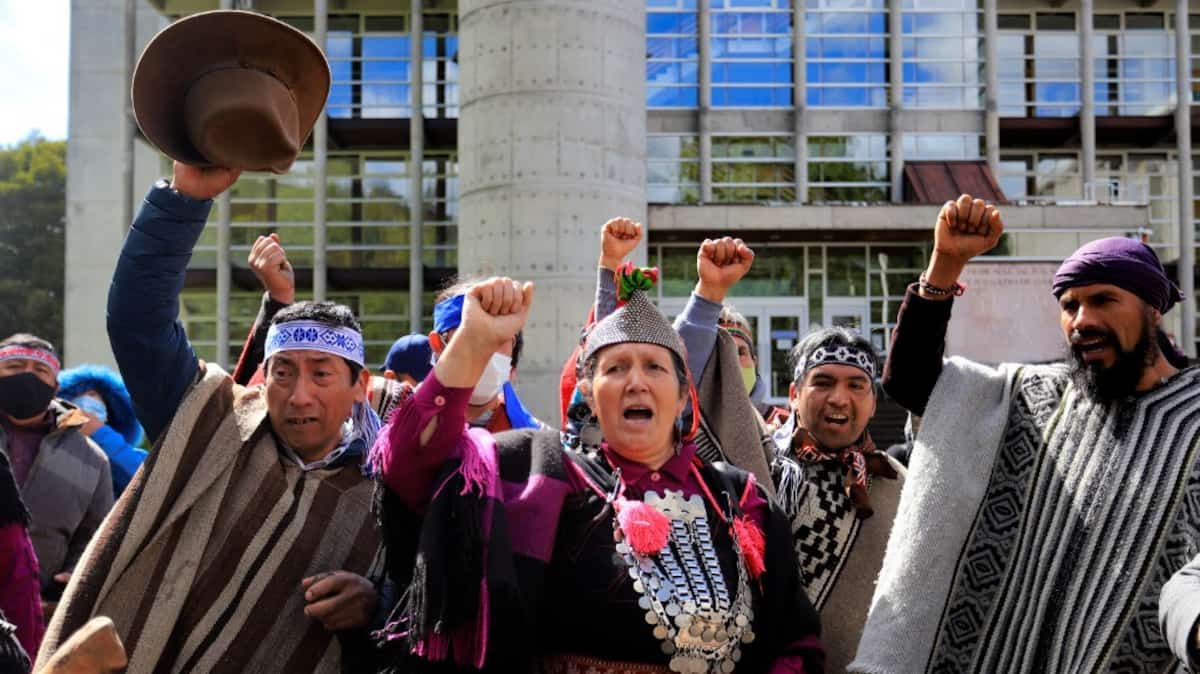
    Half of the land of the indigenous people does not belong to them

    Cole HansonBy Cole HansonNovember 7, 2021No Comments2 Mins Read
    Half of the land of the indigenous people does not belong to them
    Share
    Facebook Twitter LinkedIn Pinterest Email

    Indigenous peoples own only half the forests and the land they live on, a situation that further weakens the fate of these lands that are essential to global climate balance, according to a report published Saturday on the sidelines of the 26th session of the United Nations conference.

    • Read also: Compensation for Aboriginal children: Agreement by December, Ottawa promises

    • Read also: Abetepe: Locals distance themselves from the DPJ

    “Indigenous peoples and local communities occupy at least 958 million hectares of land” in 24 countries studied, in Latin America, but also in central Africa and subtropical Asia, notes this report by the Rights and Resources Initiative (RRI) and the Woodwell Research Center Climate and the Rainforest Foundation (RFUS).

    However, “they have legal rights to less than half of this area, or 447 million hectares,” “insecurity (which) makes communities and their lands more vulnerable to appropriation and external pressure,” add the authors of this study. .

    According to an FAO report released in the spring, about 80% of the world’s biodiversity is now found in indigenous areas, with, for example, a much lower rate of deforestation in Latin America and the Caribbean on land. Where governments have the collective rights recognized to them.

    Since the opening of the 26th United Nations Climate Conference, several declarations have been made to try to protect the planet’s natural resources. Among them, the creation of a $1.7 billion fund, provided by developed countries and private entities such as the Ford Foundation, to support land claims and protect Indigenous communities.

    Share. Facebook Twitter Pinterest LinkedIn WhatsApp Reddit Tumblr Email
    Cole Hanson

    "Extreme twitteraholic. Passionate travel nerd. Hardcore zombie trailblazer. Web fanatic. Evil bacon geek."

    Related Posts

    Early Blast of Winter Prompts Safety Warnings from Ontario Road Authorities

    November 20, 2025

    Toronto Set to Host Largest LEGO® Fan Event in Canadian History

    November 8, 2025

    Soundtrack: A Celebration of Memory, Music, and Meaning Comes to Penticton’s Tempest Theatre

    October 28, 2025
    Facebook X (Twitter) Instagram Pinterest
    © 2025 ThemeSphere. Designed by ThemeSphere.

    Type above and press Enter to search. Press Esc to cancel.