


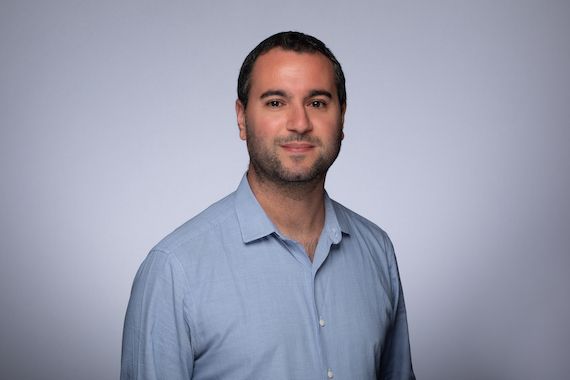

Maxim Cohen, Research Chair in Data Science at McGill University. (Photo: Courtesy – Owen Egan)
guest blog. To say we live in the age of data is an understatement. It is said that 90% of the data in the world was generated in just the last two years. In essence, exploiting all this data and turning it into useful information has become one of the most important issues for businesses today.
While it can report on the current situation, the data can also be used as “future-focused scope glasses,” said Maxim Cohen, head of Scale AI Research, in retail data science at McGill University.
“Data is your best indicator of knowledge and information about your own business,” he said. “So why not use it intelligently to guide future strategic decisions?”
Maxim Cohen was recently appointed as the first Chief Artificial Intelligence Officer (CAIO) at ELNA Medical, Canada’s largest integrated network of medical clinics.
In their book, Forecasting demand in retail: A practical guide to leveraging predictive data and analytics, Cohen et al. Discuss ways and methods of utilizing data in forecasting the demand for retailers. Accurate forecasting of demand and customer value for each product helps guide retailers in their operating decisions and ultimately increase profitability.
“You can use data to uncover hidden trends that allow you to improve business practices and operational decisions,” Maxim Cohen said.
But how do you predict customer behavior in new situations? According to Maxim Cohen, it is about seeking innovation through testing.
For example, using A/B testing—a scientific method of comparing two or more variables to determine which works best—can help organizations avoid significant risks while at the same time accelerating learning outcomes with new data.
Maxim Cohen urges managers to learn about conducting field trials and understand how they can guide future decisions that take them out of their comfort zone, and open up new horizons for their business.
“I highly recommend enrolling in Data Science Executive Education programs to learn at least a little bit about the language of data and to be able to talk to data scientists,” Maxim Cohen said. “Leaders should also consider hiring a Chief Data Scientist or CAIO, someone who reports directly to the CEO and can understand any undiscovered opportunities in terms of leveraging data analytics.”
Maxim Cohen is also co-director of research at EBCD’s Retail Innovation Lab that is associated with Canadian supermarket chain Couche-Tard to work on developing “the store of the future,” he said.
“We use data to understand customer behavior within the store while fully preserving consumer privacy,” Maxim Cohen explained. “What is the customer path? How much time do customers spend in each corner of the store? Next, we strive to use this data to provide a better customer experience.”
However, computational predictions have often been linked to computer-generated discrimination. Ensuring that AI remains ethical is a priority for Maxim Cohen, which is why he has incorporated social welfare and sustainability into every step of the research programme. McGill Reporter.
Moving from predictive to prescriptive AI, Maxim Cohen plans to use data and AI to drive a circular economy, improve small business efficiencies by digitizing supply chains, and advise accessible legal systems, according to McGill Reporter.
“We need to bring together regulators, lawyers, economists and data scientists and we need to organize the AI space to ensure that people’s best interests remain a key priority,” Maxim Cohen said.
Carl Moore and Stephanie Ritchie. Carl is an associate professor in the Desautels School of Management at McGill University. Stephanie is a journalism student at Concordia University.
