


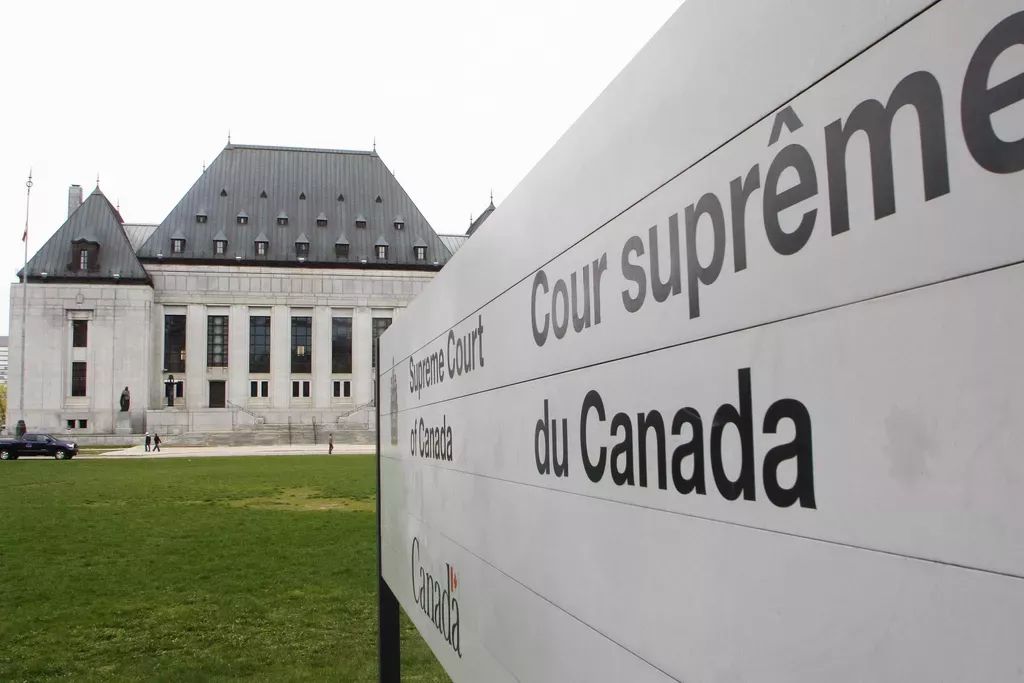
TheIn fact, the highest court agreed to hear the arguments of the crown, who since 2018 has sought a new trial to try a man who was acquitted of sexual assault in 2017.
The accused, a man who is now 73 years old and who cannot be identified due to the publication ban, was charged with seven counts of sexual assault in February 2011. A Quebec court acquitted him in February 2017.
The overall delay between the time of the charge and the issuance of the verdict was just over 72 months, of which 62 months were attributable to the Crown, but the defendant did not invoke unnecessary delays despite Jordan’s decision. He was acquitted. Jordan’s decision states that the maximum limit is 18 months in county court and 30 months in higher courts, except in exceptional circumstances.
However, in June 2018, the appeals court overturned the acquittal ruling, citing legal errors by the trial judge and ordering a new trial. In the wake of this decision, the accused requested that the proceedings be stopped based on the issue of unexplained delays, although the new trial was scheduled to end at the end of May 2019, that is, 11 months after the decision to order a new trial.
In February 2019, Judge Joel Roy ruled in favor of the accused, believing the delay in the first trial was unreasonable and ordering the proceedings to be halted. The Crown appealed against this decision.
In May 2020, three judges of the Court of Appeal unanimously confirmed this decision. Then the court said that “it was agreed with the appellant (the crown) not to add the time limits for the second trial to the time limits for the first trial and that the time clock from the time of the new trial must be reset.” The court added, however, that “we cannot, however, agree that this order prevents the accused from invoking a violation of his rights (under Article 11 (b) of the Charter) as a result of the delay in the first trial.”
In addition, the court rejected the Crown’s argument that we should refuse to consider the delays for the first trial only on the grounds that these delays were reasonable, merely because the accused did not make a request in this regard, that is, during the first trial.
In other words, the Court of Appeal considered that it was not because of the conclusion of the first trial that the rights of the accused had ceased and it was not because of his failure. No complaint was filed at that time that the delay in the first trial was reasonable.
The Crown still disagrees, and despite two failures, it is now asking the highest court on Earth to answer the following two questions:
- Is the Jordanian framework used to review judicial delays from a previous trial, which have been completely exhausted and cannot be remedied?
- Is failure to raise the possible violation of his right at trial within a reasonable time, at the first trial or on appeal, tantamount to waiving his right to invoke it in a subsequent trial?
The Supreme Court’s decision will be followed closely in the legal community.
