


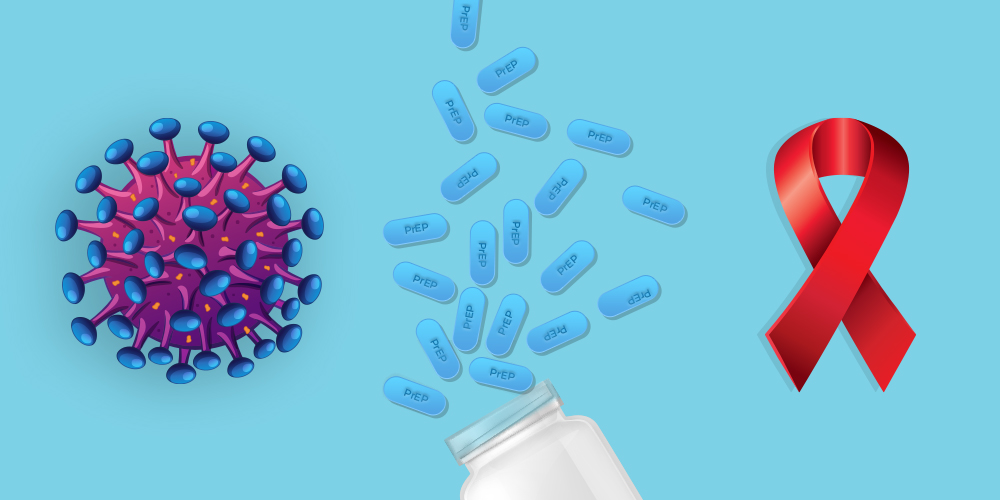
What is HIV?
HIV is a virus that weakens the body’s immune system. Our immune system is our body’s defense against disease and illness, so when it’s weakened, we’re more likely to become sick. However, with lifelong treatment and care, people with HIV can now live long and happy lives.
How is HIV Transmitted?
HIV transmits through five bodily fluids:
- Semen (including pre-cum)
- Vaginal fluid
- Rectal fluid
- Breastmilk
- Blood
In general, HIV gets passed through anal or vaginal sex or through sharing needles or other equipment related to drug use.
Seven Ways to Avoid Getting HIV
-
Condoms
Both external (sometimes called male) and internal (sometimes called female) condoms help prevent the transmission of HIV and other STIs. This is because condoms prevent semen, vaginal and rectal fluid from being transmitted to or from a partner. Therefore, if you use a condom each time you have sex, you’ll be reducing your chances of contracting HIV.
However, you must use condoms the right way. This means that if you have sex with more than one person at a time, you must use a new condom every time you change partners. Additionally, if you’re sharing a sex toy, be sure to use a new condom on the toy for each partner.
It’s also crucial that you store condoms at room temperature and check their expiry date before use. Furthermore, if you need to use lube, make sure to use a water-based or silicone-based lube as oil-based lube can break the condom.
-
Use New Equipment For Drug Use
By using new equipment every time you use drugs, there is zero chance that you will contract HIV or hepatitis C. This means that when injecting drugs, you use new needles, syringes, filters, cookers, alcohol swabs, tourniquets, acidifiers, and water each time. Likewise, when snorting or smoking drugs, you should also use new pipes and straws each time. Fortunately, many communities offer places where you can get free needles and other equipment for using drugs. Additionally, some communities provide supervised consumption sites, where you can inject yourself under the supervision of a healthcare worker or peer. These sites will provide you with the equipment you need, as well as supervision to prevent overdosing.
-
PrEP
PrEP stands for pre-exposure prophylaxis. It consists of medication that HIV-negative people use to help prevent them from contracting HIV. In general, you take PrEP before and after you come into contact with HIV.
PrEP must be prescribed by a healthcare provider and is generally taken every day for a prescribed period of time. Additionally, anyone who is prescribed a PrEP medication must see a doctor or nurse every three months for HIV testing, STI screening, and side effect monitoring, as well as ongoing support. PrEP is covered by most private insurance companies, and PrEP in Canada is sometimes also covered by the province’s medical insurance.
-
PEP
PEP stands for post-exposure prophylaxis and consists of medication that’s taken after possible exposure to HIV. For instance, you might take PEP if your condom breaks during sexual intercourse. PEP is most effective when taken as soon as possible after exposure. This means within 72 hours. You’ll then need to take PEP medication consistently for 28 days.
-
Different Types of Sex
Not all sexual contact carries the same risk of HIV transmission. Oral sex, for instance, has little to no chance of passing on HIV. Other forms of sex that carry virtually no risk of transmission are fingering, mutual masturbation, handjobs, dry humping, kissing, and unshared sex toys. That being said, STIs can still be passed through some of these forms of sex.
-
Limit Your Sexual Partners
The more sexual partners you have, the greater the chance that you’ll have a partner with poorly controlled HIV or a partner with an STD. These factors can increase the risk of HIV transmission.
-
Get Tested and Have Your Partners Get Tested
Knowing your HIV status and that of your partner can help you make smart choices about your sexual activity. Furthermore, in addition to getting tested for HIV, you should get tested for STDs as well. This is because when you have an STD, it increases your chance of getting HIV.
Summary
The only 100% foolproof way to prevent the transmission of HIV is through abstaining from sex and drugs. However, most people won’t forgo pleasure even with the risk of contracting a disease. Therefore, instead of abstinence taking preventative measures is the way to go. These measures include using condoms, using new equipment when injecting or snorting drugs, getting a PrEP or PEP prescription, and choosing types of sex that don’t result in HIV transmission. You would also benefit from knowing your and your partner’s HIV status and getting yourself and your partner tested regularly.
