


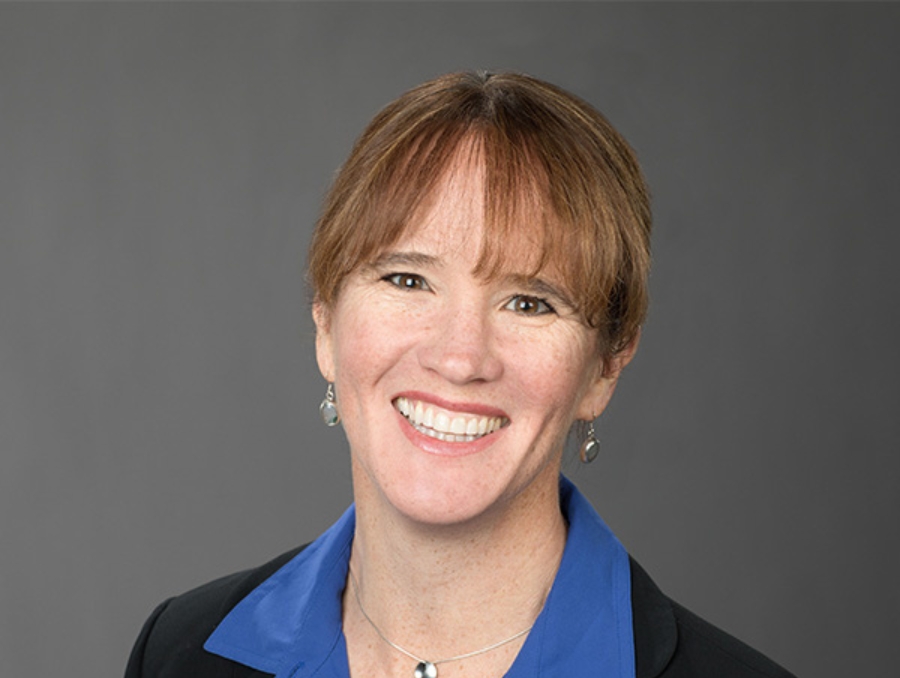
Diana Townsend, professor of Literacy Studies, plays a critical role as co-principal investigator on the Institute of Education Sciences (IES) grant “Words as Tools: Vocabulary Development for Emergent Bilinguals (EB) for Science and Education.” And beyond.” The U.S. Department of Education funded this $2 million large grant, including a subgrant of about $800,000 to the College of Education and Human Development at the University of Nevada, Reno. The grant includes extensive collaboration with regional and national educators.
“This award represents an opportunity to fill a real need for teens learning English in Nevada and across the country,” Townsend said. “The language of science is very technical and abstract, especially if you're learning it in a new language! Words as Tools will help teens build deep, flexible word knowledge in science, in really engaging ways, so they'll be ready to learn important scientific ideas.”
The Institute of Education Sciences (IES), founded in 2002, is the research arm of the U.S. Department of Education. Records of the university's Office of Sponsored Projects show that the Townsend Award is considered a rare achievement.
“This research opportunity fills a significant need we have in Northern Nevada and across the state,” said Donald Easton Brooks, Ph.D., dean of the College of Education and Human Development. “We have a large population of English language learners, and it is important that we find effective ways to enhance learning opportunity for these students, as well as for all students.”
Through the grant, the research team will develop and test a new intervention for emerging bilingual (EB) adolescents called Words as Tools. This intervention will be designed for use in English as a Second Language (ESL) lessons to promote the development of deep and flexible word knowledge, also called “linguistic awareness.” The goal of the research is to develop and test an intervention that builds a linguistic bridge between ESL classrooms and mainstream science classrooms.
Rather than teaching traditional vocabulary (e.g., matching words to definitions and random sentences), Words as Tools seeks to empower students with flexible, generative word knowledge related to compelling scientific content. Rooted in the solid principles of strong vocabulary instruction and culturally responsive teaching, this initiative is poised to make a lasting impact.
Inspired by an earlier IES development project, “Robust Academic Vocabulary Encounters for English Language Learners (EL RAVE),” the Words as Tools concept takes it even further. While EL RAVE has focused primarily on Latin roots, Words as Tools expands its scope by simultaneously teaching multiple components of linguistic knowledge, including Greek and Latin roots, suffixes and syntax, and polysemous words. All of these linguistic practices are undertaken in the context of compelling scientific questions, such as “Are males of a species typically larger, faster, and stronger than females?” and “What causes the extinction of plants and animals?” All science content aligns with the Next Generation Science Standards (NGSS), meeting the urgent need to simultaneously develop linguistic and scientific concepts.
Elizabeth Leger, Ph.D., director of the university's Natural History Museum and founding professor, also works on the project as a co-investigator, providing expert consultation on the scientific content of the intervention. Townsend's collaborating researchers on the grant are Amy Crowson, Ph.D., and Bui Wa Lee, Ph.D., at Penn State.
“We know that learning words in isolation rarely makes sense,” Townsend explains. “We all learn language best when we use it in meaningful contexts. It’s really interesting to work with teens on scientific questions and the language they need to answer those questions from likely to accelerate their language development. We need to engage young scholars from all linguistic and cultural backgrounds, and we are designing the intervention to support this goal.
The four-year research project will be developed in middle school English as a Second Language (ESL) classrooms that meet the needs of EB students with intermediate and advanced levels of English proficiency. Working with collaborative teachers and researchers regionally and from across the country, Townsend and her colleagues will design, review, and test the impact of words as tools.
With the conclusion of the research, teachers, administrators, and school professionals will have valuable intervention tools to better support emergent bilingual adolescents on their journey toward science vocabulary mastery.
“This four-year research program has the potential to engage teens in meaningful English language development that will help them learn science in middle and high school and beyond,” Townsend said. “We are working to help as many teens as possible, from all over the world.” As many backgrounds as possible to bring into science and ultimately influence new scientific discoveries.”
Townsend is the coordinator of the College of Education and Human Development's Literacy Studies Program, which includes an online master's degree in Reading Methods and Instruction, a doctorate in Education: Literacy Studies and a graduate-level reading specialist certificate. The college's Literacy Studies Program also provides a series of required university courses for all teacher preparation students. Townsend is the co-founder and president of the Nevada Adolescent Literacy Network (NALN), a coalition of cross-agency partners to build and bridge systems to help teens become fully literate individuals capable of achieving their goals.
