

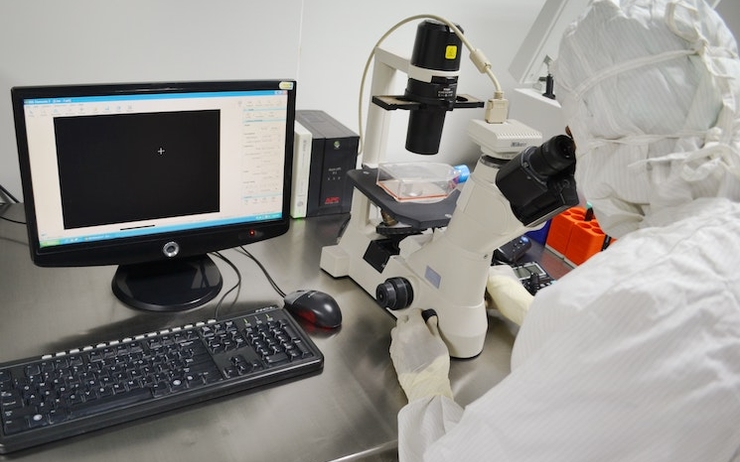
Experiments in mice have enabled British researchers to explore promising new ways to treat and vaccinate Alzheimer’s disease.
Alzheimer’s disease is a neurodegenerative disease characterized by a decline in some intellectual functions as well as memory. Many scientists are conducting ongoing research in order to improve knowledge about the causes and treatment of this pathology.
Beta-amyloid proteins at the heart of scientific research
Beta-amyloid proteins are naturally found in plaques in the human brain and are commonly associated with Alzheimer’s disease. When a person has this disease, it becomes shorter. Some scientists believe that the shapes of these proteins are key to disease development and progression. But in clinical trials, none of the potential treatments that dissolve these amyloid plaques have been shown to be successful, and they sometimes cause harmful side effects. Rather than focusing on the shape of the plaques, the new products that British researchers are looking at focus on a different form of amyloid that is considered highly toxic.
Successful experiments on mice that could have developed antibodies and even regained part of their memory
This new treatment opens up the possibility of creating a vaccine to fight Alzheimer’s disease, but so far, it has only been tested in mice. Introduction of the antibody into the mouse body may neutralize the abbreviated forms of soluble amyloid, without binding to the normal forms of the protein. Dr. Betty Bakranya and colleagues at LifeArc have adapted this antibody so that the human immune system does not consider it foreign and accept it: it has been called TAP01_04. By running the tests, the researchers realized that mice that received this type of vaccine produced TAP01-type antibodies.
This antibody and vaccine made to counteract the beta-amyloid proteins is called TAPAS and has been successfully tested on two different forms of Alzheimer’s disease in mice. They helped restore neurological function and increase glucose metabolism in the brain while also restoring some memory loss. When not directed directly, it reduces beta-amyloid plaque formation. According to these British researchers from the University of Leicester, the University Medical Center in Göttingen and LifeArc, this is a very interesting progress. They give hope for vaccination and treatment of Alzheimer’s disease. Mark Carr, a professor at the University of Leicester, told British media that these treatments “Opening up the possibility of treating not only Alzheimer’s disease once symptoms are detected, but also preventing the disease with the help of a vaccine, even before symptoms appear. “

Sophie Laurent is a contributor to Vaughantoday.ca, covering a wide range of topics including local news, politics, business, technology, sports, entertainment, and lifestyle. She focuses on delivering clear, balanced reporting that helps readers stay informed about current events and issues that matter to their communities. Sophie is committed to presenting accurate information, practical insights, and relevant stories in a straightforward and reader-friendly manner, making complex topics accessible to a broad audience.