

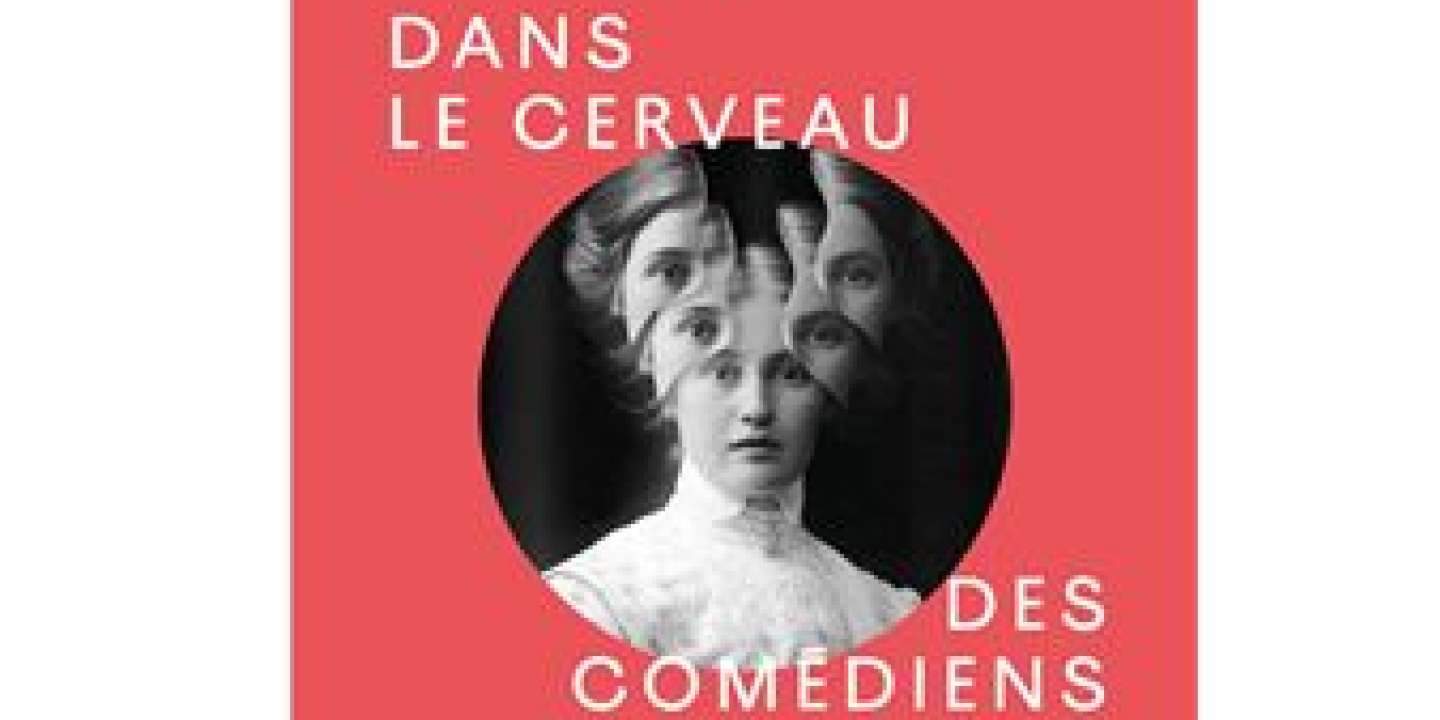
the book. What happens in the brains of actors when they perform? From this simple question, Anouk Grinberg makes a material out of a rich reflection of illusion, as our contemporaries did. Starting with a discussion with neurologist Lionel Naccache, she led the investigation in her book Inside the minds of the actors (Odile Jacob, 2021). “Today, neuroscience gives us fascinating knowledge about what goes on inside us: nothing is as we think,” announce. Because he plays comedy, he summons into himself all of humanity. “By lying well, the actors carry life, and that fascinates me, she explained. We use the trick to drop the trick, with appearances we go through appearances. »
The book, progressing through an alternating set of questions and answers, explores the perspectives of actors, neuroscientists, psychiatrists, and behavioral scientists, and explores this paradox. Anouk Greenberg identifies with the elements of the pages she collects to break down received ideas and get as close as possible to the fragmentary knowledge of who we are. “ to listen to it [une pièce]And the It is a matter of silencing the self in all transcendence, all critical meaning and self-abandonment, and losing oneself in the perversion it brings and the happiness it contains.” So wrote actor and director Louis Jovet.
The role of mirror neurons
To explain the empathy mobilized in this act of impregnation, primatologist and behavioral scientist Franz de Waal points to mirror neurons. “Because mirror neurons do not distinguish between our behavior and that of others, they allow an organism to slip into another shoe. These neurons integrate individuals on a physical level. (…). Humans do not decide to be sympathetic; Hmm, that’s it. » Neuroscience also makes it possible to better understand how to construct the narratives played by actors. “Our mind knows life only by the representation we have of it, and the fantasies it tells of itself. These voices that speak within us, which we don’t always listen to, but nevertheless dominate our mental life, connect us all to the world, but also distance us from it.” Lionel witnesses the debate.
One can lament the repetition that sometimes loses the reader, but the courage with which Anouk Greenberg does not hesitate to reveal himself to enrich his thinking is courageous. “We think we are rational and we are very irrational. All our thoughts are essentially emotions so intertwined so deep within us that we are almost the last of science. We are driven by forces beyond us,” Do you understand. The book ends with a response to Diderot, who in his book Paradox about the actor Thought to know it “Excessive sensitivity makes the actors mediocre”. “Obviously the raw materials we are dealing with are our allergies. (…) We explode our emotions like embers and then fight them. (…) In this, it is true that we are not deceiving ourselves. The fight for and against emotion takes place between the body and the head. She corrects, at the end of her investigation.
You have 4.03% of this article left to read. The following is for subscribers only.

Sophie Laurent is a contributor to Vaughantoday.ca, covering a wide range of topics including local news, politics, business, technology, sports, entertainment, and lifestyle. She focuses on delivering clear, balanced reporting that helps readers stay informed about current events and issues that matter to their communities. Sophie is committed to presenting accurate information, practical insights, and relevant stories in a straightforward and reader-friendly manner, making complex topics accessible to a broad audience.