

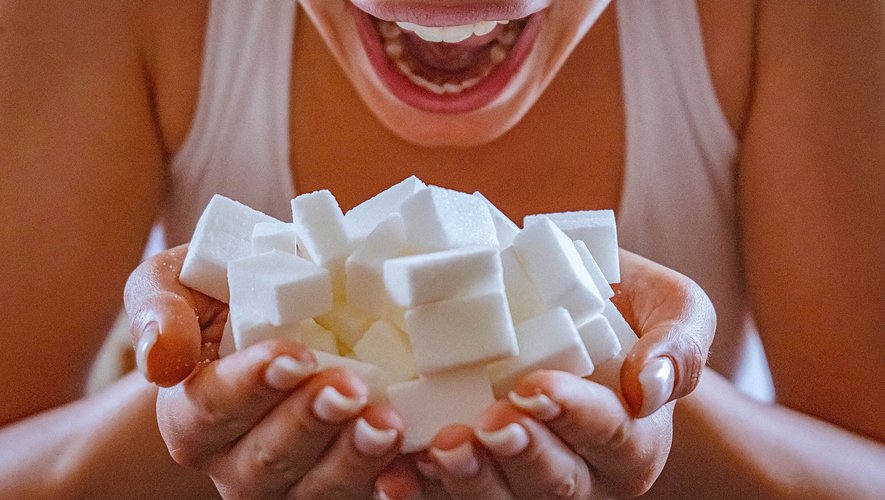
(AFP) – Sweeteners are used to replace sugar in many drinks as well as in food, and could be associated with an increased risk of cardiovascular disease, according to a French study published Thursday in the British Medical Journal.
Due to the harmfulness of added sugars, artificial sweeteners are used as alternatives in thousands of foods and drinks to reduce the amount of sugar and associated calories while maintaining a sweet taste.
But the safety of these food additives is up for debate.
A French observational study, published by researchers from various institutes (Inserm, Inrae, Sorbonne University Paris Nord, Cnam), concluded that people who consume the most sweeteners, especially aspartame and acesulfame-K, have a higher risk of developing cancer.
To explore the risks associated with cardiovascular disease this time around, the researchers used the same methodology in health and sweetener consumption data for 103,388 French adults who participated in the NutriNet-Santé cohort study.
Among other information, the volunteers detailed their food consumption.
37% of participants consumed sweeteners with an average of 42.46 mg/day, the equivalent of a single table-top sweetener or 100ml of diet soda.
After collecting information about the diagnosis of cardiovascular disease during the follow-up period (2009-2021), statistical analyzes examined the association between consumption of sweeteners and the risk of developing such diseases.
According to the study, artificial sweeteners, including aspartame, acesulfame-K, and sucralose, are associated with an increased risk of cardiovascular, cerebrovascular, and coronary heart disease.
Over nine years of follow-up, 1502 cardiovascular events (heart attacks, angina pectoris, angioplasty, strokes, etc.) occurred.
Until then, studies had indicated an increased risk of cardiovascular disease associated with consumption of sweetened beverages. No one considered exposure to sweeteners as a whole, according to the authors.
“These findings, in line with the most recent WHO (World Health Organization) report published this year, do not support the use of sweeteners as safe alternatives to sugar,” concludes Dr. Mathilde Toffer, director of research at Inserm and coordinator of the study.
However, this has limits.
This “observational study cannot answer the question at hand” due to “key differences in several characteristics of people who consume artificial sweeteners compared to those who do not,” in particular, says Center for Science Media, Naveed Sattar, professor of metabolic pathology at University of Glasgow.
In his view, it “strongly suggests a causal relationship between sweeteners and cardiovascular disease” with a methodology that is not robust enough, and would require “large-scale, long-term, randomized trials”.
More research will be needed to replicate and possibly confirm these findings.

Sophie Laurent is a contributor to Vaughantoday.ca, covering a wide range of topics including local news, politics, business, technology, sports, entertainment, and lifestyle. She focuses on delivering clear, balanced reporting that helps readers stay informed about current events and issues that matter to their communities. Sophie is committed to presenting accurate information, practical insights, and relevant stories in a straightforward and reader-friendly manner, making complex topics accessible to a broad audience.