

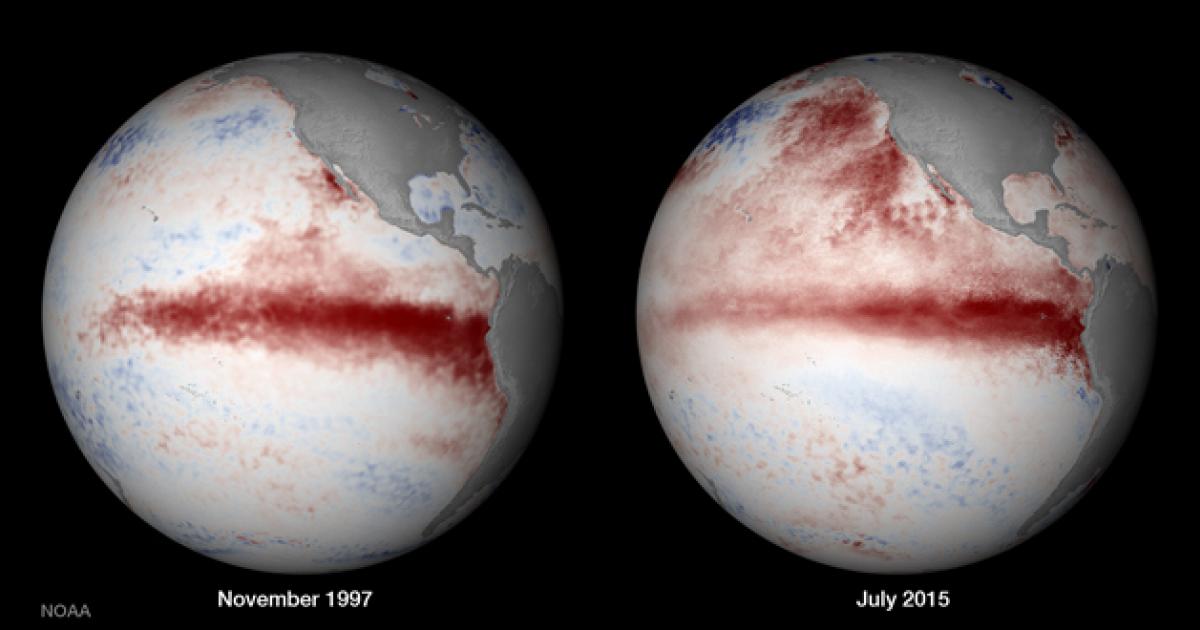
The latter, which reappears – yet unexpectedly – once or twice every decade, is characterized by unusually warm waters in the western Pacific, and heavy rains in the east. It causes a domino effect on multiple climate systems around the world. However, according to study Recently published in the magazine Nature ConnectionsHowever, significant Arctic ice losses are already starting to affect the increasing frequency of El Nino, and will have an even greater impact, as the Arctic becomes more and more ice-free during the summer.
Nearly half of the increase in “strong” El Niño events by the end of the century, they wrote, “is specifically related to the loss of Arctic sea ice.”
The relationship between the two is not clear, but it is not the first time that a decrease in this ice sheet has been linked to climate changes elsewhere: abnormal warming of the Arctic, for example, could explain the erratic behavior of the jet stream (Jet) in recent years, which sometimes brings cooler winter temperatures over eastern North America, and sometimes warmer temperatures over Europe. In other words, severe weather becomes more and more complicated.
Comparing different mathematical simulations, researchers from China and the United States found not changes in “strong” El Ninos when ice loss is in the “moderate” category, but rather when it increases. acceleration.
The last occurrence of El Nino was in 2015. It was responsible for a disastrous agricultural season in New Guinea as much as it was responsible for a disastrous agricultural season in New Guinea. coral bleaching off Australia and Worst floods in 50 years ” In South America.

Sophie Laurent is a contributor to Vaughantoday.ca, covering a wide range of topics including local news, politics, business, technology, sports, entertainment, and lifestyle. She focuses on delivering clear, balanced reporting that helps readers stay informed about current events and issues that matter to their communities. Sophie is committed to presenting accurate information, practical insights, and relevant stories in a straightforward and reader-friendly manner, making complex topics accessible to a broad audience.