


Getty Images
Fingerprints are no longer unique, and this could reopen criminal cases
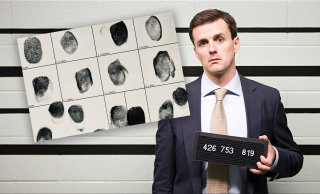
Science – Imagine. Your apartment has just been burgled, your belongings have been turned upside down, and your valuables have been stolen. A stroke of luck ! The criminal police found a fingerprint on your forced door. Thanks to her, the suspect was arrested. However, the criminal's fingerprint that the investigators had was not on the same finger or on the same hand…
This scenario seems absurd: fingerprints are unique, not just to every person, but to every finger, including the toes. Until artificial intelligence intervenes. In an experience recounted in the magazine Advancement of science, a team from Columbia University has proven that, contrary to what was previously thought, our fingerprints are not unique. All of an individual's fingers have the same “signature”. You just had to know where to look.

Hills, bumps and bends
All this thanks to artificial intelligence, which has been trained on hundreds of real cases to recognize fingerprints, from prints coming either from the same person or from different people each time. Little by little, something strange happened: AI was able to recognize, with ever-increasing efficiency, which fingerprints came from the same individuals.
” We're talking about selecting five fingers from the same hand, to match them with the five fingers from the opposite hand “, He specifies HuffPost Gabriel Guo, one of the researchers who participated in the experiment. This is something that humans have been unable to do, until now. And for good reason: AI doesn't use the same landmarks we use to identify fingerprints.
Advanced science
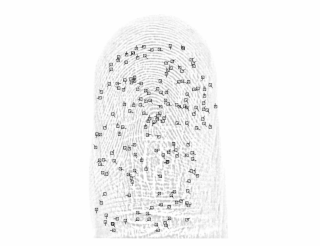
The traditional technique of identifying fingerprints, through fine details.
To confuse a criminal, or unlock a cell phone, the method is the same. We rely on the matching of distinct elements, such as the bifurcation of a furrow, or the space that closes in – what we call fine detail. Since no fingerprint is identical with another, a certain number of such matches (twelve according to French law) makes it possible to officially identify an individual.
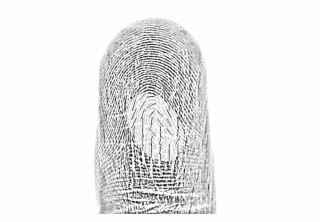
But our AI didn't just look at these tiny details, even though they were always the element we relied on to recognize fingerprints. The algorithms chose to focus on the angles and circles formed by our fingerprints, especially near the center of the fingers. From this matching, Columbia's computer found, with more than 80% accuracy, that certain fingerprints belonged to the same hand, or to the same person.
Advanced science
The method used by AI uses approximations in the middle of the finger.
Reopening “cold cases”
The impact of this progress is likely to be enormous. Is it enough to use it for police purposes? This success rate Not for use in court », corrects the young researcher. But by training the AI on a larger sample, scientists believe they can achieve full efficiency. In the meantime, this could still allow investigations to be directed or reopened.
In fact, how many fingerprints are there in dormant files because they cannot be linked to anyone? Here it is possible to imagine that a properly trained AI would be able to link several cases in which different fingerprints were found, but belonging to the same person.
But it's not just that: if technology proves reliable, why don't our smartphones and computers rely on these curves to recognize their users? Practical when the usual opening hand is not free. ” It is an easier application than police identification “, explains Gabriel Guo.
In order to “feed” the AI, the team often used partial prints, which were more or less readable on different backgrounds. In the case of a push-button smartphone, identification is much easier, and the risk of making mistakes is much lower. Interest in this technology was not lost on industrialists. ” We have received many expressions of interest from many companies », explains the researcher, whose technology is in the process of being patented.
See also on HuffPost:
Sophie Laurent is a contributor to Vaughantoday.ca, covering a wide range of topics including local news, politics, business, technology, sports, entertainment, and lifestyle. She focuses on delivering clear, balanced reporting that helps readers stay informed about current events and issues that matter to their communities. Sophie is committed to presenting accurate information, practical insights, and relevant stories in a straightforward and reader-friendly manner, making complex topics accessible to a broad audience.