

Basic
- Electric signatures specifically relate to different states of inner thought to determine whether our mind is focused or wandering.
- When thoughts wander aimlessly, there is spike in alpha waves in the prefrontal cortex.
- P300, or P3, brain waves are observed at lower frequencies in the parietal lobe, which is a sign of inattention.
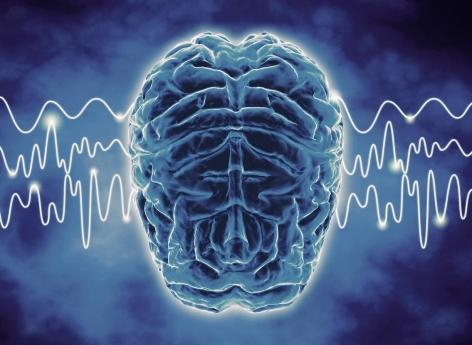
Depending on our thoughts, our brain calibrates itself differently. A team of American scientists from the University of Berkeley in California has successfully identified brain waves that are particularly compatible with some of our thinking states. The results were presented Jan.26 in the journal Proceedings of the National Academy of Sciences (PNAS), describes the electrophysiological signatures specifically associated with different states of inner thinking, making it possible to determine whether our minds are focused or wandering.
Four distinct intellectual states
The gray areas remain on the brain mechanisms involved in our thought flows. To shed some light, the researchers conducted their study on 39 participants in which they learned to distinguish between 4 different states of thought: related to a task (“Relevant to the task“), Wandering (“Moving freely“), Intentionally restricted (“Intentionally restricted“) And automatically restricted (“Restricted automaticallyThe concept of constraint used here refers to the fact that attention is focused on something for a long period of time. When thought is automatically restricted, it means that it is directed towards personal information, and when thinking is deliberately restricted, the thought is directed towards a goal.
The volunteers were then asked to complete a task, and then were asked to rate on a scale of 1 to 7 to what extent their ideas during the sequence aligned with each previously studied category: task-related, freely roaming, intentionally restricted or automatically restricted. They indicated the direction arrows appearing on the screen dot. During the exercise, the researchers recorded their brain activity using electroencephalography (EEG), and their results were compared to those reported by the participants.
The activated region describes the state of thought
The results showed that brain waves differ for different thought states. As the participants’ thoughts wandered aimlessly, the researchers observed a sharp increase in alpha waves in the prefrontal cortex. These waves are a feature of the calm or creative state of thinking and they oscillate at frequencies between 8.5 and 12 Hz. In addition, P300, or P3, brain waves were observed at low frequencies in the parietal lobe, a sign of inattention. When participants were found to be more focused on their task, P3 waves are observed in the frontal lobe, rather than alpha waves.

Sophie Laurent is a contributor to Vaughantoday.ca, covering a wide range of topics including local news, politics, business, technology, sports, entertainment, and lifestyle. She focuses on delivering clear, balanced reporting that helps readers stay informed about current events and issues that matter to their communities. Sophie is committed to presenting accurate information, practical insights, and relevant stories in a straightforward and reader-friendly manner, making complex topics accessible to a broad audience.