

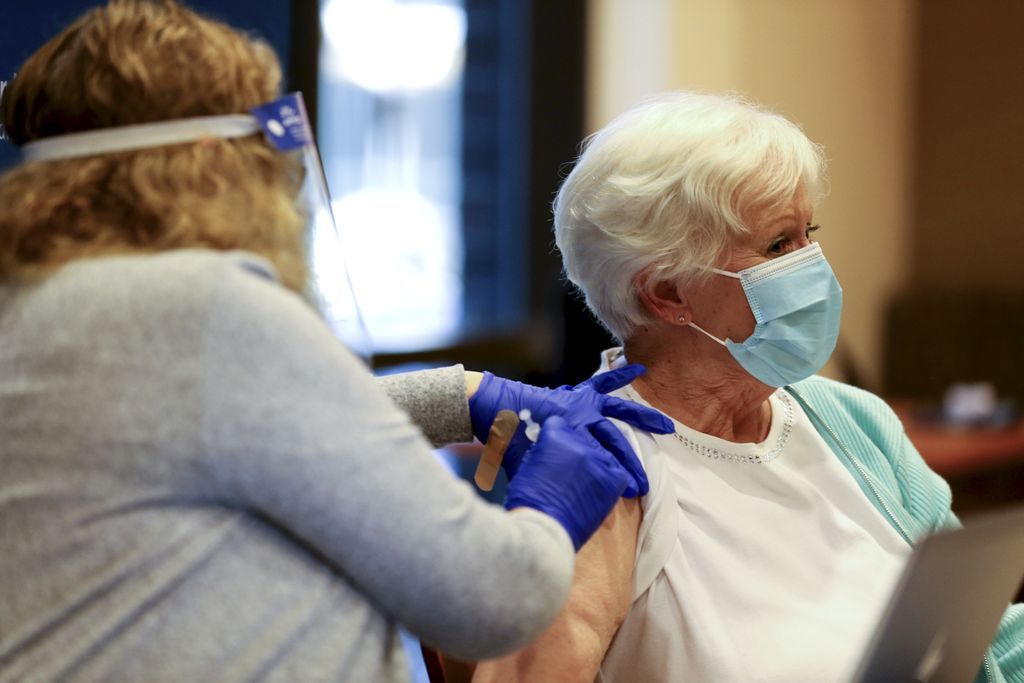
CHowever, vaccines are not 100% effective in stopping transmission or infection. The risk of some vaccinated people fully contracting the infection is small, but this is to be expected.
It is important to be aware of the limitations of vaccinations. No vaccine provides complete protection for everyone who receives it. The measles vaccine has been shown to be very effective in preventing infection, which has effectively eliminated the virus in some countries.
However, infections are reported even in widely vaccinated populations. These infections don’t just happen in unvaccinated people. There are cases of infection in people who have been fully vaccinated.
The seasonal flu vaccine provides protection from the circulating viruses. But circulating influenza viruses are different, and people who are vaccinated can still get sick, but less seriously.
This phenomenon is explained by the fact that immune defense occurs in different ways. On the one hand, there are antibodies, which are Y-shaped proteins that trap and neutralize germs, and on the other hand, there are T-lymphocytes that find and destroy infected cells.
Antibodies are usually directed against the more diverse proteins on the surface of the virus, while the more stable proteins – inside the virus – are targeted by T lymphocytes.
Regarding SARS-CoV-2 (the virus responsible for COVID-19), there are a few post-vaccination infections in Seychelles, but little information has been published so far in scientific journals.
A recent report in New England Journal of Medicine Describes two cases of COVID-19 after vaccination. Both people had mild symptoms that disappeared within a week.
A Stanford University study, which has not yet been evaluated by other scientists, describes 189 cases after vaccination from COVID-19 in 22,729 healthcare workers. However, some infected workers have received only one dose of the vaccine. Vaccination is likely to make the disease less severe if such outbreaks occur.
Several explanations
There may be several causes of post-vaccination infection. The immune response in humans is encoded in our DNA and varies from person to person. This contrast helps us respond to a variety of viruses. But the effectiveness of these responses is also variable. It depends on many factors, including health, medication, or age.
The aging immune system does not respond to new antigens (a foreign substance that causes your immune system to make antibodies) and vaccines as well as younger immune systems. For the COVID vaccine, there was a significant difference in the concentration of neutralizing antibodies in the elderly compared to the younger adults. Some elderly participants had no equivalent antibodies at all after receiving two doses of the vaccine.
Post-vaccination infections can also be caused by different types of virus that are not detected by the immune system but rather develop in people who have been vaccinated. A virus, especially an “RNA virus” such as SARS-CoV-2, is expected to mutate and give rise to variants, some of which may be more infectious. These variants are more or less effectively neutralized by the immune system, because mutations can modulate the parts of the virus that the antibodies and T lymphocytes recognize.
A new type of SARS-CoV-2 identified in India (B.1.617.2) would make the virus more contagious, which is of concern given the ongoing health crisis in this country. Despite the lack of scientific studies, the media have reported numerous cases of frequent infectious breakthroughs and variant B.1.617.2 is involved, but this still needs to be proven.

Sophie Laurent is a contributor to Vaughantoday.ca, covering a wide range of topics including local news, politics, business, technology, sports, entertainment, and lifestyle. She focuses on delivering clear, balanced reporting that helps readers stay informed about current events and issues that matter to their communities. Sophie is committed to presenting accurate information, practical insights, and relevant stories in a straightforward and reader-friendly manner, making complex topics accessible to a broad audience.