


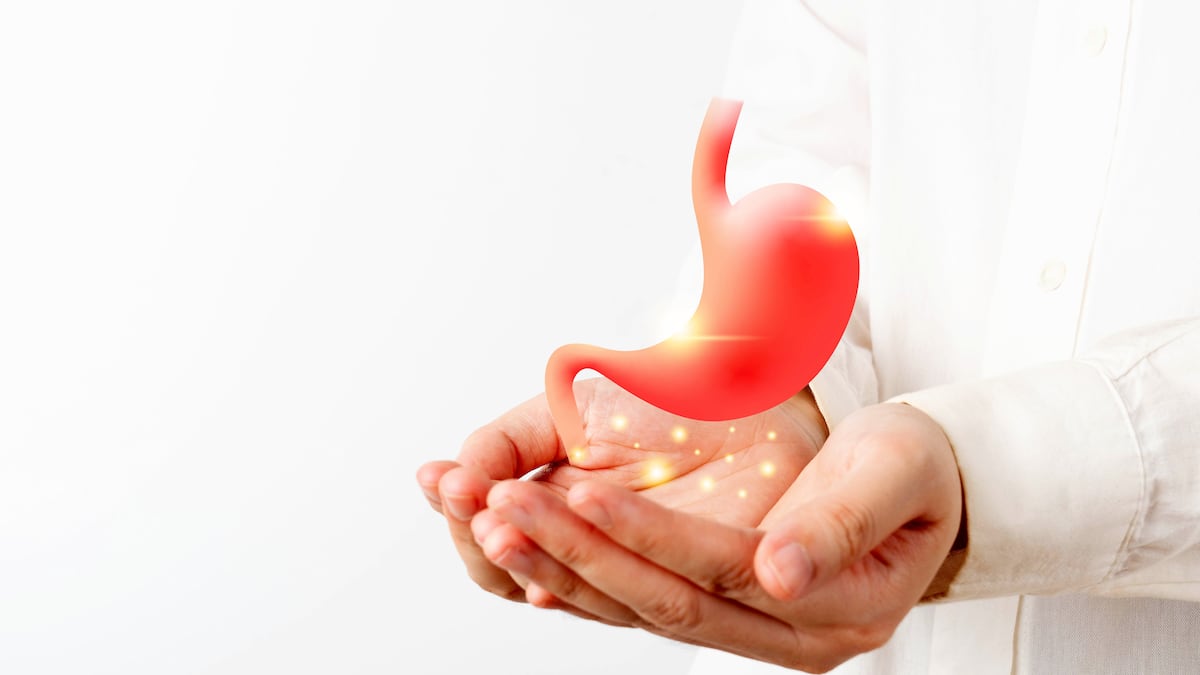
Large-scale study confirms that eliminating bacteria Helicobacter pylori The use of antibiotic therapy significantly reduces the risk of stomach cancer.
It was long believed that the stomach was sterile because of the highly acidic gastric secretions that made it impossible for microorganisms to grow.
But this belief was shaken when in 1984 Australian researchers Robin Warren and Barry Marshall described a new type of bacteria associated with stomach ulcers.
Initially, these bacteria, which were later named, were discovered Helicobacter pyloriIt was met with great skepticism by the medical community, with the consensus at the time being that stomach ulcers were caused by stress, alcohol, or spicy food.
But the later work of Drupee Warren and Marshall made it possible to show beyond doubt that it was these bacteria that were involved (d.S Warren went so far as to voluntarily eat bacteria to prove it!) This major discovery was eventually rewarded with the Nobel Prize in Medicine in 2005.
inflammatory lesions
presence Helicobacter pylori In the stomach it is explained by the numerous adaptations of bacteria that allow them to survive in this hostile environment.
It has a spiral shape that allows it to slide through the mucus lining the stomach wall (like a corkscrew), and at the same time, it secretes an enzyme that converts urea into ammonia and thus forms an alkaline molecular shield that neutralizes stomach acidity.
When it manages to colonize the mucosa, there is the formation of inflammatory lesions (chronic gastritis) which can develop into ulcers or worse, into gastric cancer.
This carcinogenic effect of bacteria is caused by the secretion of a toxin called CagA (cytotoxic geneA) It penetrates the cells of the gastric mucosa and modifies their composition and function.
Anticancer antibiotics
Although adapted to the harsh conditions of the stomach, Helicobacter pylori The bacteria remain sensitive to some currently available antibiotics, suggesting that it may be possible to eradicate the infection and thus prevent the development of inflammatory conditions that lead to cancer.
A large-scale study conducted in China has just confirmed the anti-cancer effect of antibiotic treatment. Helicobacter pylori (2).
The study, which began in 2011, initially examined the presence of the bacteria in a community of 180,000 people, spread across 1,000 villages in Shandong Province (eastern China, south of Beijing). The research team then gave about half of the infected people (nearly 100,000 people) a combination of antibiotics and antacids to rid them of the microbe (20 mg omeprazole, 750 mg tetracycline, 400 mg metronidazole and 300 mg bismuth subsalicylate, for 10 days), while the other half received just a single dose of antacids (omeprazole and bismuth subsalicylate) to relieve symptoms.
More than a decade later, the group now reports that this simple intervention reduced the risk of stomach cancer by 20% in the treatment group who did develop stomach cancer. Helicobacter pylori It was successfully eliminated.
This reduction in risk was greatest in the subgroup under 45 years of age at the start of the study, with a 35% reduction in the risk of stomach cancer.
Therefore, early eradication of the bacteria, before they can cause lesions large enough to promote the onset of cancer, is likely necessary to prevent the development of the disease.
DS Sadly, Warren passed away on July 23 at the age of 87, just one week before this important study was published. He left behind an invaluable scientific legacy, and his positive impact on human health is still being measured.
(1) Marshall PJ, Warren GR. Unidentified curved bacilli in the stomachs of patients with gastritis and peptic ulcer. Lancet 1984;1:1311-5.
(2) Pan KF et al. Prevention of gastric cancer by eradication of Helicobacter pylori in the community: a cluster randomized controlled trial. Nature Medicine, published July 30, 2024.
