


MONTREAL – A new US study warns that bottled water could contain 100 times more microscopic plastic fragments than previously thought.
Using a state-of-the-art new laser imaging technique, researchers at Columbia University were able to measure that each liter of bottled water could contain up to 370,000 particles of microplastics, or even nanoplastics.
Professor Thierry Olivier, from the Department of Chemistry at Université Laval, commented: “I was surprised by the number of molecules described; I wasn't expecting such a high value and honestly, it was worrying me. “I actually had concerns about this type of product, but I have to say it worried me more than I felt.”
Some of these microscopic particles are so small that they can enter the bloodstream after being ingested or inhaled. In the case of a pregnant woman, it can even cross the placental barrier to reach the fetus.
Their effect on human health is still not well understood, but it is possible that these particles interfere with the functioning of certain organs (including the brain) and the functioning of the reproductive system. They can also have carcinogenic properties, be a source of oxidative stress and mimic the action of some hormones (so-called endocrine disruptors).
The study results show that each liter of bottled water can contain between 110,000 and 370,000 plastic particles. About 90% of these particles are nanoplastics, and the remainder are larger microplastics.
These particles consist in particular of polystyrene, polyvinyl chloride, polymethyl methacrylate and polyethylene terephthalate. It is from this last plastic that the bottles themselves are made. Water can become contaminated when the bottle is squeezed or exposed to heat, or when the cap wears out from being repeatedly opened and closed.
The researchers also found particles of polyamide, a type of nylon, in the water that may have come from the filters the water passes through before being bottled.
“A certain number of consumers believed that (bottled) water could be purer or purer,” Professor Olivier noted. But (this study) puts this issue in a completely different context.”
The researchers were able to identify seven different types of plastic. However, they point out that these seven plastics only account for 10% of the nanoparticles in water, which means they don't know what 90% of the nanoparticles are made of.
These nanoparticles could be “anything,” admits a document published online by Columbia University. But if all of these nanoparticles were nanoplastics, each liter of water could contain tens of millions of them.
“I think it takes the debate to a whole new level,” Professor Olivier said.
Microplastics range in size from one micrometer (millionths of a metre) to about five millimetres. We measure the size of nanoplastics in billionths of a metre. For comparison, the circumference of a human hair is about 70 micrometers.
A first study, conducted in 2018, measured about 325 molecules per liter of water, but experts suspect this may be a significant underestimate. However, we did not have reliable techniques to enter the “nano” world, below the micrometer band.
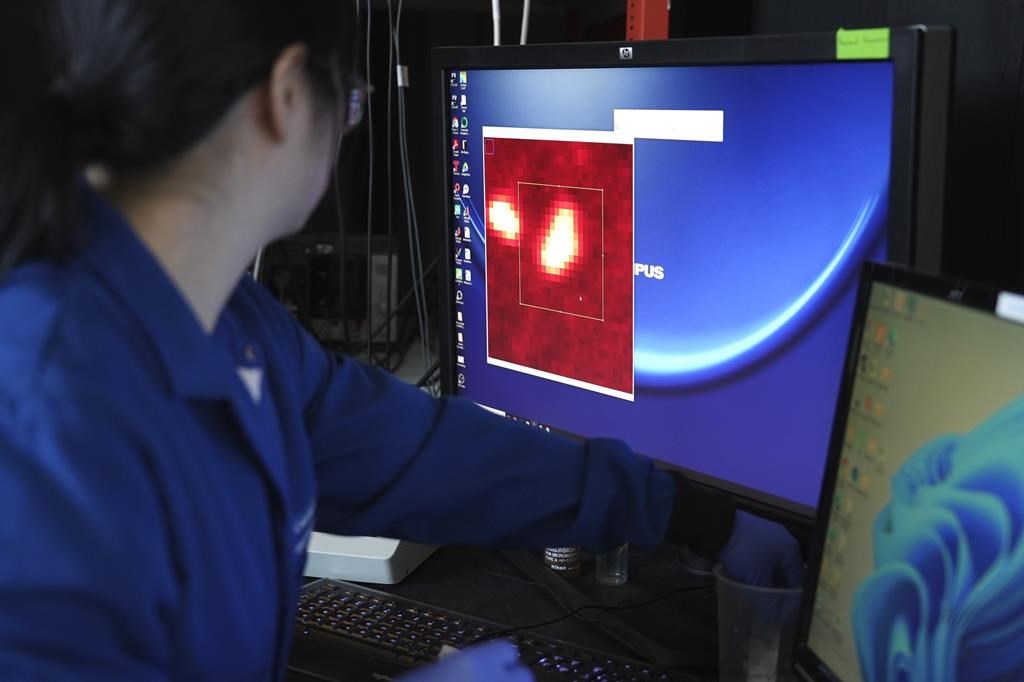
A new method developed by a team at Columbia University – the details of which are beyond even beginners' understanding, except for the fact that it uses lasers and (obviously) an algorithm – has made it possible to overcome this obstacle.
“There is actually a problem here that we need to be concerned with,” Professor Olivier said. We are no longer just talking about plastic continents (floating in the ocean). We are talking about sizes that we cannot see with the naked eye. “It's much more harmful.”
The results of this study were published in the scientific journal Proceedings of the National Academy of Sciences.
