

Close Menu
    Facebook X (Twitter) Instagram
    Trending
    • Hauser’s Marks 45 Years With Province-Wide Customer Celebration and Renewed Focus on Community Care
    • Young drivers face elevated collision risks after consuming edible cannabis, new CAA-funded study finds
    • Salvation Army Thrift Store Marks 40th Ontario Location with Peterborough Opening
    • Early Blast of Winter Prompts Safety Warnings from Ontario Road Authorities
    • HONOR Takes Home Two TIME Best Inventions 2025 Awards for Smartphone Breakthroughs
    • Toronto Set to Host Largest LEGO® Fan Event in Canadian History
    • Hank Azaria and Caitlin Morrison Champion Mental Health Through Music at Toronto’s Koerner Hall
    • Bricks in the Six to Build Canada’s Largest-Ever LEGO® Fan Event This November
    Facebook X (Twitter) Instagram YouTube
    Vaughan TodayVaughan Today
    • Home
    • Top News
    • World
    • Banking
    • Explore Canada
    • How to
    • Solutions
    • Contact Form
    Vaughan TodayVaughan Today
    Home»science»Deprived of speech after a stroke, he can now communicate in English and Spanish thanks to a transplant
    science

    Deprived of speech after a stroke, he can now communicate in English and Spanish thanks to a transplant

    Maria GillBy Maria GillMay 29, 2024No Comments2 Mins Read
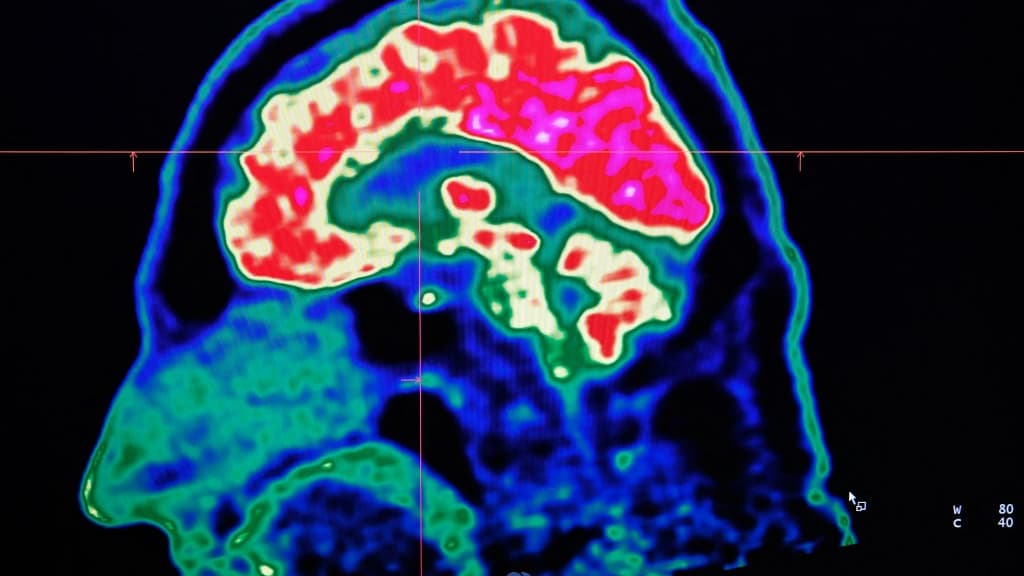
    Deprived of speech after a stroke, he can now communicate in English and Spanish thanks to a transplant
    Share
    Facebook Twitter LinkedIn Pinterest Email

    In the world of brain transplantation, the major discovery of a group of researchers from California is restarting the race for innovations.

    A group of scientists from the University of California, San Francisco, have announced a major discovery by developing a neural implant that uses artificial intelligence to allow patients to communicate in Spanish and English.

    This is an achievement that we owe to dozens of researchers from the Center for Neural Engineering and Prosthetics, which required several years of design to find a way to convert human brain activity into bilingual sentences that are “displayed on the screen.”

    Transplant speaks English and Spanish

    In an article published in the medical journal Nature of biomedical engineeringWe learned that a man was being used as a guinea pig. He became severely paralyzed at the age of 20, after suffering a stroke in the early 2000s. This patient was unable to express clearly. His native language was Spanish, but he had spoken English since his late teens.

    To make it successfully speak both languages, the researchers used an artificial intelligence method known as a neural network, which allows the data received by the implant to be processed in the same way as the human brain.

    The same technology was used in 2021 to allow this patient to communicate in English. The arrival of this implant is therefore a major development: “There is a need for developers of decoders that allow bilingual people to communicate in both languages,” said Dr. Edward Zhang, co-director of the research group.

    To achieve this, the implant collected data from the first language to train the decoder for the second language. Through it, the patient was able to “participate in a conversation, and switch from one language to another according to his preferences.”

    Most read

    Share. Facebook Twitter Pinterest LinkedIn WhatsApp Reddit Tumblr Email
    Maria Gill

    "Subtly charming problem solver. Extreme tv enthusiast. Web scholar. Evil beer expert. Music nerd. Food junkie."

    Related Posts

    Rare Earth Metals: Essential Uses and the Global Supply Chain

    October 4, 2025

    200 meteorites found on Earth could be linked to Martian craters, allowing new insight into Mars’ history

    August 28, 2024

    Antibiotics that reduce the risk of stomach cancer

    August 26, 2024
    Facebook X (Twitter) Instagram Pinterest
    © 2025 ThemeSphere. Designed by ThemeSphere.

    Type above and press Enter to search. Press Esc to cancel.