


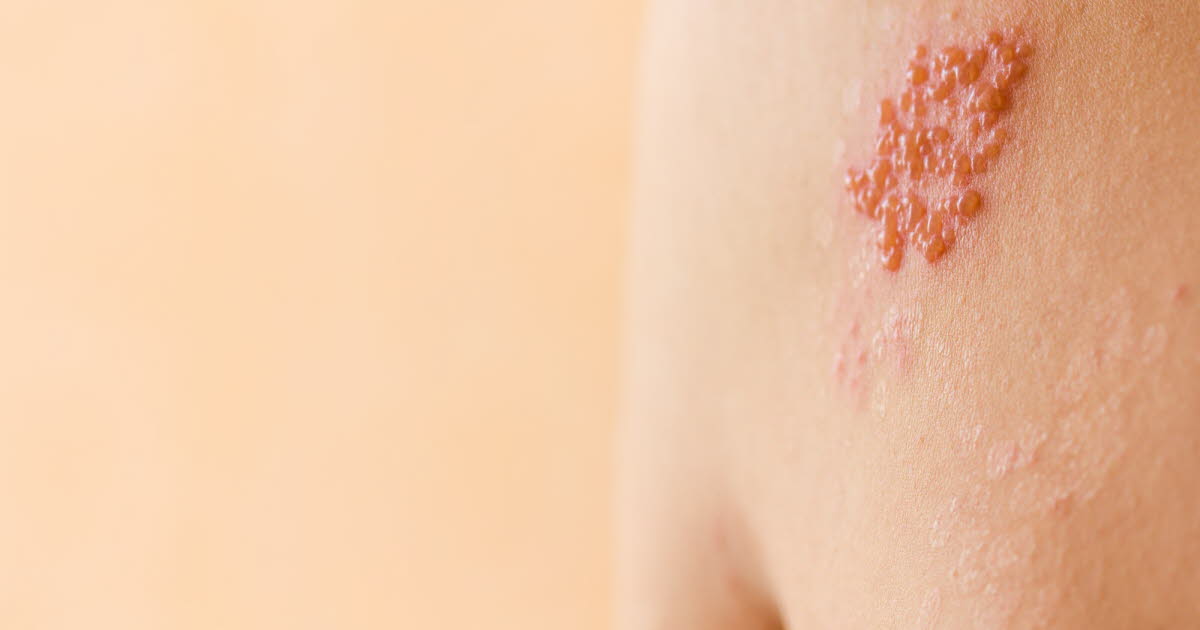
Shingles mainly affects people over 50 years old. Extremely painful, this viral infectious disease “is caused by the reactivation of the varicella-zoster virus of the herpes virus family, which occurs long after chickenpox,” the health insurance describes.
In detail, in order for shingles to appear, the varicella-zoster virus, which has remained “asleep” at the nerve root at the level of the ganglia, must multiply there. Then, it “runs along the nerve fibers and causes painful skin or mucous rashes in the area innervated by these fibers,” she continues.
strike
Studies have indicated that varicella virus reactivation may be a risk factor for dementia in the elderly. To be sure, Sigrun Alba Johannesdottir Schmidt’s team from Aarhus University Hospital in Denmark obtained medical data from nearly 250,000 people treated in hospital for shingles. They formed a parallel control group of people of the same age – average age 64 – who had not been treated for the disease.
After comparing the incidence of dementia in the two groups, the scientists found no significant difference. Participants who had shingles had 9.7% developed dementia twenty years later, while the other 10.3% had.
Even more surprising, the researchers noted that the shingles group had a 7% lower risk than the control group, once other health factors associated with dementia risk (diabetes, cancer, and head trauma) were taken into account.
“We were surprised by these results,” reassured the authors, whose reasons for this observation remain unknown.
Vaccination is recommended
These results should not call into question the recommendation to vaccinate the elderly against this disease. Because if nearly 90% of shingles are cured without sequelae, some complications, including persistent pain, bacterial infection, or even extension of shingles to many parts of the body, including the central nervous system, may appear in the case of immunosuppression.
Moreover, the study authors note that in the latter case, although rare, an increased risk of dementia was clearly observed.
