


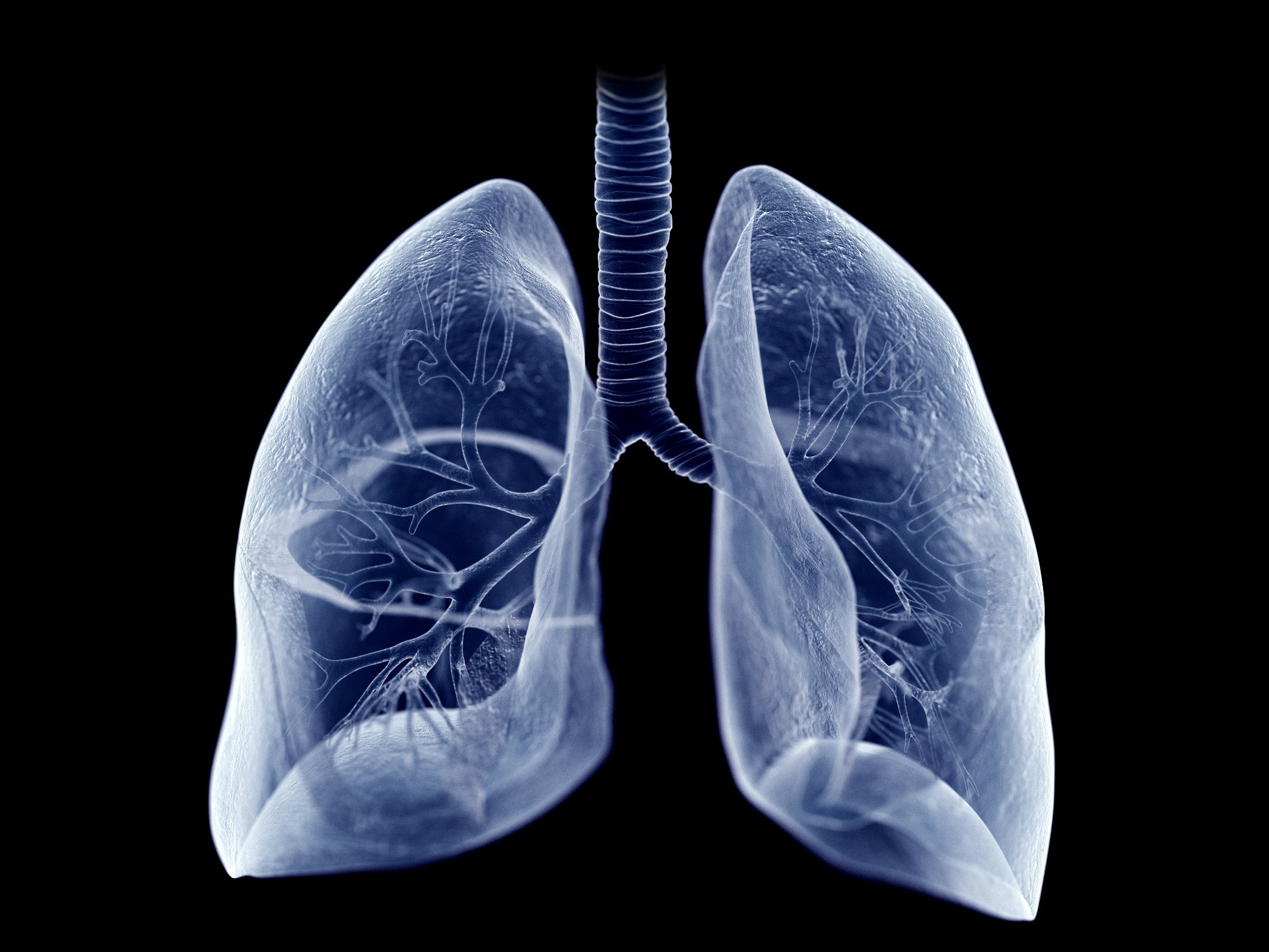
The researchers showed that memory B cells can be found in the lungs. © Adobe Stock
How can the effectiveness of vaccines to prevent viral respiratory diseases such as influenza and COVID-19 be increased? Scientists from Inserm, CNRS and the University of Aix-Marseille at the Center for Marseille-Luminy Immunology are breaking new ground on the topic, by showing that stimulating the appearance of memory B cells directly in the lungs would constitute a promising pathway. Currently, vaccines are given by intramuscular injection and It does not give rise to these cell groups. This work, which improves basic knowledge in the field of immunology, was published in the journal immunity.
Memory B cells are immune cells that are produced mainly in the lymph nodes and spleen after infection. It persists for a long time in these areas and retains the memory of the infectious agent. If the body encounters them again, these cells are immediately mobilized and the immune system quickly reactivates to provide effective protection to the individual.
After extensive work on memory B cells, researchers discovered three years ago that these cells can also be found in the lungs. The team led by Inserm researcher Mauro Gaya and collaborators from the Center for Marseille-Luminy Immunology (AMU/CNRS/Inserm) and the Center for Immunology (AMU/CNRS/Inserm) went further to describe the nature and functioning of these particular immune cells. .
The goal was to better understand these cells and their involvement in the long-term immune response against respiratory infections. The scientists worked towards this with two infection models in mice: the influenza virus or Sars-CoV2 virus.
“authentic” and “spectator”
They used fluorescent markers to track the appearance of memory B cells after infection and then performed a single-cell transcriptional analysis[1]. These techniques allowed us to precisely locate these cells in the lungs of our animal models and to describe the gene expression profile of each cell individually to study their function. ,” explains Mauro Gaya.
About ten weeks after the virus was inoculated and eliminated from the body, the team observed the formation of clusters of memory B cells at the level of the bronchial mucosa strategically located, allowing them to come into direct contact with any of them. A new virus reaches the lungs.
Furthermore, this work indicates that there are two subsets of memory B cells that express different genes, called ‘memory B cells’. good well and “bystanders” which can be translated to “authentic” and “bystanders”. cells” good well They show a special affinity for the virus that caused their appearance. In the event of a new encounter with this pathogen, they immediately differentiate into plasma cells[2] It produces highly specific antibodies against the virus.
Conversely, “bystanders” do not directly recognize the virus but, thanks to a specific receptor, bind to the immune complexes formed by the antibodies that produce it. good well “.
Thus ‘bystanders’ can allow cross-reactions by increasing the response of different combinations of ‘ good welle “against several types of viruses. ” Here we have a two-speed system that allows for a synergistic effect and increases the effectiveness of the antiviral memory response in the lungs tenfold. ,” explains Mauro Gaya.
In addition to developing basic knowledge in immunology, the research team sees these findings as a long-term way to improve the effectiveness of vaccines against influenza or COVID-19.
These findings could indeed be the basis of new research into the way vaccines are given. ” The hypothesis is that by intranasal vaccination, we can mimic the natural entry pathway of the virus, mobilizing pulmonary memory B cells to block the virus once it reaches the respiratory tract in case of infection. In this way, we can fight severe forms but also better protect against infection. Mauro Gaya concludes.
[1] Single-cell transcriptome analysis: a technique consisting of studying the genes expressed in each cell of the sample
[2] Plasma cells: B lymphocytes that have reached the stage of final differentiation during which they produce antibodies
