

Close Menu
    Facebook X (Twitter) Instagram
    Trending
    • Hauser’s Marks 45 Years With Province-Wide Customer Celebration and Renewed Focus on Community Care
    • Young drivers face elevated collision risks after consuming edible cannabis, new CAA-funded study finds
    • Salvation Army Thrift Store Marks 40th Ontario Location with Peterborough Opening
    • Early Blast of Winter Prompts Safety Warnings from Ontario Road Authorities
    • HONOR Takes Home Two TIME Best Inventions 2025 Awards for Smartphone Breakthroughs
    • Toronto Set to Host Largest LEGO® Fan Event in Canadian History
    • Hank Azaria and Caitlin Morrison Champion Mental Health Through Music at Toronto’s Koerner Hall
    • Bricks in the Six to Build Canada’s Largest-Ever LEGO® Fan Event This November
    Facebook X (Twitter) Instagram YouTube
    Vaughan TodayVaughan Today
    • Home
    • Top News
    • World
    • Banking
    • Explore Canada
    • How to
    • Solutions
    • Contact Form
    Vaughan TodayVaughan Today
    Home»science»How does a seawater desalination plant work?
    science

    How does a seawater desalination plant work?

    Maria GillBy Maria GillSeptember 4, 2022No Comments1 Min Read
    How does a seawater desalination plant work?
    Share
    Facebook Twitter LinkedIn Pinterest Email

    Due to drought and low water resources, some French cities have opted for seawater desalination units or seawater desalination, as this system removes salt from the water to make it clean for consumption. On Groix Island, the system has been installed since the beginning of August for an interim period of three months.

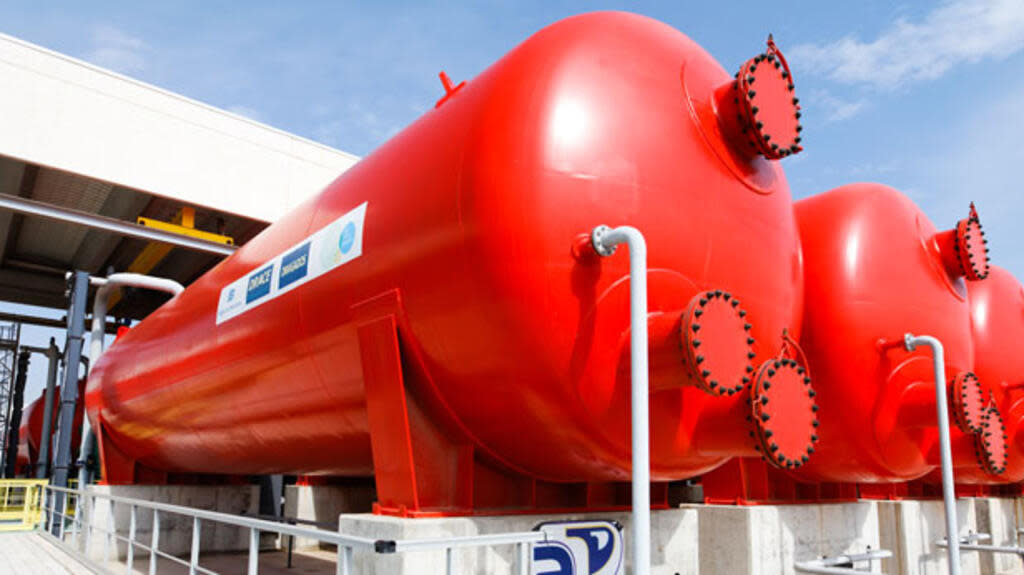
    You can see from the beach of Groix Island at sea The raft is connected to the desalination units by a thick black tube. The water is pumped, stored and then transferred to two white containers. This is where the salt and water are separated by a membrane.

    “ Thus, membranes are physical filtration that allows water to pass through on one side while retaining all particles on the other side. These membranes are fragile, and therefore are regularly maintaineddescribes Sandrine Delemazur, director of the water and wastewater service for the Lorient conglomerate. During the filtering process, we check for membrane contamination, and when we reach a certain degree of fouling, we can try to clean it, by passing water upstream, by chlorine washing or chemical washing. »

    Water desalination plants are expensive. At Groix, the conglomerate paid €800,000.

    Read more about RFI

    Share. Facebook Twitter Pinterest LinkedIn WhatsApp Reddit Tumblr Email
    Maria Gill

    "Subtly charming problem solver. Extreme tv enthusiast. Web scholar. Evil beer expert. Music nerd. Food junkie."

    Related Posts

    Rare Earth Metals: Essential Uses and the Global Supply Chain

    October 4, 2025

    200 meteorites found on Earth could be linked to Martian craters, allowing new insight into Mars’ history

    August 28, 2024

    Antibiotics that reduce the risk of stomach cancer

    August 26, 2024
    Facebook X (Twitter) Instagram Pinterest
    © 2025 ThemeSphere. Designed by ThemeSphere.

    Type above and press Enter to search. Press Esc to cancel.