



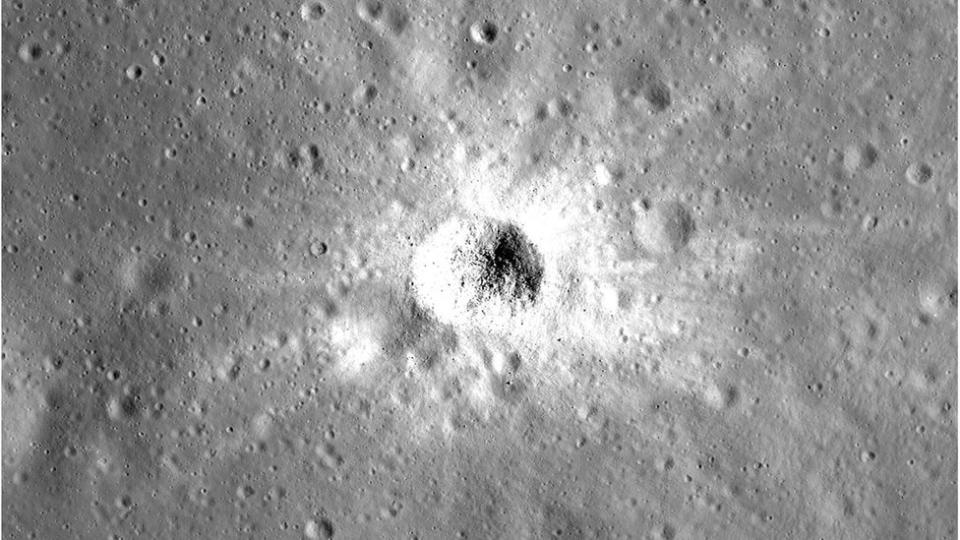
As the Japanese Aerospace Agency said: “Operations have resumed!”
After the Japan Aerospace Exploration Agency (JAXA) reestablished contact with the lunar lander on Sunday evening, the rover began studying its surroundings in detail and sending new images back to Earth.
The lander is performing analyzes that could inform future, much longer missions to the Moon.
“Now we're really seeing the science,” one lunar scientist told BBC News.
The vehicle is at a very critical angle. The photo taken by the tiny, baseball-sized robot called Sora-Q — which was ejected from Slim moments before landing — showed the lander face down on the moon's surface.
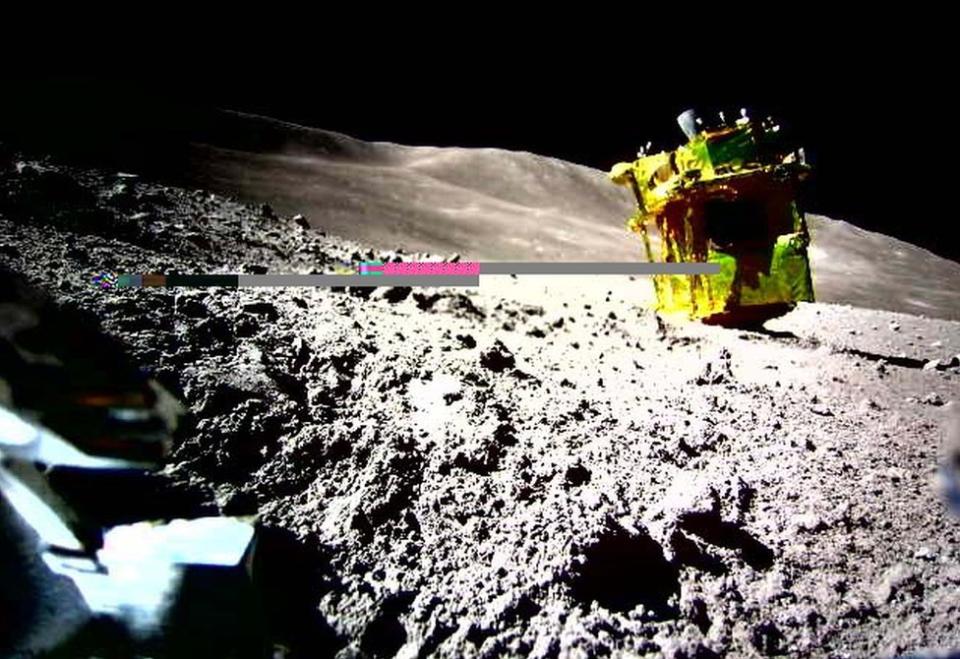
This has left the solar panels out of sunlight and unable to generate power. The decision to put the lander to sleep – and conserve any remaining energy – was made less than three hours after landing.
This tactic appears to have worked. The change in the direction of the sunlight has now “woke up” the rover.
The mission team had already been able to study photographs of the landing site and selected specific rocks in the area and gave each of them the name of a breed of dog – apparently to give an indication of the size of each rock. On Monday, the team released an image of a nearby gray rock — this was the probe's science camera zooming in on a rock called “Dog Toy.”
It may not look like an amazing photo, but the shot was captured using what's called a multi-band camera, or MBC, which can essentially take photos that reveal the rock's formation.
“The camera responds differently – at different wavelengths – to each of the minerals in this rock,” explained lunar scientist at the Open University, Dr. Simon Barber.
Seeing this will enable scientists to build a picture of the moon's history. “If the toy poodle is very different from the rocks around it, that may indicate that it was transported there by a collision event,” Dr. Barber explained. “So all these details allow us to piece together more about what has happened on the Moon since its formation.”
Being able to identify and examine rocks in this way could also reveal materials on the moon's surface that future missions might be able to use to make fuel or provide water supplies.
“This detailed geology is the cherry on the cake,” Dr. Berber said. “[The mission is] “It's already a success in my mind – I think the engineering has been great so far.”
It is not yet clear how long the vehicle will be able to operate, as it all depends on the angle of the sun and the solar panels.
The sun will eventually set on the lander, and JAXA has previously warned that it was not designed to survive a lunar night, when the moon's surface is not exposed to the sun for about 14 days.
But mission engineers have already achieved their landing goal of getting within 100 meters (330 feet) of the intended landing site.
