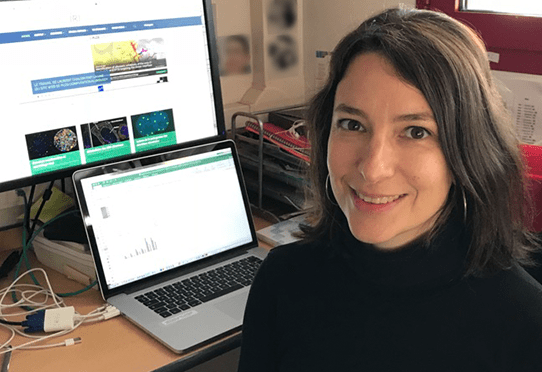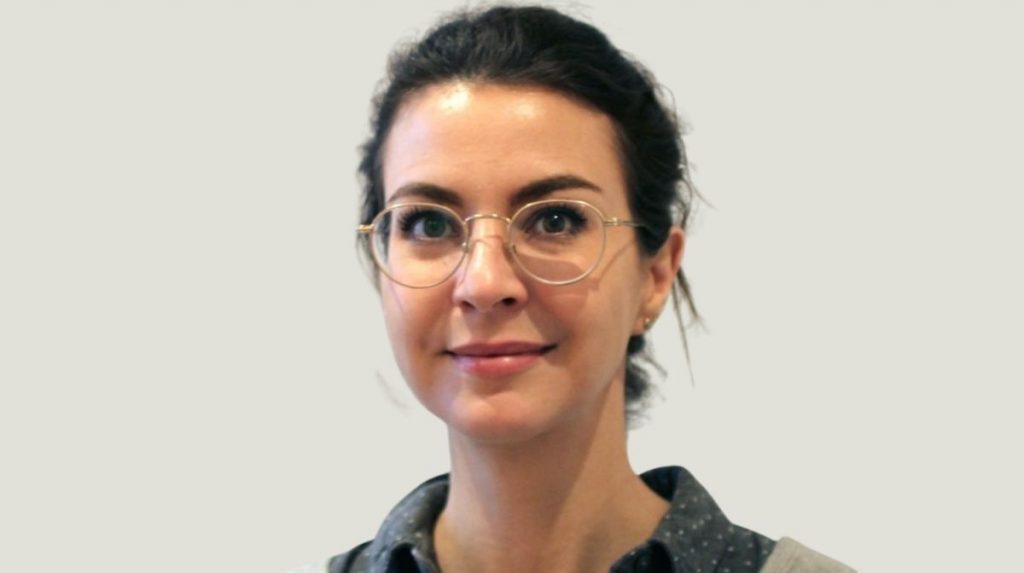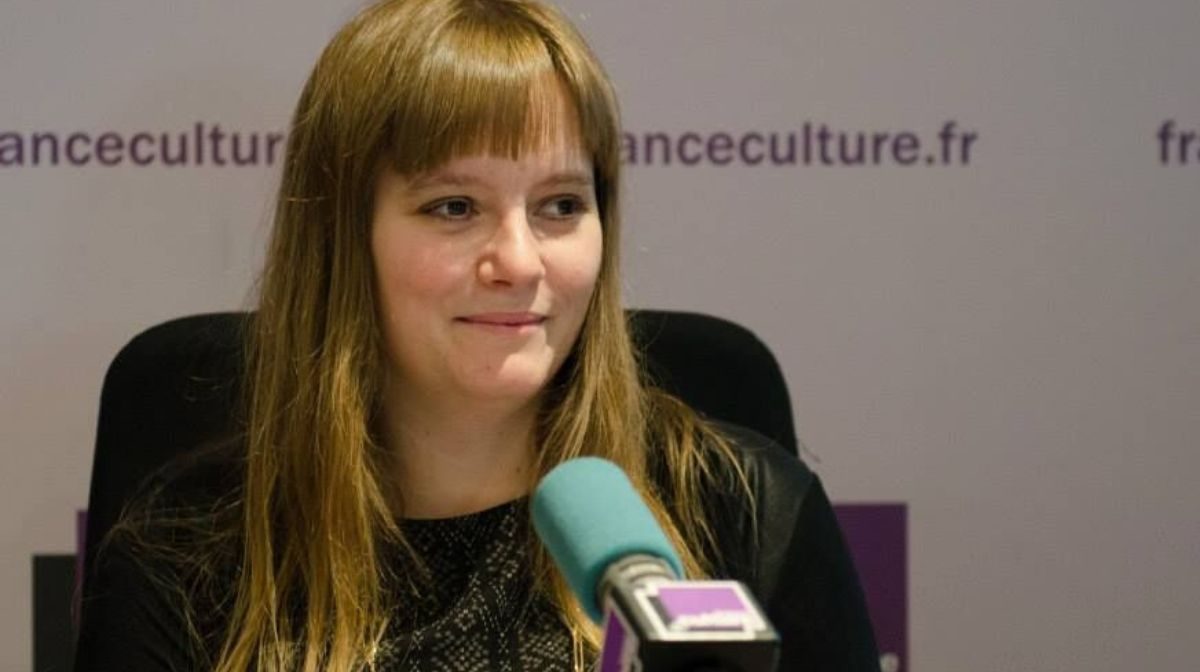
Aude Bernheim, who specializes in microbiology and genetics, is distinguished by her strong commitment to associations. When not dedicated to tracking down the parallels between immunity of bacteria and that of humans, a young researcher works to erase the differences in treatment between women and scientific men…

Researcher, activist, author. Aude Bernheim, 32, has many hats. Recently, she received European Research Council (ERC) funding in addition to Atipe Avenir’s funding, to set up her own research laboratory and continue her work on bacteria’s ability to fight viruses. An emerging topic that has fascinated her for nearly 10 years, but has yet to fully dedicate a French team to it.
” This European funding of 1.5 million euros will allow me to study the conervation of specific genes that govern antiviral immunity to bacteria, but also animal cells, including humans The researcher summarizes. At the interface of bioinformatics and microbiology, this project has its roots in the work she started on her dissertation, beginning in 2014. Then I was working on CRISPR-Cas systems, these enzymes that bacteria produce to fight the viruses that infect them, phages.. The potential of these bacterial tools in the service of human health has stimulated a strong research dynamism on this topic. »
Since then, after the discovery of CRISPR-Cas, more than 60 bacterial systems capable of fighting phages have been identified.. “During my postdoc, I first became acquainted with two of them: bugloss and retrons. However, it was soon noticed that some of these molecular tools could be found in non-bacterial cells, including human cells. ! This is especially the case of bugloss. Thus, despite the bacteria’s extreme genetic variability, there is evolutionary protection for some of these antiviral weapons.
” Today, our ERC-funded project aims to explore this conservation, to better understand how bacteria protect themselves against phages, but also to assess how we can exploit these antiviral properties to fight disease-causing viruses.. The researcher and the team she appointed are working on two phases: The first phase of Comparative genomics Procedure in silico It allows them to develop hypotheses which they then evaluate through experimental microbiology work.
bacterial immunity
Interestingly, the genes encoding the different antiviral enzymes are located next to each other within the genome of bacteria. This feature facilitates bioinformatics analyzes aimed at discovering new antiviral systems. With Florian Tyson, a doctoral student in her lab, the researcher created an algorithm to describe the number and nature of the protective systems present in the bacterial strain. “ By studying more than 21,000 bacterial genomes, we have observed that bacteria have an average of 5 different systems. But there is great diversity between species and even within the same species: the number of systems present can vary from 0 to 57 ! So Aude Bernheim postulates that bacteria do not protect themselves individually, but collectively: with their congeners, they will have a common immune system whose functioning depends on their ability to easily transfer the genes necessary for their defense.
With Vincent Lebes and Helena Shumar, researchers on her unit, she also wants to do a study using soil samples taken from all over France. By analyzing the bacteria and phages found there, they hope to be able to identify other bacterial immune mechanisms that are important to human health. ” For this, we will suggest volunteer citizens to send us samples of their environment. In addition to the great diversity of sampling, this will also be a way to concretely increase public awareness of the importance of soil biodiversity. Aude Bernheim explains.
Inclusive and participatory sciences
This participatory science project was not surprising given the researcher’s background: she explored interdisciplinary and innovative approaches to research in the life sciences directly from her graduate studies. This experience also proved crucial in more ways than one: During my 2nd Master’s thesis, I chose to do research in biology from my core business. Until then, I knew I wanted to act so that science would have its full place in society, but I was hesitant between that choice and the choice to engage in public policy on these issues. I finally chose to search, but at the same time involved myself in union activity. That’s why I co-created wax science (What about experimental science?), an association that wants to promote diversity in science and break gender stereotypes in and through science. ” During this same year for Master 2, the The Part of the Student Science Mainstreaming Club, Flora Vincent I won a European video competition aimed at raising public awareness of the place of women in science. This project made us realize the scale of the problem. It was impossible for us to abandon the topic after that. Hence the creation of the WAX Science Association. In the process, the two young researchers write a book, Artificial intelligence is not without them!. The book draws the attention of the general public and decision-makers to the absence of women in the algorithmic sector, and to the dangers of reproducing, or even amplifying, the gender stereotypes that result if nothing is done.
” I have the crazy privilege of being able to do research. But this journey, which seemed to me a classic, later seemed to me full of difficulties connected with the fact that I am a woman, Aude Bernheim admits. Thus, working to make science more comprehensive is not a choice in my opinion, but a necessity. I often get asked how to reconcile these two activities, but I more easily ask myself how I can’t do that. This topic is very important, and I can’t invest myself in it to make things happen. »
NB :
* Unit 1284 Inserm / Paris City University, Team Molecular diversity of microbesLearning Planet Research Institute, Paris
Read also