


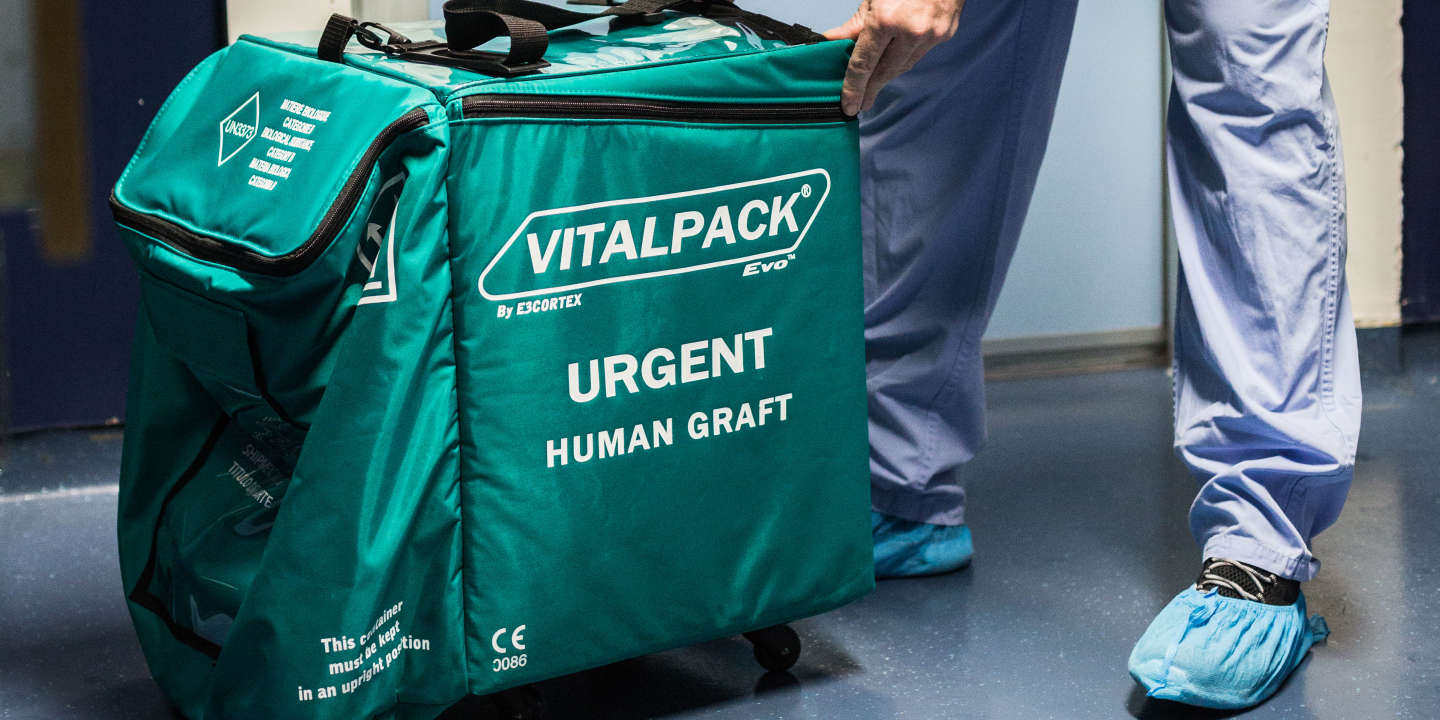
This is additional collateral damage from the Covid-19 pandemic to other patients, not least. Transplant activity fell nearly 16% in 2020 (and up to 31% during the first wave), causing the loss of more than 48,000 years of life, according to estimates by a study in 22 countries, published online August 31 in the review. Lancet Public Health. The results of this international work, coordinated by Professor Alexandre Lupi (Nephrologist, Director of the Center for Translational Research in Organ Transplantation in Paris, INSERM) were presented at the Congress of the European Society of Organ Transplantation in Milan (Italy).
Transplants are a highly supervised medical field, distinguished by their high technology, and by a large gamut of personnel who mobilize them, from graft removal to placement. To assess the impact of the pandemic on this peak of activity, researchers compared the number of organ transplants (kidney, liver, heart and lung) in 2020 with the previous year, 2019, in 22 countries: 16 in Europe, 2 in North America (Canada and the United States), 3 in America Southern (Argentina, Brazil, Chile), and Japan. Altogether, in these countries, which account for about 62% of global transplant activity, the number of transplants decreased by 16% in 2020 (- 11,253 compared to 2019), while it usually increases from year to year. to 10%. “During the first wave in particular, the transplantation activities declined significantly, but it has not yet returned to normal, and this will undoubtedly take several years,” Professor Luby confirms.
Kidney transplants, which can be postponed thanks to hemodialysis, were the most affected (- 19.1%), as were lung and liver transplants to a lesser extent (respectively – 15.5% and – 10, 5%). Heart transplants, which are considered immediate emergencies, recorded a lower decline (- 5.5%). For patients awaiting transplant, the consequences were dire because the cessation of activity resulted in a total of 48,239 years lost in these 22 countries, including 37,664 years for kidney patients.
29% fewer transplants in France
The authors also noted significant disparities between countries, which they categorized into three categories: those in which transplant activity declined sharply even though the number of deaths due to Covid was low (Argentina, Japan, and Chile), and those in which it declined concurrently with deaths. of Covid (the majority of countries including France, Spain and the UK) and finally those in which transplant activity has decreased relatively little despite being severely affected by the epidemic (US, Italy, Switzerland, Slovenia and Belgium). Thus, in the United States, the country that performs the largest number of organ transplants in the world, the impact of the crisis was less (- 4.1% of business in 2020). In France, transplant activity experienced one of the most significant decreases (-90%) during the first weeks of the epidemic, even in areas initially slightly affected by SARS-CoV-2. Then the measures were taken, and over the whole of 2020, the drop was 29% (- 1,410 actually), with a drop of more than a third in kidney transplants.
You have 14.16% of this article to read. The rest is for subscribers only.
