


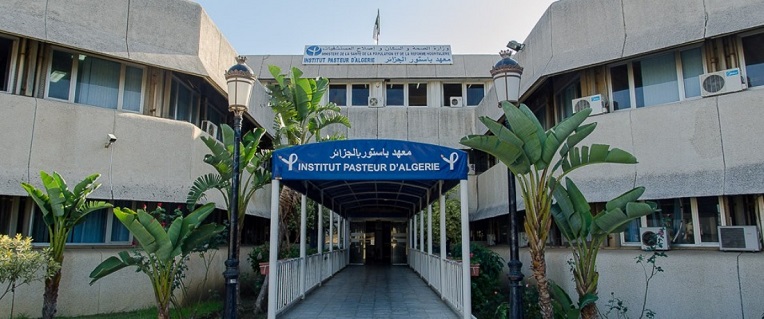
The Algerian Pasteur Institute published, on Sunday, an explanatory note on the monkey pox Cases of them have been discovered all over the world, raising fears of a new global pandemic.
US President Joe Biden on Sunday warned of the “imperative” of a possible spread of this disease in the world still battling the Covid-19 pandemic.
| Read also: Monkey pox: the full note from the Algerian Pasteur Institute
In Algeria, health authorities have not reported detection of monkeypox cases. No specific device has been deployed to the border against this virus. But health authorities are on the alert. On Sunday, the Algerian Pasteur Institute published an explanatory note on monkeypox.
The Algerian Pasteur Institute states that monkeypox “was discovered in 1958, when two epidemics of a disease similar to smallpox spread in colonies of monkeys bred for research, hence the name “monkeypox”. »
He adds that the first human case of this disease “was recorded in 1970 in the Democratic Republic of the Congo, during a period of intensifying efforts to eradicate smallpox.”
“Since then, ‘monkeypox’ has been reported in many other Central and West African countries: Cameroon, Central African Republic, Côte d’Ivoire, Democratic Republic of the Congo, Gabon, Liberia, Nigeria, Republic of the Congo and Sierra Leone,” adds the Algeria Pasteur Institute. In 2022, several cases of monkeypox were detected in England, Portugal, Spain, France, Sweden, the United States, Australia and Canada, as well as in other countries.
Transmission
The Pasteur Institute in Algeria explains in its note that the transmission of this virus “may be due to the global decline in immunity against viruses of the genus Orthovirus (responsible for human smallpox), after the cessation of smallpox vaccination in the 1980s.
Algeria’s Pasteur Institute warns that “monkeypox could thus become the most important OPV infection in humans,” stressing that “modeling data show that as long as populations whose collective immunity to OPV species declines, the potential for epidemic OPV will continue to rise. . »
The Pasteur Institute in Algeria further states that the transmission of monkeypox “occurs when a person comes into contact with the virus from an animal, human or material contaminated with the virus.”
He notes that the virus “enters the body through a wound in the skin (even if it is not visible), the respiratory tract, or the mucous membranes (eyes, nose or mouth). »
Transmission of monkeypox from animal to human can occur by “bite,” “scratch,” “bush meat preparation,” “direct contact with bodily fluids,” “physical damage,” or “indirect contact with a contaminated substance.” Example through contaminated bedding. »
“Human-to-human transmission is thought to occur primarily through large respiratory droplets. Respiratory droplets generally cannot travel more than a few metres, which requires prolonged face-to-face contact”, says the Algerian Pasteur Institute.
According to the same source, other methods of human-to-human transmission of this virus include “direct contact with body fluids” and “indirect contact with soiled equipment, for example through contaminated clothing or linens.”
“The repository host (the main vector of the disease) of monkeypox is still unknown, but the African rodent is suspected of playing a role in transmission,” the Algerian Pasteur Institute further details.
