


Scientists have specialized in analyzing the possible link between extreme weather events and global warming. They were criticized at first, and their work became credible
When a few scientists in 2015 attempted to assess the role of climate change in record floods in the UK, reception was icy and the approach was described as “unscientific”. Six years later, their work has become credible.
In early July, scientists from the World Weather Attribution estimated that climate change made the heat wave that hit the western United States and Canada in June at least 150 times more likely.
The World Weather Referral Organization (WWA), which brings together experts from various research institutes around the world, has specialized in analyzing the potential link between a particular extreme climate event and global warming, by computing over very short time periods. In short, the possibility that it would have happened even without climate change linked to greenhouse gas emissions.
“We wanted to change the debate, but we didn’t think it would work either,” says climate scientist Frederic Otto of Oxford University, who founded the WWA in 2014 with Gert Jan van Oldenburg of the Royal Netherlands Institute of Meteorology, who died of cancer on October 12.
The researcher, who would have turned 60 on Friday, has developed the Climate explorer website, which makes climate data accessible to researchers around the world.
“Very disappointed”
Research on the links between climate change and climate disasters dates back nearly 20 years. In 2004, a British study published in the scientific journal “Nature” showed that the heat wave of 2003 in Europe, which killed many people, was more likely to occur due to global warming. At the time, it took months to publish such a study because it had to be evaluated by other experts.
Faced with a severe heat wave or torrential rain, scientists have been reluctant to blame overheating. It was “very frustrating,” says Frederic Otto.
In one of its first studies, the academy concluded that climate change exacerbated the floods in Britain in 2015, but was rejected by a scientific journal, before being published a few years later.
The scientist remembers: “A lot of people in the scientific community were saying, ‘It’s too fast, it’s not science, science doesn’t work that way.'”
To gauge the role climate change plays in an extreme climate event, the WWA compares the current climate, with a 1.2°C warming since the mid-19th century.NS The century is caused by human activities, with what could have been otherwise, using models and observations in the past.
with methodology
They also work with local experts to better understand the context in which these events are occurring. The Red Cross cooperated with them quickly, as did the American scientific organization Climate Central.
The WWA has developed a methodology that has been validated by other experts, and has shown that accelerating attribution of a natural disaster to climate change is an “operational activity,” comments Robert Footard, a researcher at the Laboratory for Climate and Environmental Sciences (LSCE).
“You don’t publish a study every time a weather forecast is released,” the climate scientist, who is involved in the IPCC’s work, told AFP. But during the heatwave in Canada and the United States, temperatures were “out of range,” he continues.
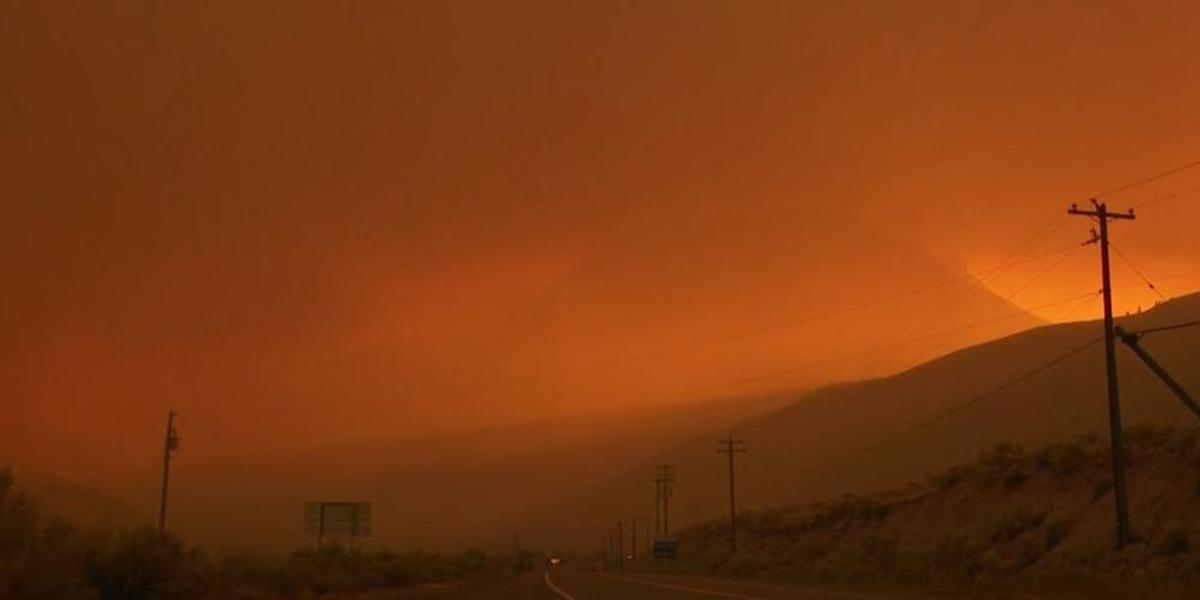
Lytton, 250 kilometers from Vancouver in western Canada, set a record for three consecutive days, reaching 49.6 degrees Celsius before consuming 90% of the flames, killing two people.
According to WWA’s work, under the current climate, such a heat wave could statistically occur once every 1,000 years. The researchers also determined that the recorded temperatures were about two degrees Celsius higher than they would have been if this bout of extreme heat occurred at the start of the Industrial Revolution.
