

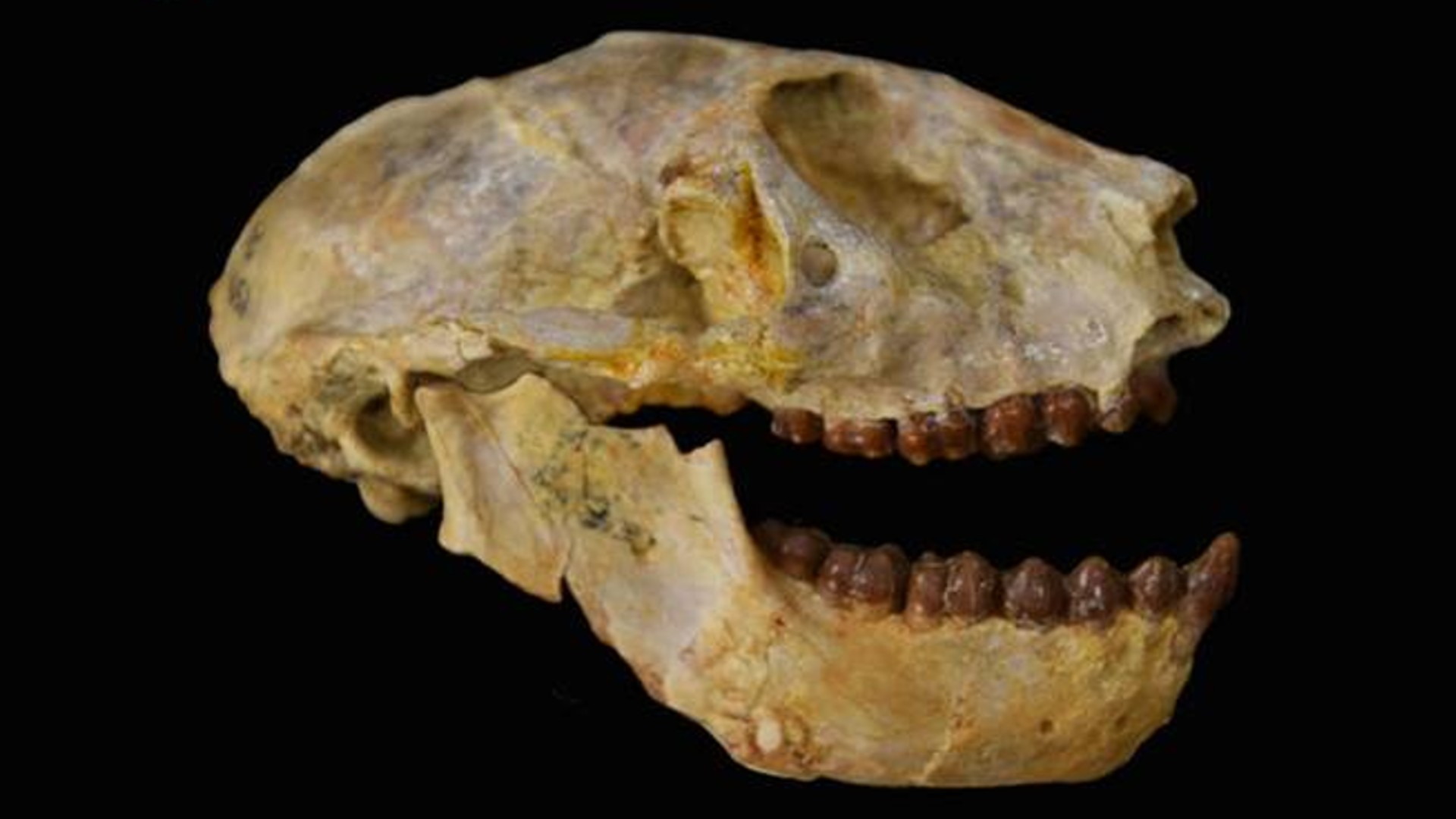
A mass extinction that had never before been documented in this way wiped out many species 30 million years ago.
There have been five confirmed mass extinctions in the history of our planet. a Sixth Extinction, due to human activities, continues. Could other events of this kind occur without us having fully identified them? This is the published discovery in a Communication biology October 7, 2021: The transition between the Eocene and Oligocene geological periods appears to have been marked by an extinction of 30 million years ago.
Significant climate change, already documented, occurred around this time. Then the planet cooled, and the reverse of the current phenomenon occurred: carbon dioxide became scarce, sea levels fell, and ice caps widened. There were other transformations, such as the transformation of forests into vast meadows. We already knew that this climate change caused the extinction of many species in Europe and Asia, but without defining this as a major mass extinction, because the debate continues: African mammals would have largely survived due to the proximity to the equator, which reduces climate damage.
But the newly concurring evidence contradicts this theory: East Africa has not delivered, far from it. ” It is very clear that there is a huge extinction event, and then a period of resiliency ’,” comments co-author of the study, Stephen Heritage, on Location from Duke University.
‘New Environmental Opportunities’
To reach this conclusion, the research team compiled a huge collection of fossils – hundreds, collected from several African sites over several decades. They correspond to several groups of mammals: hyaenodonts (carnivores), two groups of rodents that are anomalies (big-tailed squirrels) and hystricognaths (where we find porcupines and naked mole rats), and finally two groups of primates, strepsirrhines (which include lemurs) and an anthropoid that Includes apes and great apes.
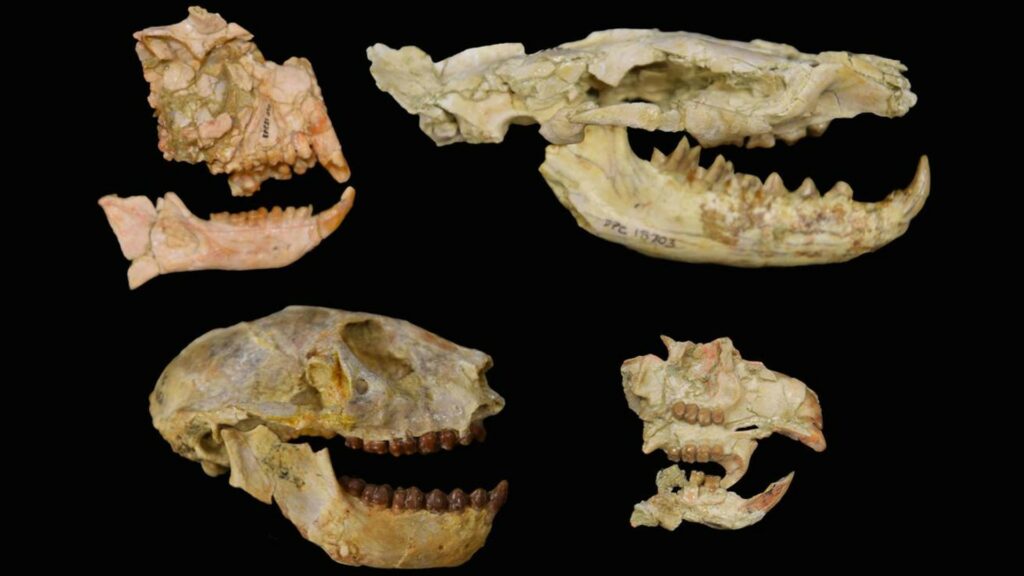
This revision made it possible to reconstruct a family tree of the time: when all species appear, flourish and disappear. This certainly makes it possible to point out losses or increases in numbers, but it also highlights more complex developments: when a species diversifies by filling in the remaining space in an ecosystem by one or more extinct species.
The losses in the five groups of mammals are enormous. ” It’s as if we really pressed the reset button “,” comments one of the authors, Dorien de Vries, on the university’s website.
During the extinction period, genetic diversity declined before increasing again after a million-year hiatus. This can be seen, for example, through the teeth: “ We notice a significant loss of tooth diversity, and then a recovery period with new tooth shapes and new adaptations. »
During the transition between the Eocene and the Oligocene, that is, during the mass extinction, the tooth type was very small – for our ancestors it is simple, only one form of tooth remains. It is a symptom of the massive loss in the number and diversity of species capable of surviving during this time, many of which simply became extinct. Then, after the extinction, the lines that managed to survive were able to diversify again. In this next stage, new species, slightly different or completely different, emerge with new adaptations within a different ecosystem.
« Extinction is interesting at this point says Matt Borths, one of the authors. ” It kills, but it also opens up new ecological opportunities for the lineages living in this new world. »
Extinction Challenge
If you feel like you’re having a bad day, tell yourself that it’s nothing compared to the challenges the species faced at the time. Because there was not only climate change that caused temperatures to drop dramatically: East Africa was simultaneously experiencing giant volcanic eruptions, basaltic floods that covered vast areas with molten rock, not to mention some geological surprises such as the separation between the Arabian Peninsula and Africa that created Red Sea and Gulf of Aden.
However, many species survived this mass extinction by continuing despite this changing climate and largely restored ecosystem.
For the authors, this bottleneck for terrestrial mammals also indicates ” Interesting story ” employment Our early evolutionary history «:« We almost never would have been, if our ape ancestors died out 30 million years ago. Fortunately, this was not the case. As usual, learning from the past allows us to better understand the present and the future: this type of discovery is useful for modeling of current climate change caused by human activities.
Share on social media
Continuation of the video

Evan McKenzie is a contributor at Vaughantoday.ca, covering a wide range of topics including local news, politics, business, technology, sports, entertainment, and lifestyle. He focuses on clear, balanced reporting that helps readers stay informed about current events and issues that matter to their communities. His work aims to provide useful information, timely updates, and relevant stories presented in an accessible and reader-friendly way.