

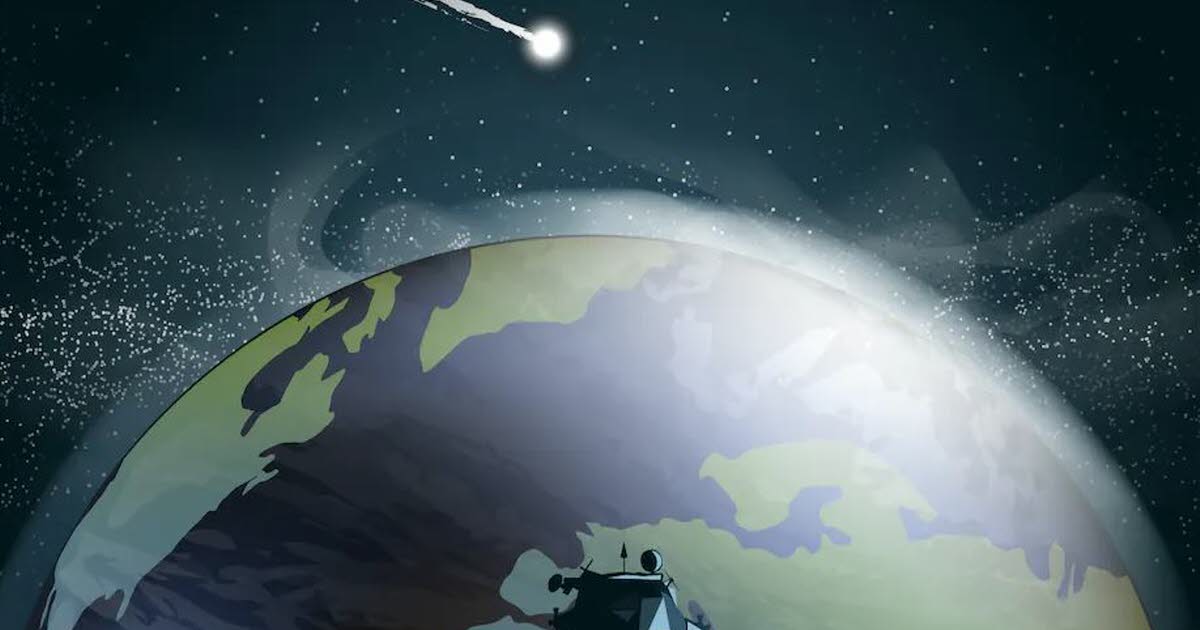
Asteroids are small planets, found mostly between the planets Mars and Jupiter. They are the oldest elements in the solar system. A very long time ago (4.5 billion years ago), when the Sun was formed, there was nothing but dust and gas around it.
Dust specks gathered together and made big things, which could be as big as a truck, your school, or even your city. These are asteroids. Most of them then managed to stick together and form planets. But, as we said, there are still a few, especially between Mars and Jupiter.
Asteroids contain rocks and minerals as well, often in small grains. There are some places where the metal forms a large core in the center, and even some of them are all metallic (perhaps because they are bits of broken large asteroid cores).
We know this thanks to the space probes that returned the samples. By the way, there is currently one, sent by Japan, called Hayabusa 2, which is exploring an asteroid called “Ryugu”, and it gives us a lot of interesting pictures. Another probe, an American called Osiris-rex, has also approached the very similar asteroid Bennu.
We also know this by looking at meteorites, which are pieces of asteroids.

Evan McKenzie is a contributor at Vaughantoday.ca, covering a wide range of topics including local news, politics, business, technology, sports, entertainment, and lifestyle. He focuses on clear, balanced reporting that helps readers stay informed about current events and issues that matter to their communities. His work aims to provide useful information, timely updates, and relevant stories presented in an accessible and reader-friendly way.