


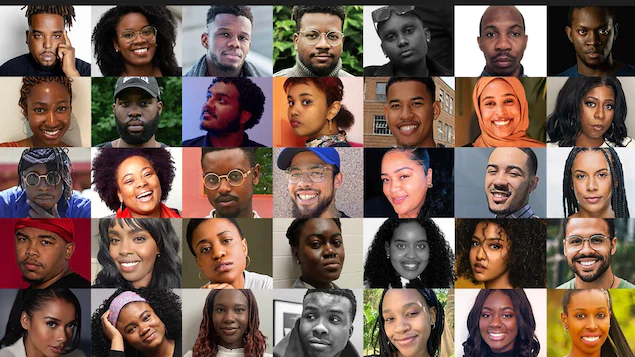
In 2020, Jorge Camarrotti won the Director of the Year award at the Gala Dynasty for his film kinship. Another bonus was the career of the filmmaker, who since March 2021 represented the famous production company Roméo & Fils. However, the person who left his native Brazil to settle in Quebec in 2003, says the road to recognition was a long one.

Jorge Camarrotti presents the short film “Othman” at the Toronto International Film Festival.
Image source: Jorge Camarotti
For three years, he’s been trying to help young filmmakers from black communities get a head start by participating in Being Black in Canada, created in 2012 by the queen of festivals, Fabian Colas. The program is overseen by the Fabienne Colas Foundation, with financial participation from Netflix.
When I came to Canada, there was no such program. It took about 10 years to get to my place, he explains over the phone. The idea of the program is to give people opportunities so they don’t have to do like me and to settle the race a little bit more, because black communities start from far away. As I always say, there is no talent without potential.
Lack of communication is the main obstacle to the rise of black cinema
For the third year, Jorge Camarotti has played the role of mentor and educator within Being Black in Canada. For the 2021-2022 season, he had two groups of emerging filmmakers from Montreal, one speaking English and one speaking French. Other cities that participated in the program included Ottawa, Calgary, Vancouver, Toronto and Halifax.
He acts like the Artistic Director of all projects, in addition to teaching his students the technical aspects of production. The idea is to get to a certain level despite their inexperience, because these movies often end up on Tou.tv and other platforms. I am here to support people so that they can achieve the best possible result.
he explains.
Several factors explain why directors leave black communities and are at a disadvantage compared to other filmmakers, but according to Mr. Camaruti, the main problem is the lack of communication.
For me, this was the hardest part. You don’t have to be friends with anyone to get access [aux budgets]. On the other hand, in the production stage, we face the reality of things
He says, adding that the biggest challenge is finding peers to work with.
There are already teams that have been formed for several years, like the people who all studied at UQAM together. One becomes a director and the other a cinematographer and they work together for years. These people will not leave.
The short film, an ideal format for budding filmmakers
People who participate in Being Black in Canada can come from all walks of life. Most of them have some basis in cinema, but this is not a prerequisite. At the maximum sometimes we give the opportunity to people who have absolutely no experience. There were nurses and people with PhDs in writing. It is very selective
Jorge Camarroti explains.
The program imposes a format — a short documentary film — on participants, but the latter is very flexible: filmmakers must convey their vision of what it means to be a black person in Canada. A short film allows you to gently enter the world of filmmaking, which can be very complex.
It can become very intimidating for someone who has not done this before. It takes a lot of confidence [de plusieurs personnes] towards the exit. Even me, I’ve been doing this for 10 years and haven’t done a feature film yet.
says Mr. Camaruti.
more powerfulHypnotic Beatz, a movie about the product
The young director, Mile Bonegres, who is originally from Martinique, was part of the French-speaking Montreal group in 2021-2022 under the direction of Jorge Camarrotti. She arrived in Montreal at the age of 17, where she studied cinema at the Cégep de Rosemont.
His short documentary film, more powerful, takes a look at the journey of a young music producer from Guadeloupe who creates rhythms for world-renowned artists from Europe, such as rappers Damso and SCH. This is Yannick Capald, aka Hypnotic Beatz, who arrived in Montreal around the same time as Maëlle Bonnegrace.
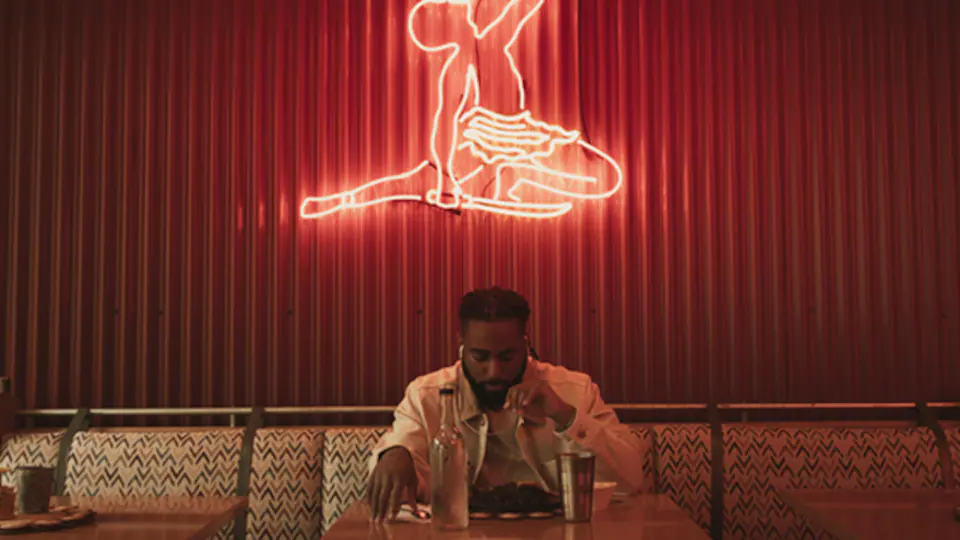
Montreal-based Guadeloupean producer Hypnotic Beatz is the heart of the Maëlle Bonnegrace short film.
Photo: Toronto Black Film Festival
Like her mentor Jorge Camarrotti, Maëlle Bonnegrace stresses the importance of a program like the Fabienne Colas Foundation to make up for the lack of diversity in front of and behind the camera. When you begin, you have all the will in the world; We can’t wait to get started, but we lack the resources, she says. In order to be able to produce our thoughts, we must actually stand out, yet so often we are not seen, nor heard.
The director hopes that her film will help show different sides of black communities, often presented in a linear fashion here and in the United States. She cites the movie as an inspiration Kisses Street – NegresDirected by Martinique, Ozan Balcy. The work, set in the working class in the 1930s in Martinique, was awarded the Silver Lion in Venice in 1983 and Cesar for Best First Work in France in 1984.
She says she is glad to finally get to know herself in a movie: It was one of the first times I was able to see people like me, people of my culture. This representation from West India and the Caribbean in the film motivated me to say to myself, “Okay, you can make movies.”
