

Close Menu
    Facebook X (Twitter) Instagram
    Trending
    • Hauser’s Marks 45 Years With Province-Wide Customer Celebration and Renewed Focus on Community Care
    • Young drivers face elevated collision risks after consuming edible cannabis, new CAA-funded study finds
    • Salvation Army Thrift Store Marks 40th Ontario Location with Peterborough Opening
    • Early Blast of Winter Prompts Safety Warnings from Ontario Road Authorities
    • HONOR Takes Home Two TIME Best Inventions 2025 Awards for Smartphone Breakthroughs
    • Toronto Set to Host Largest LEGO® Fan Event in Canadian History
    • Hank Azaria and Caitlin Morrison Champion Mental Health Through Music at Toronto’s Koerner Hall
    • Bricks in the Six to Build Canada’s Largest-Ever LEGO® Fan Event This November
    Facebook X (Twitter) Instagram YouTube
    Vaughan TodayVaughan Today
    • Home
    • Top News
    • World
    • Banking
    • Explore Canada
    • How to
    • Solutions
    • Contact Form
    Vaughan TodayVaughan Today
    Home»science»Boyle vs. Hobbes: Experiment or Theory?
    science

    Boyle vs. Hobbes: Experiment or Theory?

    Maria GillBy Maria GillJanuary 24, 2022No Comments2 Mins Read
    Boyle vs. Hobbes: Experiment or Theory?
    Share
    Facebook Twitter LinkedIn Pinterest Email

    This is a fundamental question in science: should we prefer experiment or theory?

    Is there a void? This debate about ancestry was revived in the 17th century by various experiments, including those of Irish aristocrat Robert Boyle. Considered one of the founders of the modern experimental method, Boyle, in 1659, invented the first air pump, a highly advanced device intended to create a vacuum. Its goal is to establish scientific “facts” in the laboratory, without having to utter the true existence of the void, which would remain an impossible metaphysical problem. Because, according to Boyle, knowledge can only come from experiments: it is necessary to obtain measurement results that are guaranteed by the quality of the air pump and the witnesses who attend the experiments.

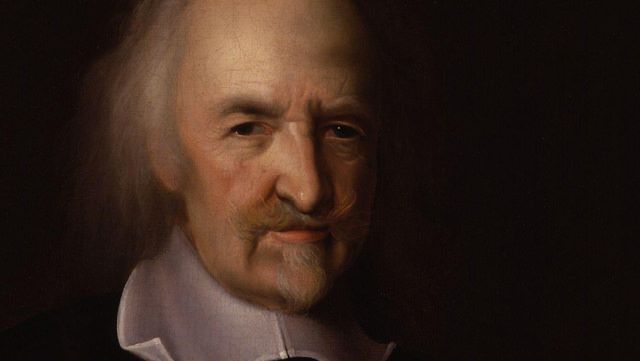
    But his English contemporary, Thomas Hobbes, a philosopher of politics and science, thinks the exact opposite. For him, one cannot deduce objective empirical facts. First, because it is impossible to be completely impartial: the way of presenting the results of an experiment necessarily depends on a certain interpretation of nature. Moreover, the air pump is not a completely reliable tool: there are always leaks! So experience can only lead to uncertain knowledge, unlike abstract thought. Thus, Hobbes recommends searching for the “real causes” by building theories using the mind, on the model of mathematics. And you, to access knowledge, would you choose the conceptual path of Hobbes or the empirical path of Boyle?

    >> Read also: “A word to researchers: Environmental transformation is not enough, we must evolve”

    Share. Facebook Twitter Pinterest LinkedIn WhatsApp Reddit Tumblr Email
    Maria Gill

    "Subtly charming problem solver. Extreme tv enthusiast. Web scholar. Evil beer expert. Music nerd. Food junkie."

    Related Posts

    Rare Earth Metals: Essential Uses and the Global Supply Chain

    October 4, 2025

    200 meteorites found on Earth could be linked to Martian craters, allowing new insight into Mars’ history

    August 28, 2024

    Antibiotics that reduce the risk of stomach cancer

    August 26, 2024
    Facebook X (Twitter) Instagram Pinterest
    © 2025 ThemeSphere. Designed by ThemeSphere.

    Type above and press Enter to search. Press Esc to cancel.