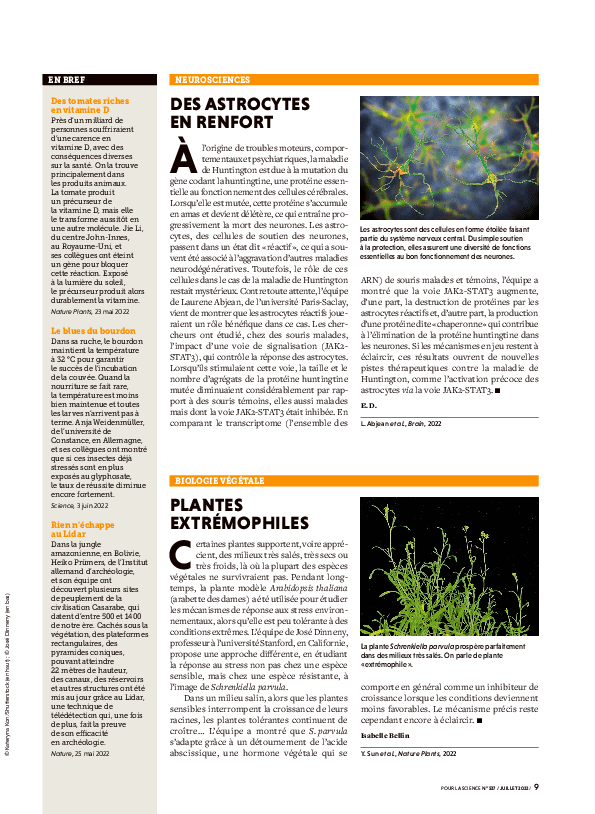

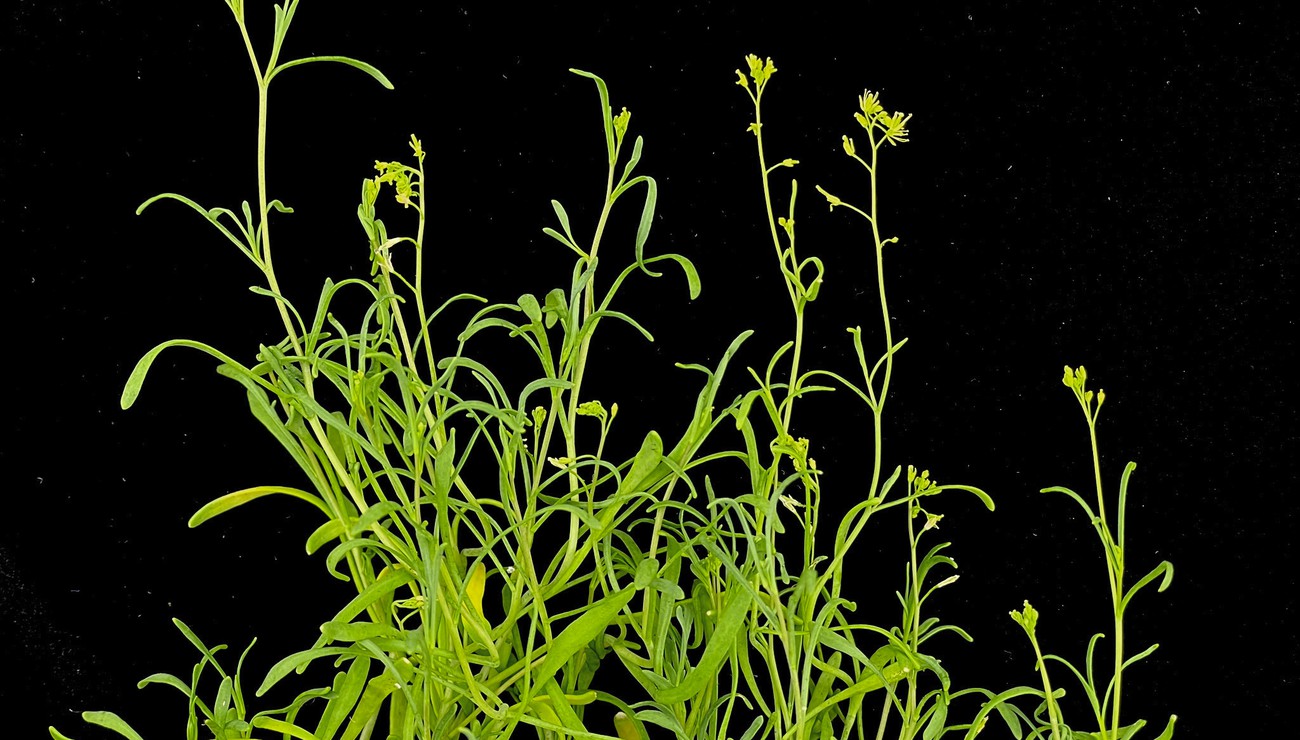
Some plants, which we call “extreme plants,” tolerate or even appreciate environments that are too salty, too dry, or too cold, where most plant species do not survive. For a long time, environmental stress response mechanisms have been studied with a common plant Arabidopsis thaliana (Ladies cress), which belongs to the family of mustard, rapeseed or even cabbage. It was chosen as a model organism because of the many advantages it has: a fast life cycle, large seed production, self-fertilization, a relatively small genome … However, it is far from tolerating harsh environmental conditions! Jose Denini’s team, a professor at Stanford University in California, offers a different approach, by studying the response to stress not in susceptible species, but in resistant ones.
“It’s time to choose the right models to understand these mechanisms,” agrees Alexander Beer, a researcher at the CNRS Institute for Molecular Biology of Plants (IBMP), who studies these extreme plants. Especially since genome sequencing has never been so technically and financially affordable. Another originality of this work was the comparison of responses to stress and salt in this case (strongly associated with water stress and thus with human activity and global warming), for four species with similar genomes: two naturally tolerant species (Utrema salsogenium And the Schrenkiella parvula) and two more sensitive ones )Sesemperium Irio And the Arabidopsis thaliana).
First observation: In a salty environment, while sensitive plants intercept their root growth, tolerant plants continue to grow… To understand this difference in behaviour, the team focused on a “classic” method of plants’ response: regulating gene expression under the influence of a plant hormone known to control their growth in Under stress conditions, abscisic acid (ABA). ABA generally acts as a growth inhibitor when conditions become less favorable, allowing the plant to save its resources while waiting for improvement. In an individual way, in one of the two extreme plants studied, Schrenkiella parvulaOn the contrary, ABA accelerates growth.
By relying on high-throughput sequencing to identify differences in gene expression in response to ABA (RNA-Seq, RNA sequencing) and to determine the regulatory sequences in the genome (DAP-seq or DNA affinity purification sequencing), the scientists found marked differences in Schrenkiella parvula. They also highlighted the importance of other plant hormones such as auxin, which is known for its key role in controlling growth and development.
Without questioning the usefulness of these discoveries, Alexander Beer points out, however, that the direct link between salt stress tolerance of Schrenkiella parvula The uniqueness of their response to high concentrations of ABA remains to be demonstrated. “For example, it was interesting to quantify ABA, which is a routine analysis, to see if this plant makes more of it than other plants or synthesizes it more quickly under stress conditions,” he notes.
In any case, this study underscores the interest of extreme models in improving the understanding of the mechanisms of plant response and tolerance to environmental stresses. It also highlights the diversity of strategies of hypersensitive plants: maintaining their roots with a protective coating, strengthening their cells, or, as here, switching response pathways to ABA. It will be necessary to wait to learn more to consider transferring these findings by gene or genetic surgery to relevant cultivated plants.