

Close Menu
    Facebook X (Twitter) Instagram
    Trending
    • Hauser’s Marks 45 Years With Province-Wide Customer Celebration and Renewed Focus on Community Care
    • Young drivers face elevated collision risks after consuming edible cannabis, new CAA-funded study finds
    • Salvation Army Thrift Store Marks 40th Ontario Location with Peterborough Opening
    • Early Blast of Winter Prompts Safety Warnings from Ontario Road Authorities
    • HONOR Takes Home Two TIME Best Inventions 2025 Awards for Smartphone Breakthroughs
    • Toronto Set to Host Largest LEGO® Fan Event in Canadian History
    • Hank Azaria and Caitlin Morrison Champion Mental Health Through Music at Toronto’s Koerner Hall
    • Bricks in the Six to Build Canada’s Largest-Ever LEGO® Fan Event This November
    Facebook X (Twitter) Instagram YouTube
    Vaughan TodayVaughan Today
    • Home
    • Top News
    • World
    • Banking
    • Explore Canada
    • How to
    • Solutions
    • Contact Form
    Vaughan TodayVaughan Today
    Home»Tech»NASA details the cooling process of the James Webb instrument
    Tech

    NASA details the cooling process of the James Webb instrument

    Jillian CastilloBy Jillian CastilloApril 8, 2022No Comments2 Mins Read
    NASA details the cooling process of the James Webb instrument
    Share
    Facebook Twitter LinkedIn Pinterest Email

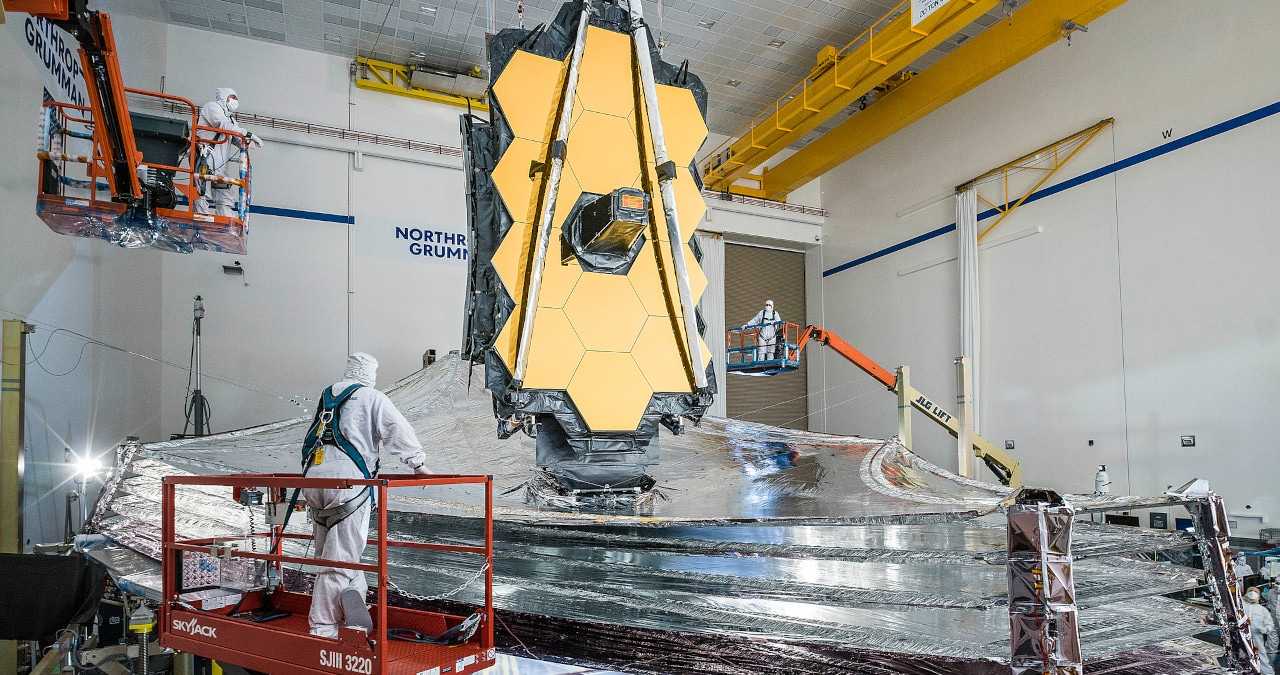
    The James Webb Space Telescope, which launched on December 25, 2021, goes through a cooling process until it reaches the right temperature to operate at full capacity. A new statement posted on the official NASA website explains this part of the mission a little more.

    According to the US space agency, the instrument known as “MIRI” (short for “Middle Infrared Instrument”) should operate at a temperature between -239.15 degrees Celsius (Celsius) and -234.15 degrees Celsius. However, its optical detectors – essentially, the “eyes” of a telescope that would be able to see the light – would have to be much cooler than that. This is where the “cooled radiator” comes in.

    Read also
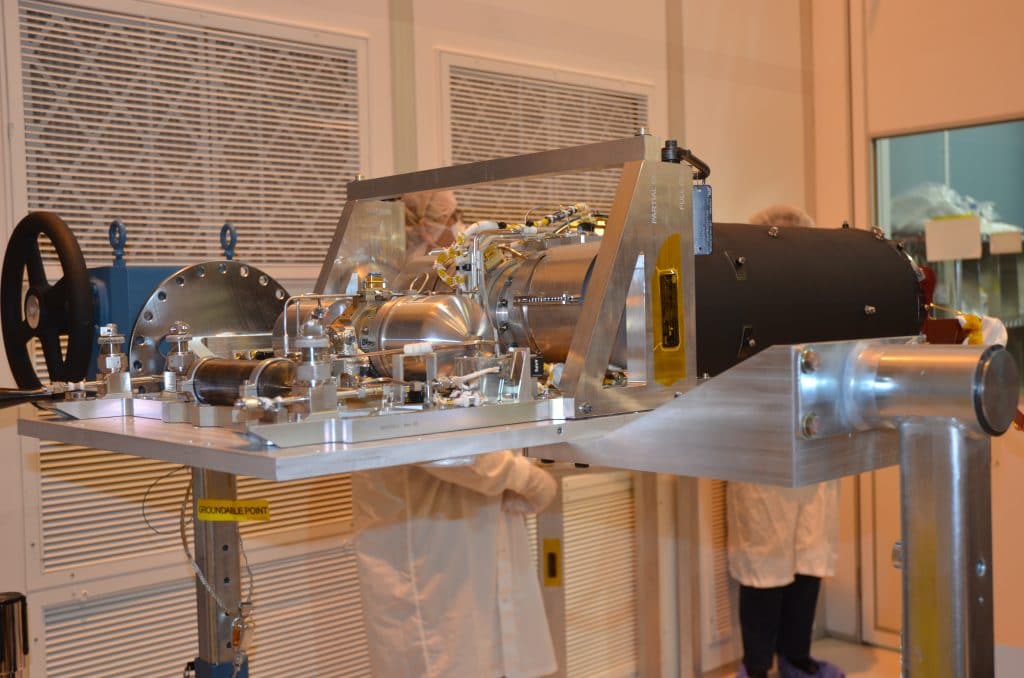
    MIRI, one of the core instruments of the James Webb Space Telescope, requires extreme cooling to operate.
    MIRI, one of the main instruments of the James Webb Space Telescope, requires extreme cooling to operate (Image: NASA/JPL-Caltech/Handout)

    “For the past two weeks, the cooler has been circulating cooled helium through the MIRI optical line, which will allow us to cool it down to -258.15 degrees Celsius. Soon, the cryogenics will face their toughest days of mission,” said Konstantin Benanen and Brett Naylor, cooling specialists at NASA’s Jet Propulsion Laboratory. (JPL-Caltech), by turning on the cryogenic valves, it will redirect the helium and force it to constrict the flow.“As the gas expands as it exits the restriction, it will become colder, bringing the operating temperature of the MIRI detectors below -266.15°C.”

    In fact, at any temperature higher than this, the photodetectors will be effectively “blind”. Since they are tuned to operate at mid-infrared frequencies, there is no other option for them to operate. For this reason, the MIRI is installed outside the metal grille where the telescope’s lenses are also located – incredibly heated by absorbing sunlight, but in this way the instrument is thermally insulated.

    “Cooling this instrument is one of Webb’s last big challenges before our team can truly relax, and getting past that point is a very important step in this challenge,” said Alistair Glass and Macarena Garcia-Marin, both MIRI calibration experts, when the time is right, the coolant will be It extracted nearly all of the heat from 100 kg of MIRI metal, the remnants of the orbital day of its launch.

    Have you seen our new videos on Youtube? Subscribe to our channel!

    Share. Facebook Twitter Pinterest LinkedIn WhatsApp Reddit Tumblr Email
    Jillian Castillo

    "Proud thinker. Tv fanatic. Communicator. Evil student. Food junkie. Passionate coffee geek. Award-winning alcohol advocate."

    Related Posts

    MSI Unveils Black Friday Discounts on Flagship Laptops and Handhelds

    November 1, 2025

    Rare Earth Metals: Essential Uses and the Global Supply Chain

    October 4, 2025

    Bell error 2000: Troubleshoot and Solutions

    June 4, 2023
    Facebook X (Twitter) Instagram Pinterest
    © 2025 ThemeSphere. Designed by ThemeSphere.

    Type above and press Enter to search. Press Esc to cancel.