

Close Menu
    Facebook X (Twitter) Instagram
    Trending
    • Hauser’s Marks 45 Years With Province-Wide Customer Celebration and Renewed Focus on Community Care
    • Young drivers face elevated collision risks after consuming edible cannabis, new CAA-funded study finds
    • Salvation Army Thrift Store Marks 40th Ontario Location with Peterborough Opening
    • Early Blast of Winter Prompts Safety Warnings from Ontario Road Authorities
    • HONOR Takes Home Two TIME Best Inventions 2025 Awards for Smartphone Breakthroughs
    • Toronto Set to Host Largest LEGO® Fan Event in Canadian History
    • Hank Azaria and Caitlin Morrison Champion Mental Health Through Music at Toronto’s Koerner Hall
    • Bricks in the Six to Build Canada’s Largest-Ever LEGO® Fan Event This November
    Facebook X (Twitter) Instagram YouTube
    Vaughan TodayVaughan Today
    • Home
    • Top News
    • World
    • Banking
    • Explore Canada
    • How to
    • Solutions
    • Contact Form
    Vaughan TodayVaughan Today
    Home»science»Safe from sunburn under the awning? False
    science

    Safe from sunburn under the awning? False

    Maria GillBy Maria GillAugust 19, 2021No Comments2 Mins Read
    Safe from sunburn under the awning?  False
    Share
    Facebook Twitter LinkedIn Pinterest Email

    This article is part of a column rumor detectorClick here for other texts.


    The origin of the rumor

    The belief stems from the fact that we often imagine the sun’s rays as straight lines falling from the sky and stopping at the first obstacle that comes – for example, an umbrella. However, there are many things that can cause UV rays to bounce back in our direction.

    facts

    The brighter the surface, the more light is reflected. This is why snow on the ground produces a blinding effect, because it reflects 60-90% of light.

    Likewise, on a day at the beach, Sand can reflect about 15% of UV rays. Although the ozone layer partially blocks this type of UV rays, UV rays are responsible for the majority of skin cancers.

    If the canopy is near a body of water, then about 8% of the light rays will reach us. Because the grass is darker, it reflects only 4% of the sun’s rays.

    Even an overcast day does not protect you from the sun’s rays. The water in the clouds sends some ultraviolet rays into the sky, but 50% of it still manages to pass through the cloud cover.

    Although it seems unnecessary when standing in the shade, apply sunscreen as well. In fact, a combination of the two It seems that The most effective solution to avoid sunburn. Needless to say, the canopy needs adjustment for the angle of the sun, which peaks at noon, but goes down softly in the afternoon. The ideal is to see as little sky as possible under the shadow source.

    according to study American published in 2015 in SciencesHowever, the harmful effects of the sun on our skin will last for up to three hours after exposure to UV rays.

    Sunlight is known to damage skin cells by altering their DNA. As this damage builds up, skin cells become more susceptible to developing skin cancer, known as melanoma.

    Rule

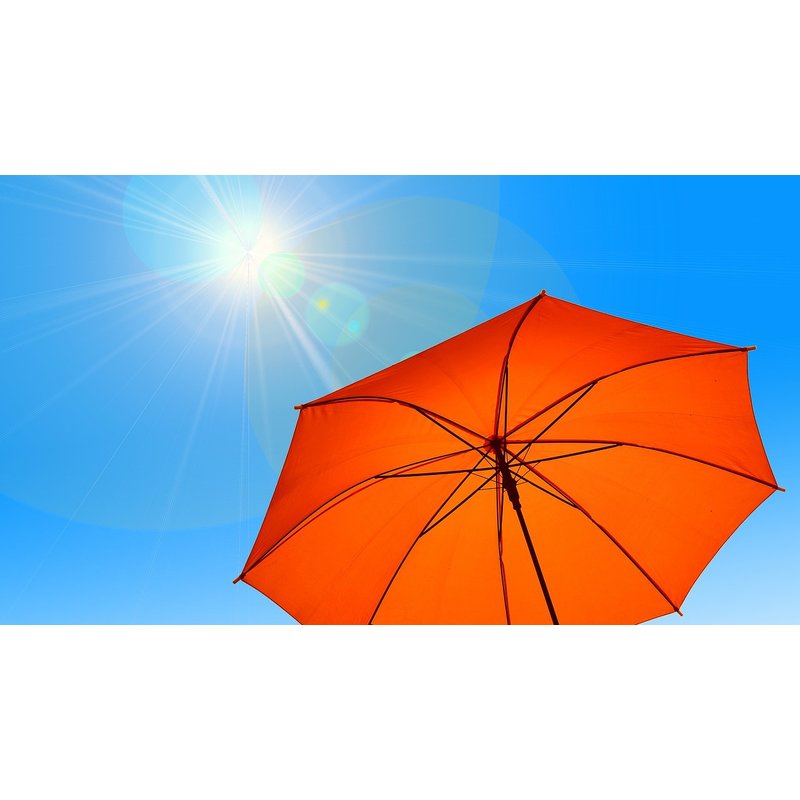
    The shade provided by the canopy gives a false sense of security. UV rays from the sun can bounce off all kinds of nearby surfaces and still reach our skin. Nothing beats a layer of sunscreen, even in the shade.

    Photo: Gerd Altman/Pixabay

    Share. Facebook Twitter Pinterest LinkedIn WhatsApp Reddit Tumblr Email
    Maria Gill

    "Subtly charming problem solver. Extreme tv enthusiast. Web scholar. Evil beer expert. Music nerd. Food junkie."

    Related Posts

    Rare Earth Metals: Essential Uses and the Global Supply Chain

    October 4, 2025

    200 meteorites found on Earth could be linked to Martian craters, allowing new insight into Mars’ history

    August 28, 2024

    Antibiotics that reduce the risk of stomach cancer

    August 26, 2024
    Facebook X (Twitter) Instagram Pinterest
    © 2025 ThemeSphere. Designed by ThemeSphere.

    Type above and press Enter to search. Press Esc to cancel.