

Close Menu
    Facebook X (Twitter) Instagram
    Trending
    • Hauser’s Marks 45 Years With Province-Wide Customer Celebration and Renewed Focus on Community Care
    • Young drivers face elevated collision risks after consuming edible cannabis, new CAA-funded study finds
    • Salvation Army Thrift Store Marks 40th Ontario Location with Peterborough Opening
    • Early Blast of Winter Prompts Safety Warnings from Ontario Road Authorities
    • HONOR Takes Home Two TIME Best Inventions 2025 Awards for Smartphone Breakthroughs
    • Toronto Set to Host Largest LEGO® Fan Event in Canadian History
    • Hank Azaria and Caitlin Morrison Champion Mental Health Through Music at Toronto’s Koerner Hall
    • Bricks in the Six to Build Canada’s Largest-Ever LEGO® Fan Event This November
    Facebook X (Twitter) Instagram YouTube
    Vaughan TodayVaughan Today
    • Home
    • Top News
    • World
    • Banking
    • Explore Canada
    • How to
    • Solutions
    • Contact Form
    Vaughan TodayVaughan Today
    Home»Tech»Space Europe is putting its flower mission back on track
    Tech

    Space Europe is putting its flower mission back on track

    Jillian CastilloBy Jillian CastilloJune 10, 2021No Comments2 Mins Read
    Space Europe is putting its flower mission back on track
    Share
    Facebook Twitter LinkedIn Pinterest Email

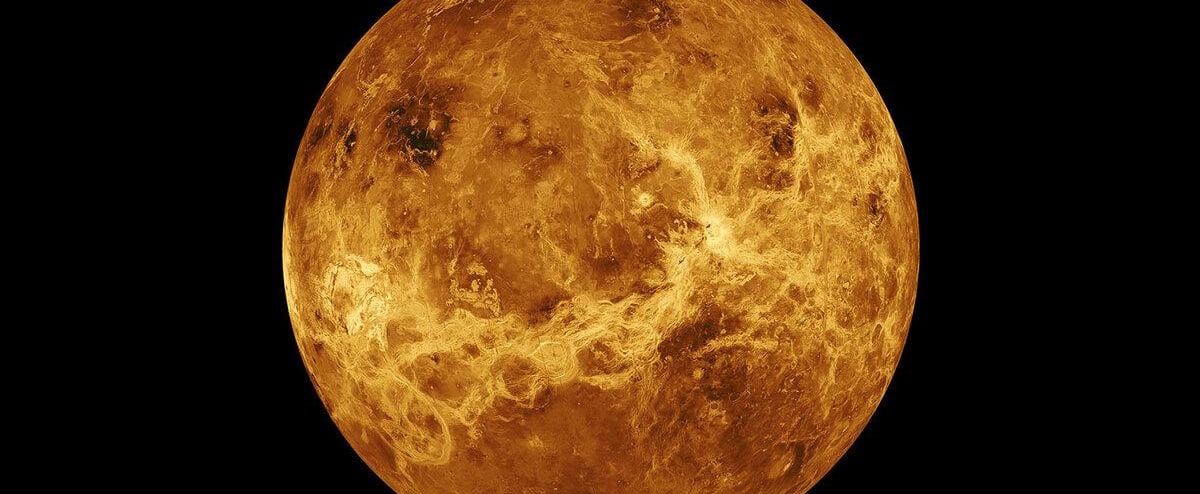
    The European Space Agency (ESA) on Thursday selected a probe, EnVision, to explore Venus in the early 2030s, in order to understand how the planet, our closest neighbor, became a toxic, uninhabitable inferno.

    • Read also: NASA announces two new missions to explore Venus

    • Read also: Are aliens watching us? Highly anticipated US UFO report

    The announcement comes a week after NASA announced two new missions to Venus, Da Vinci + and Veritas, between 2028 and 2030.

    The agency said in a statement that the Envision probe, which competed with another mission called Theseus, was ultimately selected by the ESA’s Science Program Committee for its “cutting edge” technology.

    The European Space Agency, which includes 22 countries, said the total budget for the mission is 610 million euros.

    The probe will launch a series of European instruments that make it possible to provide a “global view of the planet, from its inner core to its upper atmosphere, in order to determine how and why Venus and Earth evolved very differently.”

    Venus may have roughly the same size and composition as Earth, experienced a dramatic climate change, and evolved “in a toxic atmosphere enveloped in thick clouds rich in sulfuric acid,” the European Space Agency details.

    The closest EnVision launch opportunity is 2031, and other options are possible in 2032 and 2033. After liftoff, EnVision will take about 15 months to reach its destination, and an additional 16 months to set its orbit, including between 220 and 540 km above Venus.

    Onboard spectrometers will monitor atmospheric gases and analyze the surface composition, “looking for any changes associated with signs of active volcanic activity.” Radar provided by NASA will send images and maps of the surface.

    The instrument will also make it possible to examine the internal structure of the planet and its gravitational field.

    The previous ESA Venus Express mission (2005-2014) focused primarily on atmospheric research.

    Share. Facebook Twitter Pinterest LinkedIn WhatsApp Reddit Tumblr Email
    Jillian Castillo

    "Proud thinker. Tv fanatic. Communicator. Evil student. Food junkie. Passionate coffee geek. Award-winning alcohol advocate."

    Related Posts

    MSI Unveils Black Friday Discounts on Flagship Laptops and Handhelds

    November 1, 2025

    Rare Earth Metals: Essential Uses and the Global Supply Chain

    October 4, 2025

    Bell error 2000: Troubleshoot and Solutions

    June 4, 2023
    Facebook X (Twitter) Instagram Pinterest
    © 2025 ThemeSphere. Designed by ThemeSphere.

    Type above and press Enter to search. Press Esc to cancel.