


Researchers from the National Institute for Scientific Research (INRS) and the École de technologie supérieure have discovered that fermentation residues can be converted into tiny crystals that are used in advanced manufacturing technologies.
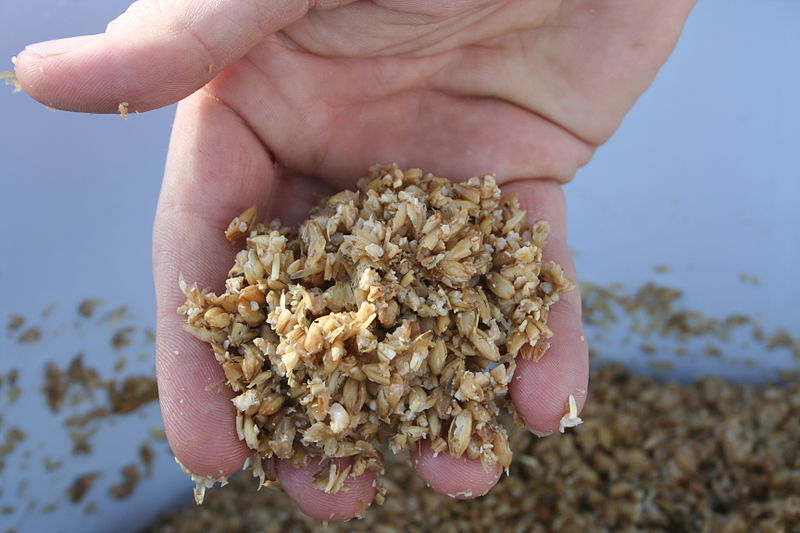
These crystals are called “quantum dots,” and they are actually “nanocrystals” each measuring a few billionths of a meter (one nanometer corresponds to one billionth of a meter). These quantum dots are typically produced from heavy metals and pollutants such as cadmium and lead, and can alternatively be produced from spent grain, the leftover grains from breweries that in recent years have been reused in animal feed. Quantum dots are used, among other things, to emit and absorb light, for example as sensors in biomedicine or as LEDs in next-generation displays. South Korean giant Samsung, in particular, is devoting massive resources to assembling quantum dots for use in its phones.
“It can also be used for less technologically and commercially mature applications, such as solar energy technologies, that is, the absorption of light to convert it into another form of energy,” explained Professor Federico Rosi, of the National Institute of Statistics. It can be electricity, as it can be used to break down water molecules and separate hydrogen from oxygen. Then the hydrogen can be used as a clean fuel. Professor Rosie and colleagues demonstrated this spring, in the pages of the RSC Advances journal, that it is possible to produce carbon quantum points with the means available. They used a home microwave oven to char the spent beans, creating a black powder that was then mixed with distilled water and returned to the microwave. Passing through centrifuges and advanced filtration steps made it possible to obtain quantum dots.
The final product is able to detect and quantify heavy metals, as well as other pollutants that affect water quality, the environment and health. “We can modify the properties of quantum dots by changing their size, morphology and composition,” Professor Rosie said. He goes on to say that the quantum dots that show the best performance unfortunately contain heavy metals whose use is not desirable from an environmental point of view. So we sought to replace it with items that are non-toxic and ideally, very plentiful. The drawing contains elements such as carbon, nitrogen and phosphorous that will contribute to the efficiency of the obtained quantum dots. Previous work showed that quantum dots obtained from carbon are interesting for capturing sunlight and converting it into another form of energy.
This project was completed thanks to the cooperation of the micro-brewery Brasseur de Montréal, which contributed grain residues. The researchers are now not ruling out contacting a larger brewery that might be interested in this technological breakthrough. “The basic principle is to try to recover the waste,” Professor Rosie said. But good. From there to conclude that the more beer you drink, the more drinks you drink
Our hospitals will help equip themselves with the advanced equipment they need, and there is definitely a step we shouldn’t take.
image credit: jinx.
